
Netherlands Cafés With Dogs: Why “Dogs Welcome” Still Needs a Quick Check
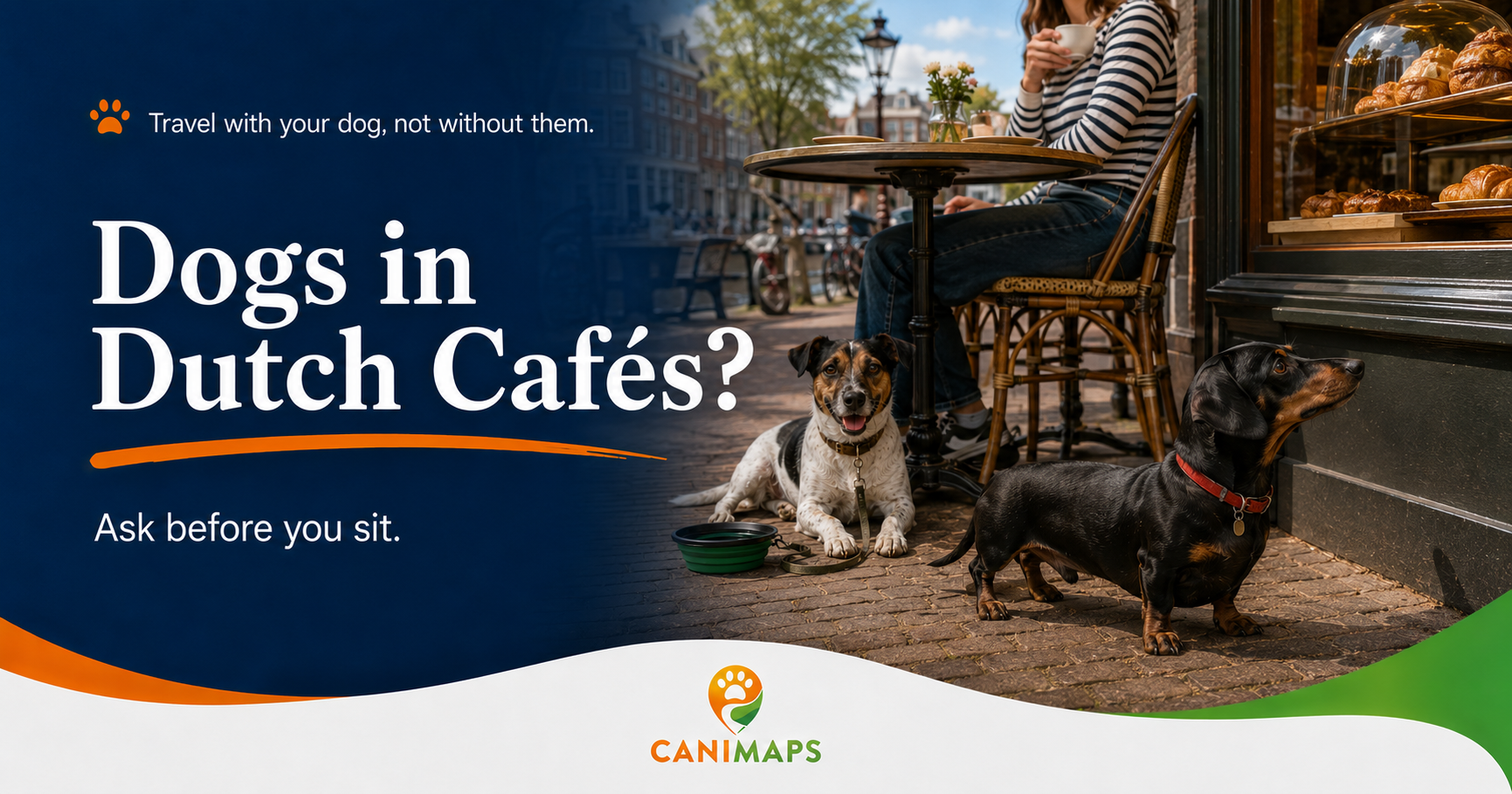
The Netherlands can feel wonderfully relaxed with dogs.
You walk through Amsterdam, Utrecht or Haarlem, see dogs on terraces, dogs under tables, dogs politely ignoring bicycles, and think: perfect, we can go anywhere.
Then your dog confidently heads toward a café with an open kitchen.
And the rule says: not so fast, furry critic.
The Netherlands is often a great place to travel with a dog, especially in cities where terrace culture, parks and casual cafés make life easier. But “dog-friendly” still has limits. Food-safety rules, open kitchens, buffets and individual venue policies all matter.
So before you walk in with your dog, check what kind of space it is.
Quick Answer
Yes, many cafés and terraces in the Netherlands may welcome dogs, but access depends on the venue and food-safety setup. Pets may be allowed in seating areas, but they are not allowed in spaces where food is prepared or stored, and open kitchens or buffets can create stricter restrictions. The safest approach is to ask before entering, choose a terrace when possible and keep your dog calm, clean and out of the walkway.
The Big Mistake: Assuming Café Culture Means Automatic Dog Access
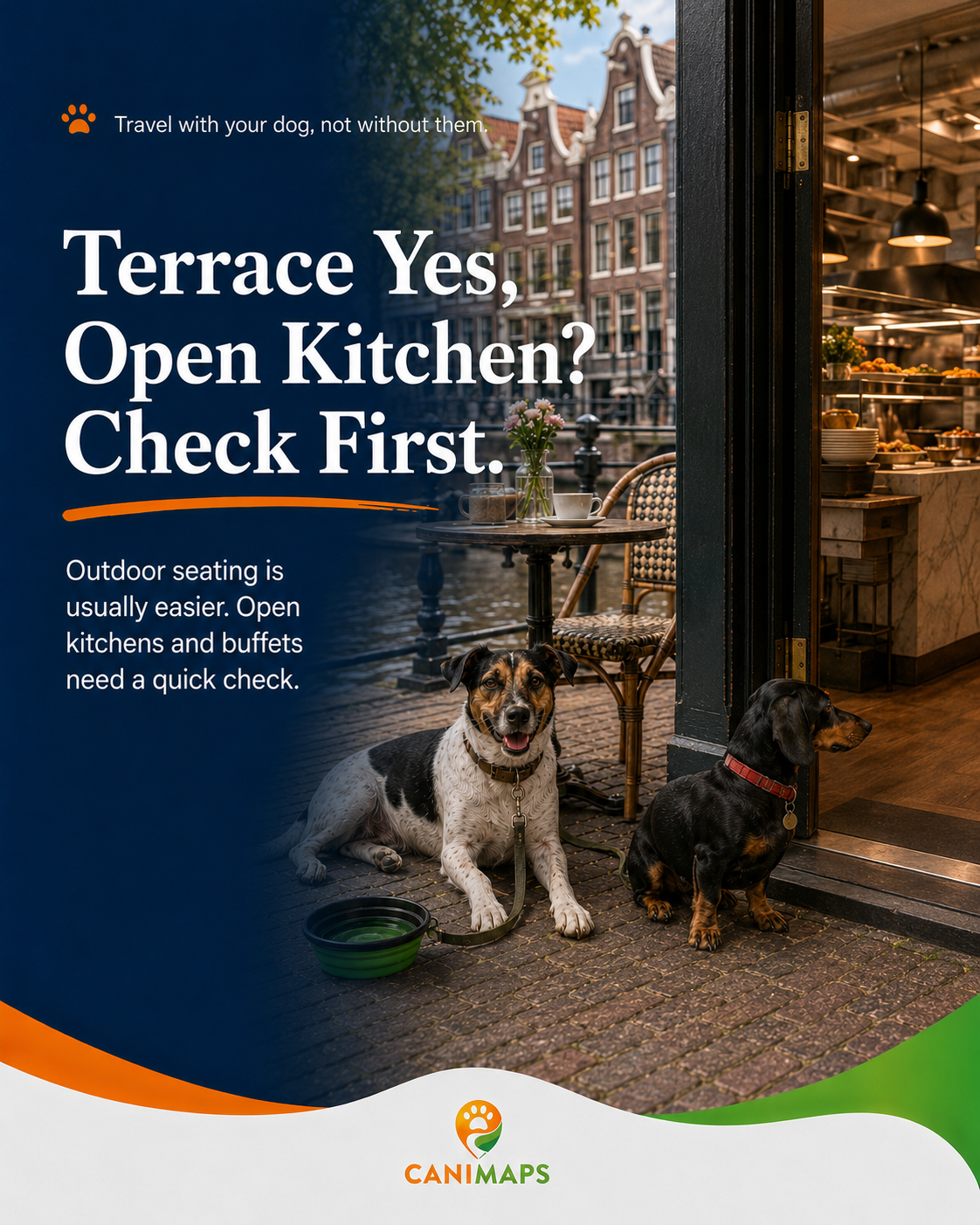
Many dog owners see a dog on one terrace and assume the whole city works the same way.
That is the trap.
A café may allow dogs outside but not inside. A restaurant may allow dogs in a seating area but not near an open kitchen. A bakery may not allow dogs at all. A bar may be relaxed on a quiet afternoon but not during a busy dinner service. A venue may welcome assistance dogs differently from pets.
The useful question is not only “Are dogs allowed?”
The useful question is:
“Where inside this business is my dog allowed, and under what conditions?”
That sounds less romantic than “Amsterdam café day,” but it saves awkward doorway negotiations.
The Dutch Food-Safety Rule That Matters
The most important official rule comes from the NVWA, the Dutch Food and Consumer Product Safety Authority.
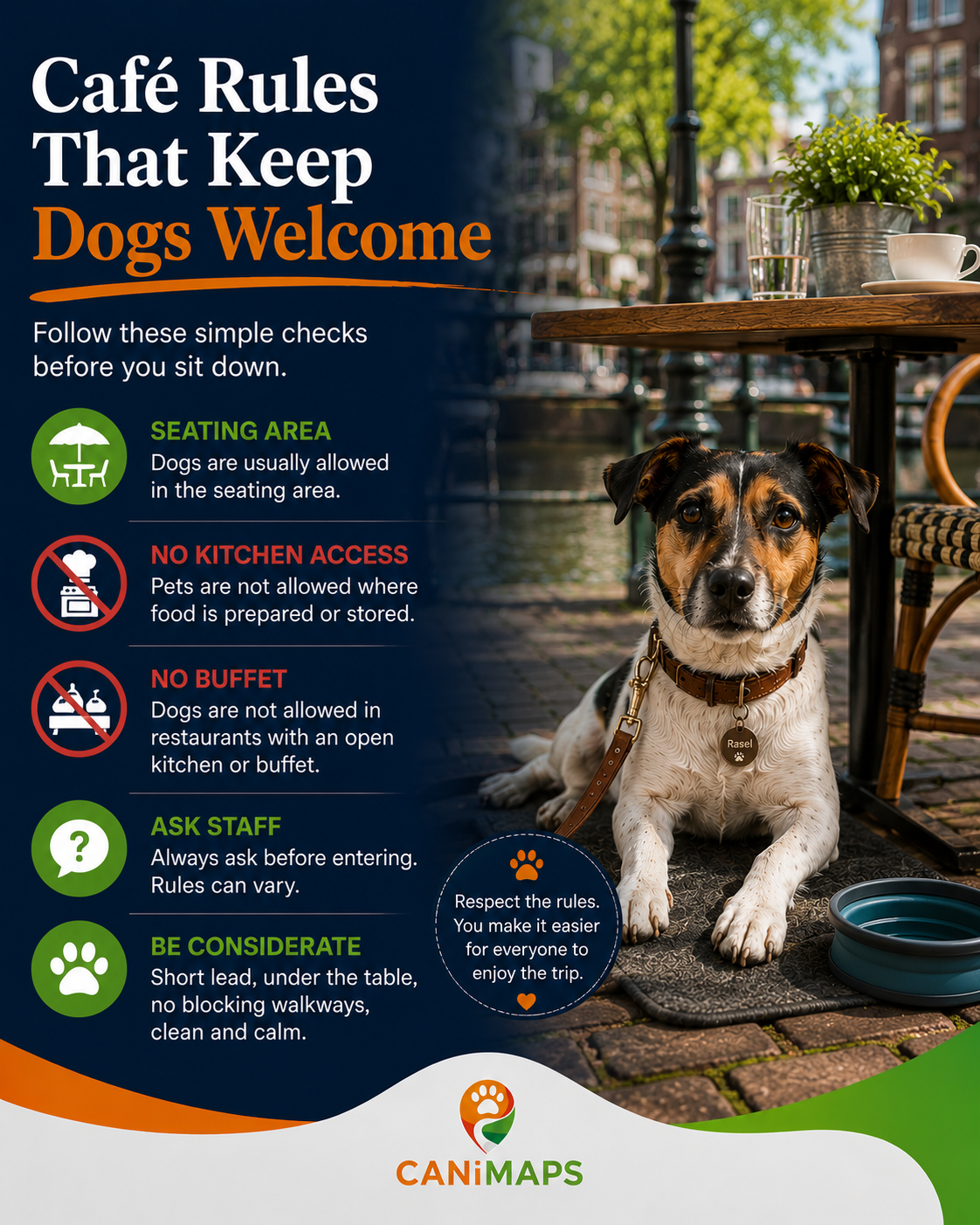
The NVWA says pets such as dogs and cats are not allowed in spaces where food is prepared or stored. Pets may be allowed in the seating area of a café, restaurant or other hospitality business, but only if food is not prepared or stored there. The NVWA also says pets are not allowed in a restaurant with an open kitchen or buffet.
That is the practical core.
Your dog might be fine in the seating area.
Your dog is not fine in the kitchen.
Your dog may also be a problem in a restaurant where the kitchen is open to the seating space or where food is stored or served buffet-style.
Noodle would call this discrimination against snack inspectors.
Rasel would call it “basic hygiene, bro.”
Terraces Are Usually the Safer Bet
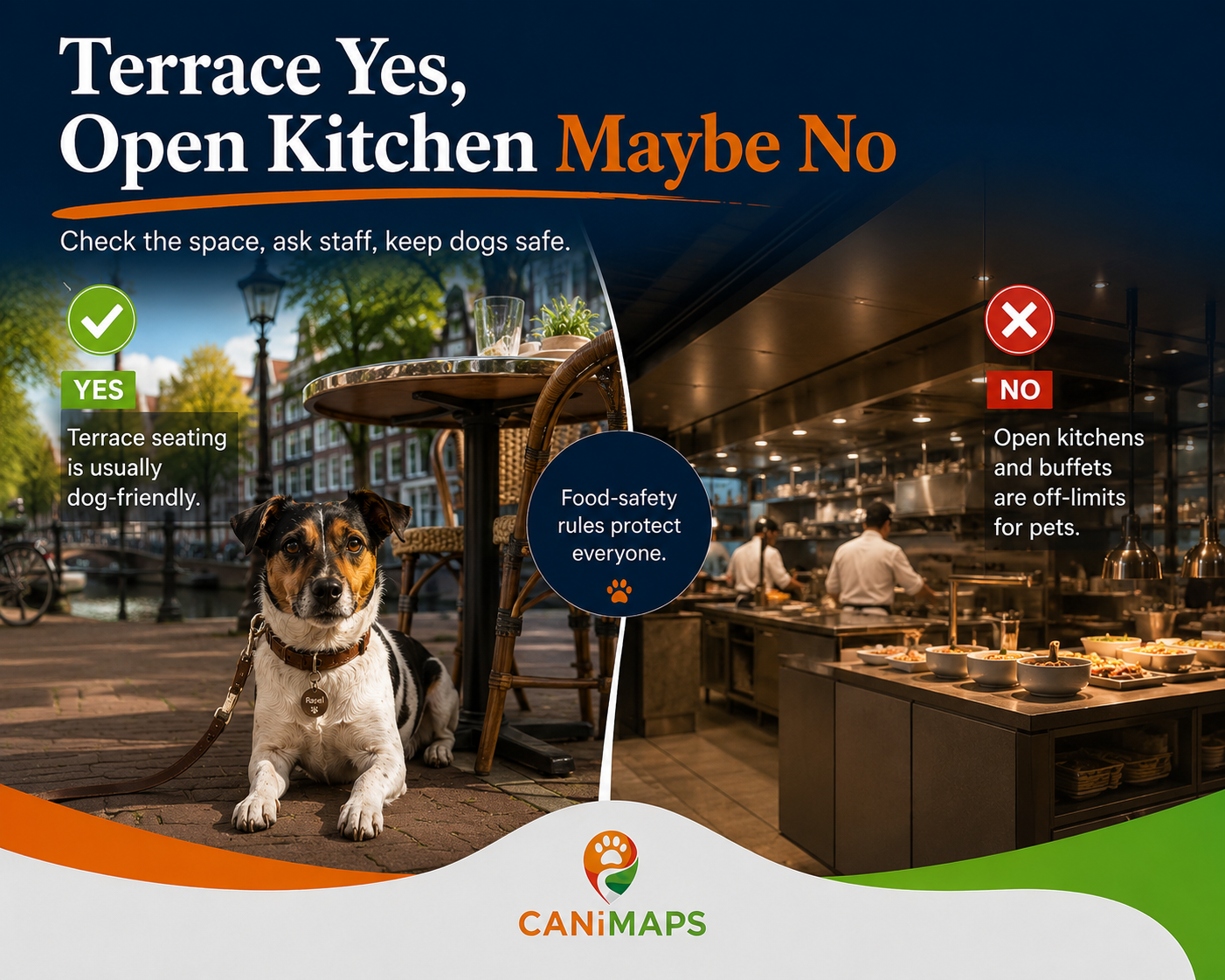
If you are unsure, start with the terrace.
Terraces are usually easier because your dog is not entering food-preparation space, there is more airflow, and staff can often seat you where the dog is not blocking a walkway.
This is especially useful in Dutch cities where outdoor seating is common.
I amsterdam’s dog-friendly city guide says most restaurants welcome dogs inside and outside, and highlights dog-friendly places in Amsterdam.
That is encouraging, but do not treat it as a blanket guarantee. A city guide can show the general vibe. The actual decision still belongs to the individual venue and the food-safety setup.
The safest travel habit is simple: look for a terrace, check the door sign, ask staff before sitting, and keep your dog under the table and out of the walkway.
That last one is important. Dutch cafés are not designed for leash chaos plus bicycles plus tiny tables plus one dog pretending to be furniture.
Open Kitchens and Buffets Are the Danger Zone
This is where people get surprised.
A restaurant may feel casual. The door may be open. The tables may be full. Your dog may be adorable.
But if there is an open kitchen or buffet, the NVWA rule becomes much stricter for pets. Pets are not allowed in a restaurant with an open kitchen or buffet.
So if you can see food being prepared from the seating area, or guests serve themselves from open food displays, do not assume your pet can come in.
This is not personal.
Your dog is not being judged.
Although if your dog is Noodle, maybe a little.
Ask Before You Enter
The easiest sentence in Dutch dog travel is not Dutch at all.
Just ask:
“Is it okay if my dog comes in?”
Then add:
“We can sit outside if easier.”
This gives staff a low-pressure way to guide you to the right spot.
Also ask if the café is small, the dog is wet, the venue is busy, there is an open kitchen, there is a buffet, you plan to stay for a full meal, or your dog may bark or move around.
A polite ask avoids the awkward moment where you settle in, remove your coat, order coffee, and then realise your dog is sitting next to the pastry display like a tiny health inspection failure.
Assistance Dogs Are Different From Pet Dogs
This article is about pet dogs.
Assistance dogs can have different access rights from pets, and businesses should treat them differently. The NVWA page separates the rules for pets from assistance dogs and explains where pets are allowed in food-service environments.
So do not use pet-dog advice for assistance dog situations.
If you travel with an assistance dog, check the relevant Dutch accessibility and assistance-dog guidance before travel.
If you travel with a pet dog, assume the normal pet rules apply.
Your Dog Still Needs Travel Paperwork
Café rules are only one layer.
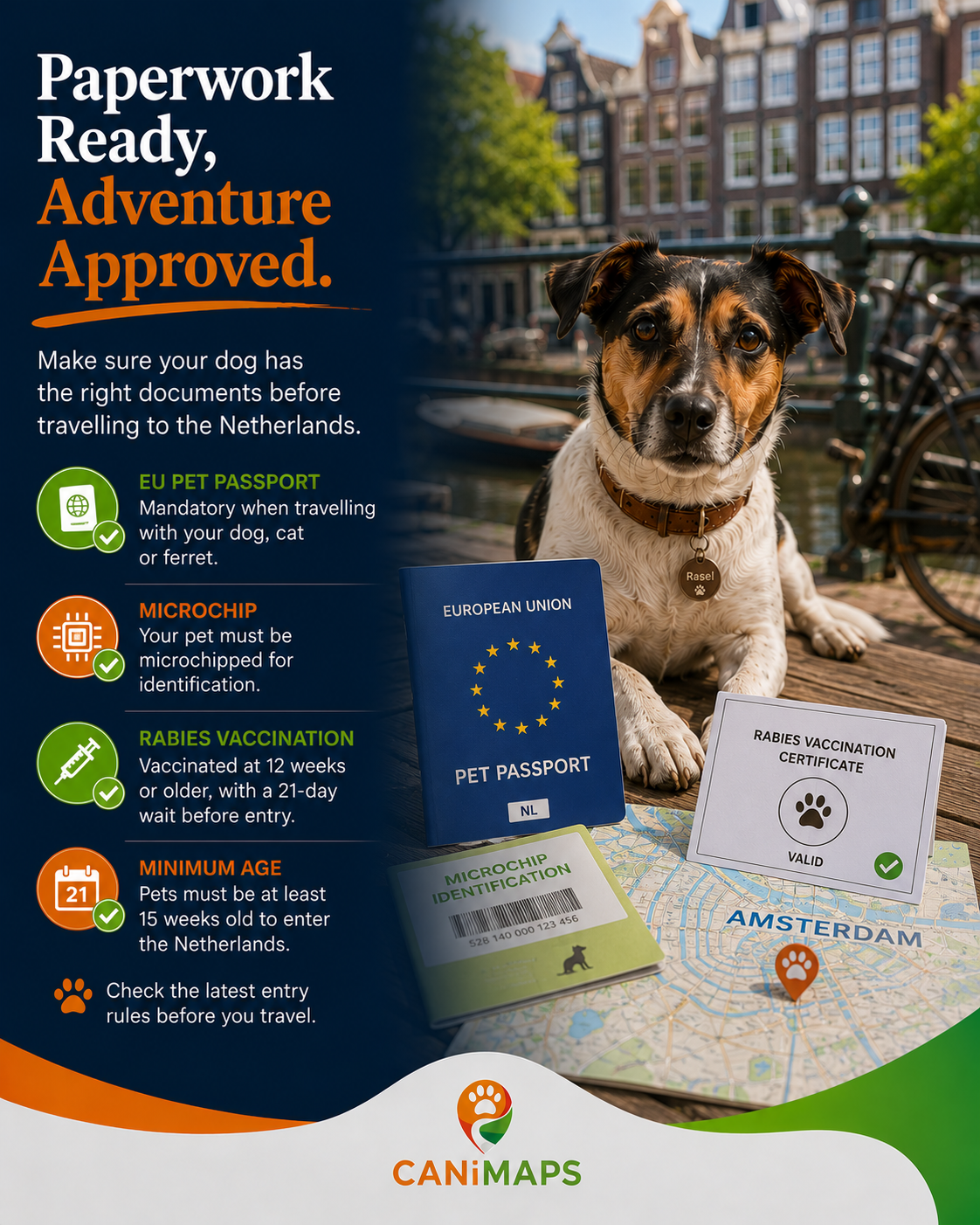
If you travel to the Netherlands with your dog, you also need to check pet-entry documents.
The Dutch government says a European pet passport is mandatory when travelling with a dog, cat or ferret, and pets must be microchipped and vaccinated against rabies.
The Netherlands government FAQ says that dogs, cats and ferrets entering from another EU country must be at least 15 weeks old, vaccinated from 12 weeks old, and there must be a 21-day wait after vaccination before entry.
Dutch Customs also says that when travelling within the EU with a dog, cat or ferret, the animal needs an EU passport, identification chip and rabies vaccination.
This paperwork will not get your dog into an open-kitchen café.
But it will help get your dog legally into the Netherlands in the first place.
Travel is layers. Annoying layers, but layers.
Café Manners That Make Staff More Likely to Say Yes
Rules matter. Behaviour matters too.
If you want Dutch cafés to feel easy with your dog, make it easy for the venue.
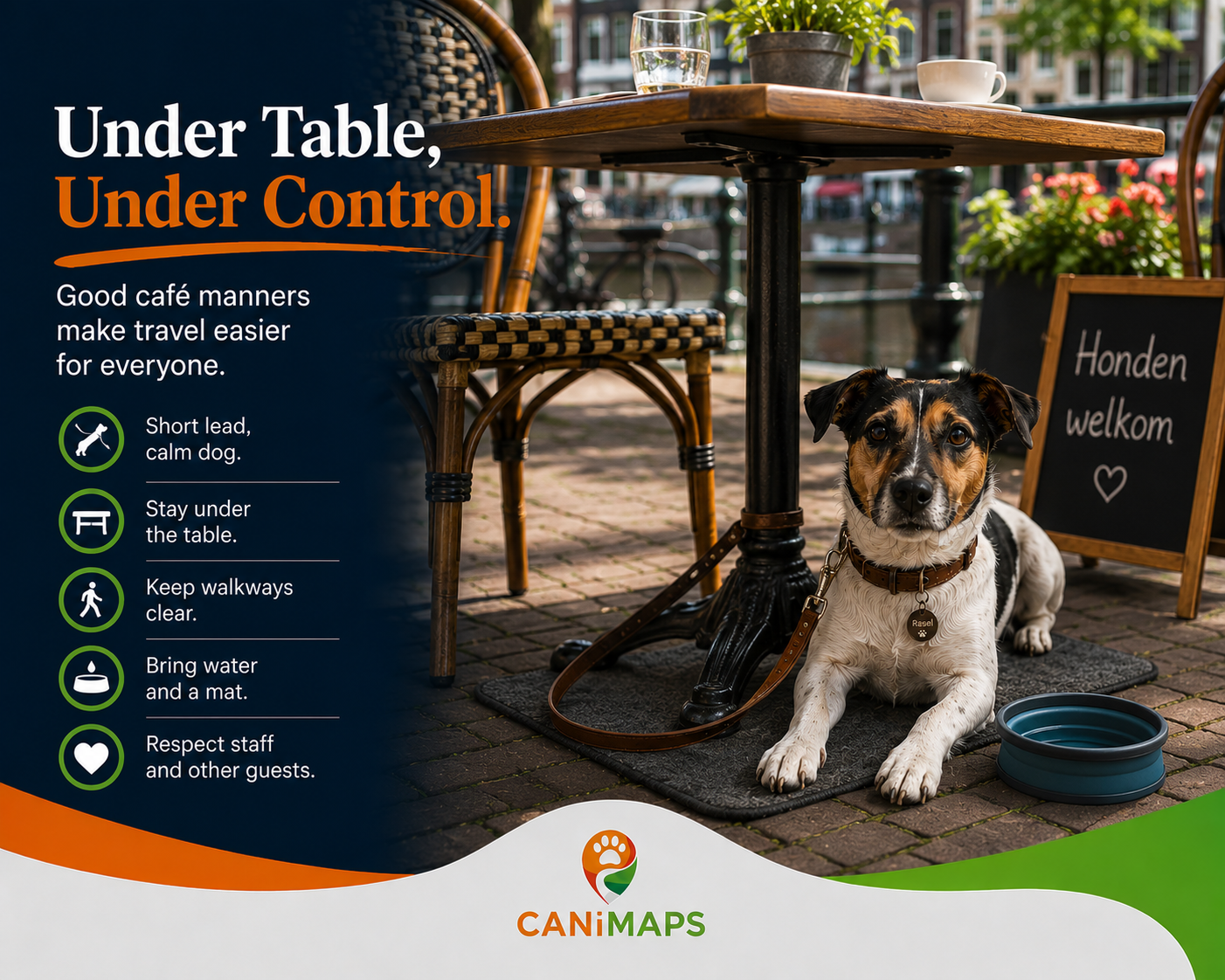
Ask before entering, keep your dog on a short lead, place your dog under the table, avoid blocking walkways, bring a small mat or towel, bring water, prevent begging, avoid peak dinner rush with a nervous dog and leave if your dog gets stressed or noisy.
Do not let your dog sniff plates, sit on chairs unless clearly allowed, block the doorway, use a long retractable leash inside, assume every café has dog water or argue with staff about hygiene rules.
Noodle would argue.
Rasel would pretend not to know him.
The CANIMAPS Café Rule
Before taking your dog into a café or restaurant in the Netherlands, check four things:
Terrace or inside.
Open kitchen or buffet.
Venue permission.
Dog behaviour and space.
That is the practical core.
The Netherlands can be a brilliant dog-friendly destination. But “dog-friendly vibe” is not the same as “every food venue welcomes pets everywhere.”
Ask first. Sit smart. Keep your dog calm. Respect the staff.
Then enjoy the coffee like a civilised person while your dog silently audits the floor for crumbs.
Save this before your next dog-friendly trip, and follow CANIMAPS for more real-world dog travel tips.
FAQ
Are dogs allowed in cafés in the Netherlands?
Many cafés and terraces in the Netherlands may allow dogs, but access depends on the venue, seating area and food-safety setup.
Are dogs allowed inside Dutch restaurants?
Sometimes yes, but pets are not allowed in spaces where food is prepared or stored. Open kitchens and buffets can make access more restricted.
Are dogs allowed on café terraces in the Netherlands?
Terraces are usually the safer option because dogs are outside the food-preparation area, but the final decision still belongs to the venue.
Are dogs allowed in restaurants with open kitchens in the Netherlands?
No. Pets are not allowed in restaurants with an open kitchen or buffet under Dutch food-safety rules.
Should I ask before entering a café with my dog?
Yes. Ask staff before sitting down, especially if the café is small, busy, has an open kitchen or your dog is wet, nervous or likely to move around.
Are assistance dogs treated differently from pet dogs?
Yes. Assistance dogs may have different access rights from normal pet dogs, so travellers should check the relevant Dutch accessibility guidance.
What documents does my dog need for the Netherlands?
Dogs travelling to the Netherlands generally need an EU pet passport, microchip identification and valid rabies vaccination, depending on the route and country of origin.
What is the CANIMAPS café rule for the Netherlands?
Check whether you are sitting terrace or inside, whether there is an open kitchen or buffet, whether the venue gives permission and whether your dog can behave calmly without blocking space.
Europe Dog Travel Checklist and Top Dog Longevity Supplements
Get the Europe Dog Travel Checklist plus the free Top Dog Longevity Supplements e-book — travel smarter and support your dog’s long-term health.