
Denmark Ferries With Dogs: What to Check Before Boarding
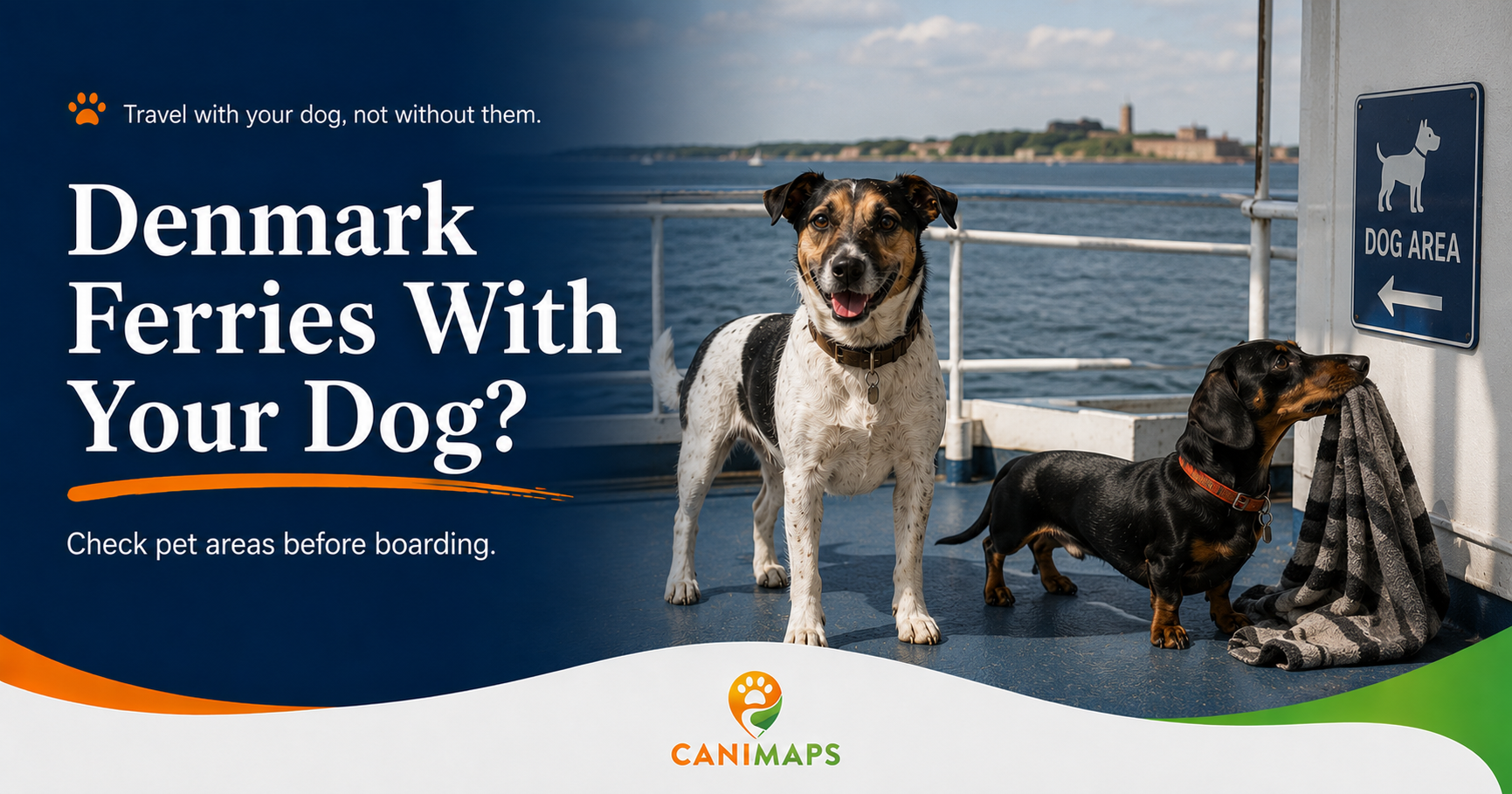
Denmark looks easy with a dog.
Short distances. Islands. Ferries. Sea air. A dog who believes every deck is a personal viewing platform.
Then the ferry rules arrive.
Dogs allowed? Usually yes.
Dogs allowed on seats? No.
Dogs allowed in restaurants? Often no.
Dog cabins available? Maybe, but limited.
Can the dog stay in the car? Sometimes, but you may not be able to visit during the crossing.
Suddenly the ferry is not just transport. It is a tiny floating rulebook with snacks.
Denmark can be a brilliant country to explore with a dog, especially if you are visiting islands or driving between regions. But ferry travel needs a little planning. The biggest mistake is assuming “pets allowed” means your dog can go anywhere on board.
They cannot.
And honestly, Noodle should not be trusted near a buffet anyway.
Quick Answer
Yes, many Danish ferries allow dogs, but the rules depend on the ferry operator, route and passenger area. Dogs may need to stay on leash, remain on the floor, use marked dog areas, avoid restaurants or buffets, and sometimes stay in the car. Pet cabins may be limited, and routes involving Sweden can add extra customs or travel-document steps. Always check the exact ferry company and route before booking.
The Big Mistake: Treating the Ferry Like a Normal Café With an Engine
A ferry is not just a boat. It is transport, food service, passenger seating, safety rules and hygiene rules all in one moving box.
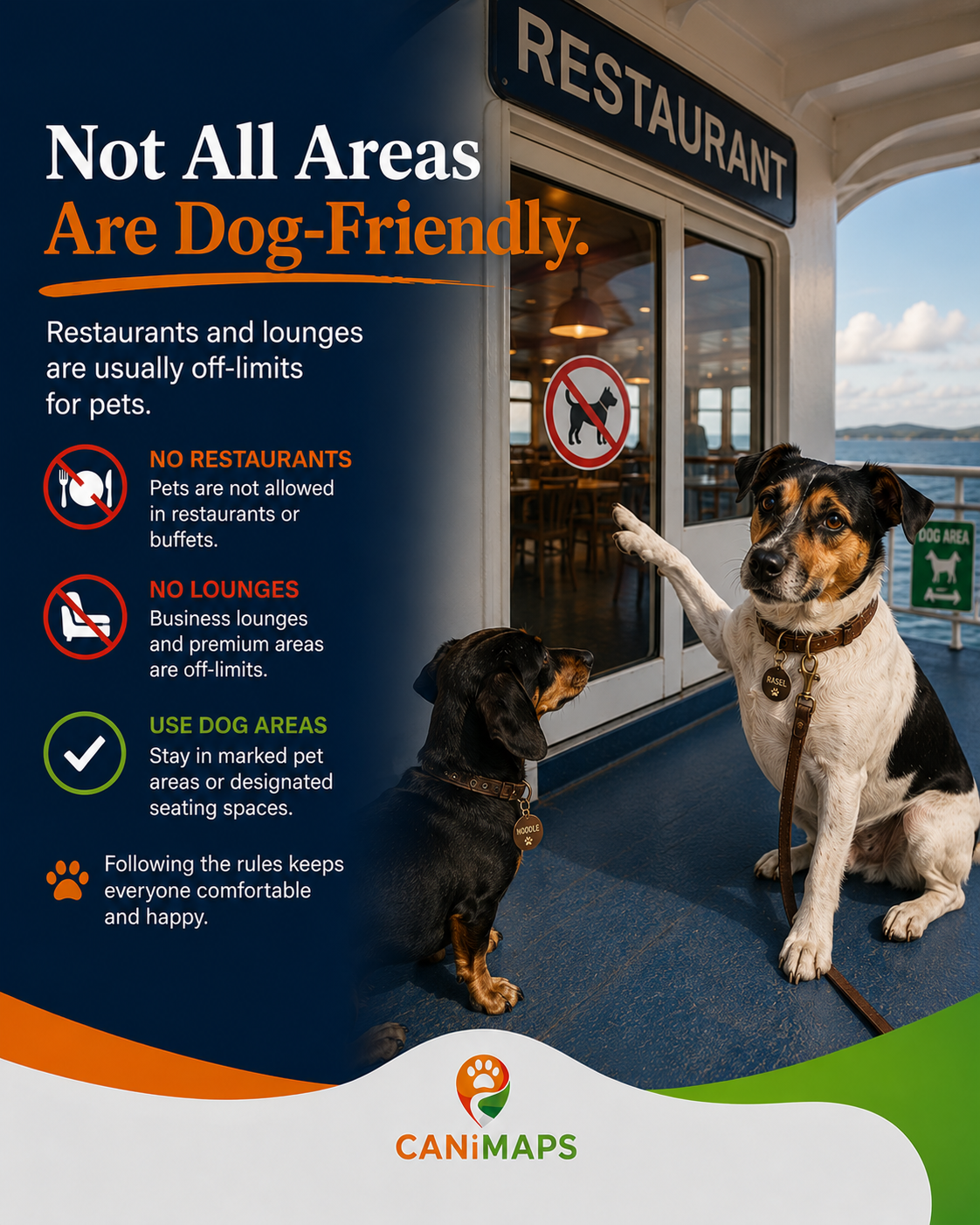
That means your dog may be welcome, but only in certain ways.
MOLSLINJEN says dogs must be kept on a leash, cats must remain in a carrier, and pets must stay on the floor, not on seats or tables. It also says pets are not permitted in the Restaurant or Keepers Business Lounge for hygiene reasons. Dog-marked seating areas and a designated dog and picnic area are available on board.
This is the core lesson.
Your dog can travel.
Your dog cannot become furniture.
Your dog cannot join every food area.
Your dog may need to stay in marked spaces.
Rasel would respect this.
Noodle would sit on a chair and call it “maritime culture.”
Different Ferry Companies, Different Dog Details
One of the most important CANIMAPS rules is: check the operator, not only the country.
Denmark has multiple ferry routes and operators. The dog rules are not one single national sentence.
Scandlines, for example, says dogs and cats are welcome on board and allowed in all non-carpeted areas, but they must be on a leash or in a cage throughout the journey. Pets must also stay at least two metres away from buffets for hygiene reasons.
BORNHOLMSLINJEN says dogs and cats are welcome in marked dog areas in the passenger areas, must be on a leash or in suitable travel boxes, and are not allowed on onboard furniture.
These rules sound similar, but the details matter: marked dog areas, non-carpeted areas, restaurants, lounges, buffets, furniture, cabins and car-deck access can all vary.
Do not rely on “ferries allow dogs.”
Search your exact ferry company and route.
Can Your Dog Stay in the Car?
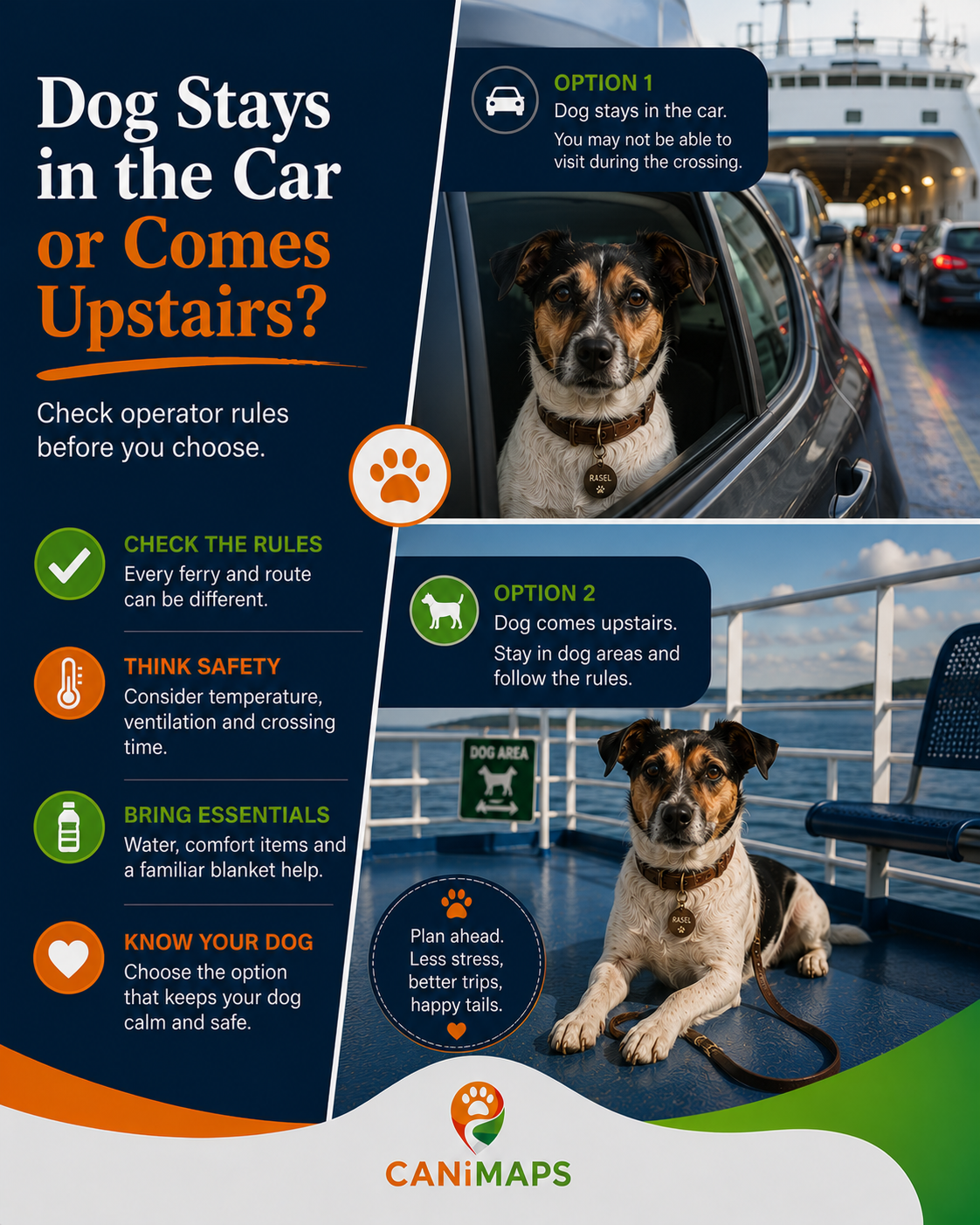
This is a major planning question.
Some owners prefer the dog to stay in the car during a ferry crossing, especially if the dog is calmer there. But that decision depends on the operator, crossing length, weather, car-deck rules and safety restrictions.
Scandlines says dogs may remain in the car during the crossing, but due to maritime safety precautions, owners cannot visit the dog while the ship is at sea.
That is not a tiny detail.
If your dog stays in the car, you need to think about temperature, ventilation, crossing time, dog stress, water, whether you can return before arrival, whether the dog panics alone and whether the operator allows it on your exact route.
For some dogs, the car is calm.
For others, the car becomes a dramatic solo theatre performance.
Know your dog before choosing.
Pet Cabins Are Not Unlimited
If you are booking a longer ferry or a route with cabins, do not assume pet cabins are easy to get.
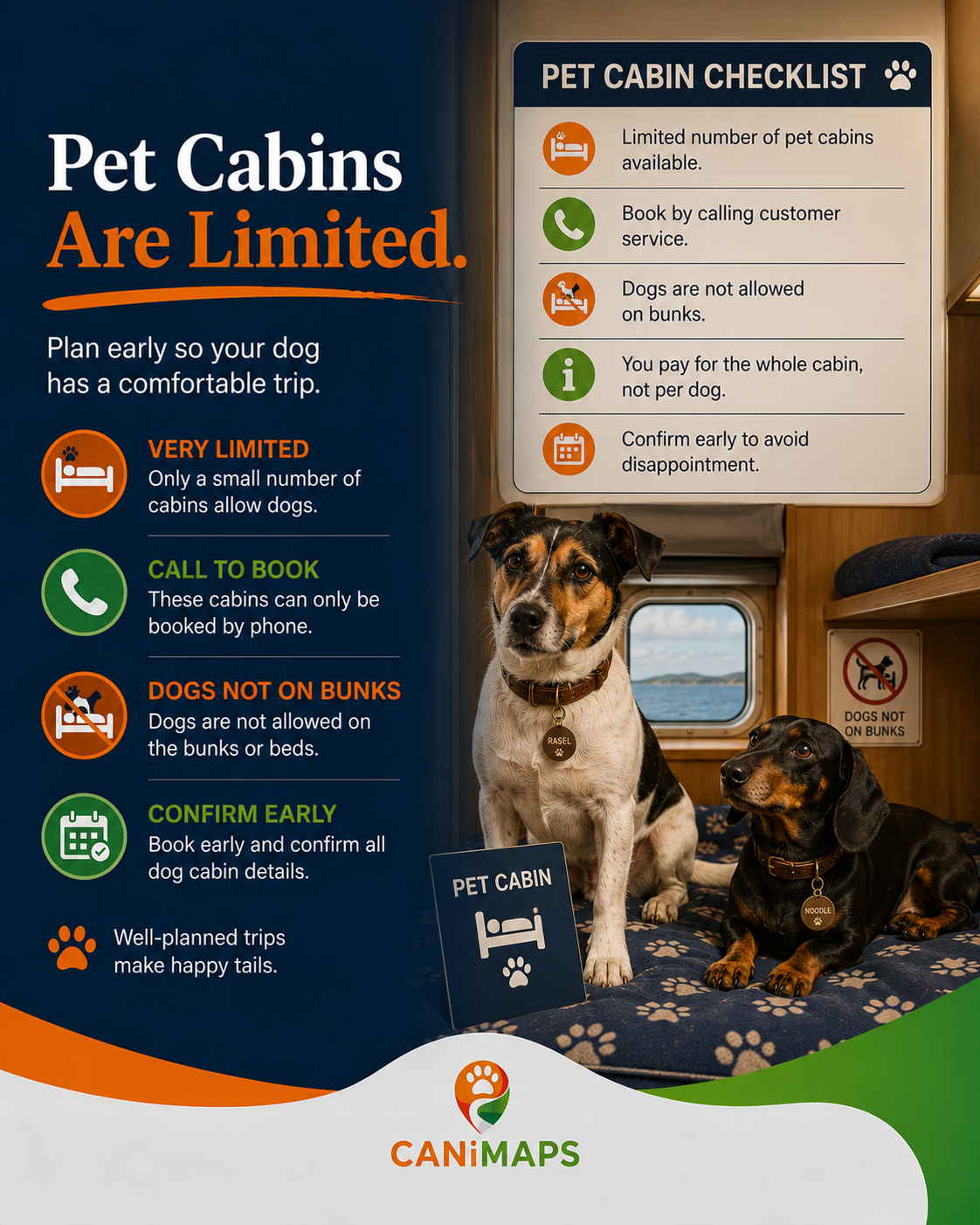
Bornholmslinjen’s helpdesk says there are only a very limited number of cabins on the Hammershus ferry where dogs are permitted. Travellers must pay for the whole cabin, dogs are not permitted on the bunks, and the cabins can only be booked by calling customer service.
That is exactly the type of rule people discover too late.
A normal online booking may not solve the dog cabin problem.
Before booking, ask whether dogs are allowed in cabins, how many pet cabins are available, whether you can book online or must call, whether you pay per dog or for the whole cabin, whether the dog can use the bunk, whether cleaning fees apply and whether there are size or number limits.
If the route matters to your whole trip, confirm the dog cabin before you build the itinerary around it.
Food Areas Are Usually the Danger Zone
This pattern repeats across ferries, hotels and cafés: dogs may be welcome, but not near food.
MOLSLINJEN restricts pets from the Restaurant and Keepers Business Lounge for hygiene reasons. Scandlines says pets must remain at least two metres away from buffets.
So if your plan is:
“We will sit inside, eat, relax, and the dog will nap under the table,”
check first.
On some ferries, that may work only in specific areas. On others, you may need to stay in dog-marked areas, non-carpeted areas or outside deck spaces.
Noodle sees a buffet.
Rasel sees a hygiene regulation incoming.
The Dog Toilet Issue Is Real
This is not glamorous, but it matters.
Scandlines says its ferries do not have a toilet area for dogs.
That means you should handle your dog’s needs before boarding.
Before the crossing, walk your dog, offer water, avoid overfeeding, pack poop bags, check the crossing length, check the waiting time before boarding and see whether there is a dog area at the port.
For short crossings, this may be simple. For longer routes, it becomes part of your route planning.
Your dog does not care that the ferry timetable is efficient.
Your dog cares that biology continues at sea.
Bornholm via Sweden Can Add Paperwork Steps
Some Denmark island trips have extra route complexity.
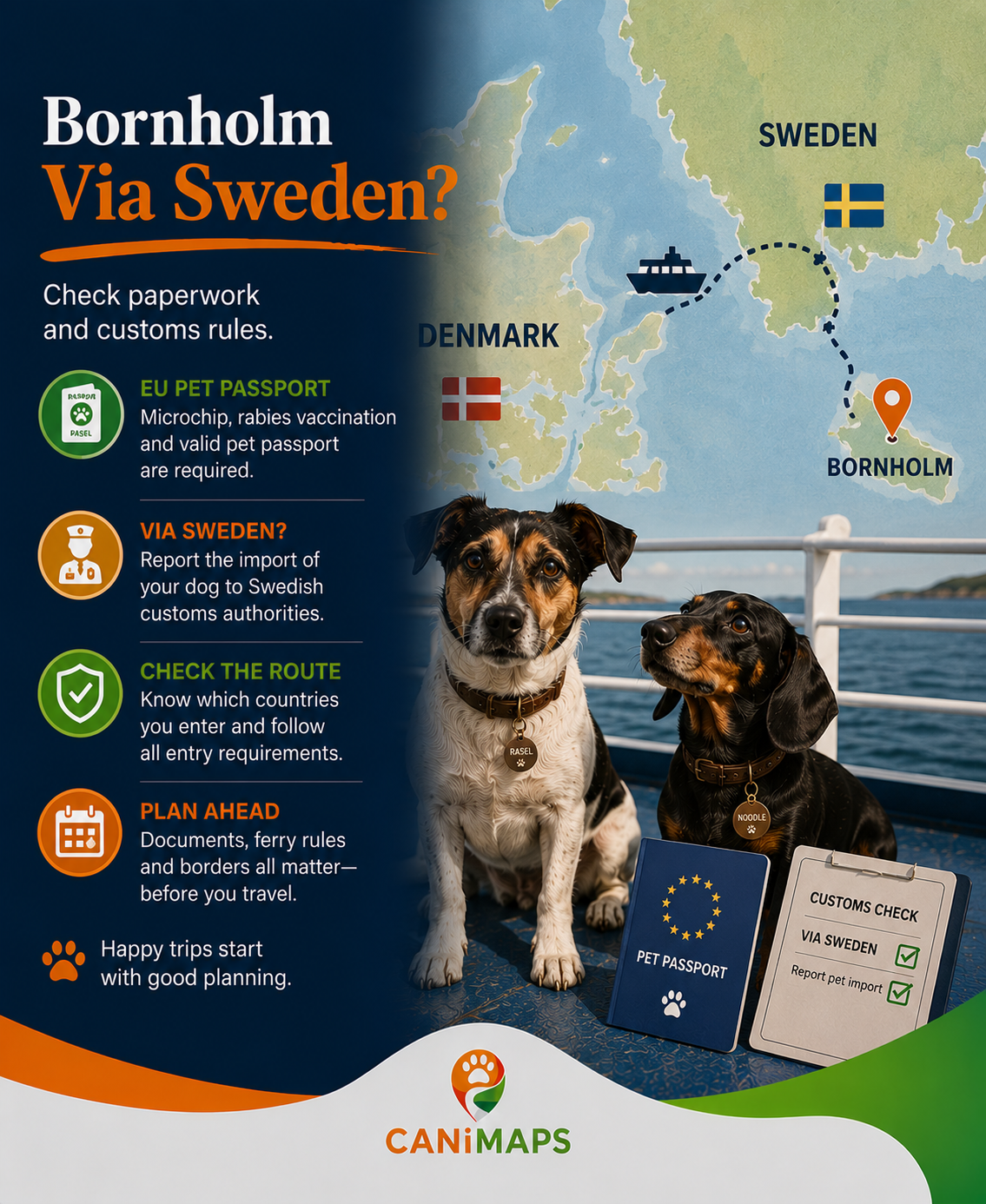
BORNHOLMSLINJEN reminds travellers with dogs or cats travelling via Sweden to report the importation of pets to Swedish customs authorities.
This is a classic travel-planning trap.
You might think:
“I am going to a Danish island.”
But your route may pass through Sweden, and that can add border or reporting requirements.
Before travelling to Bornholm or any route involving another country, check which countries you enter, whether you cross Sweden, customs reporting requirements, EU pet passport, rabies vaccination, microchip and ferry company rules.
The ferry is only one layer. Border rules are another.
Travel loves layers. Especially inconvenient ones.
Do Not Forget EU Pet Travel Documents
EU pet travel rules are separate from ferry-company rules.
EU guidance says dogs, cats and ferrets travelling to another EU country generally need a microchip or valid older tattoo, rabies vaccination, and a valid European pet passport when travelling between EU countries.
The Danish Veterinary, Food, Agriculture and Fisheries Agency also provides an official guide for people bringing dogs to Denmark for vacation or relocation. It explains that non-commercial movement means the dog moves because of the owner’s movement, accompanies the owner or travels up to five days before or after the owner, is not intended for sale, and ownership is not transferred.
This means your checklist should include both:
Dog travel documents.
Ferry operator rules.
A valid pet passport does not get your dog into the ferry restaurant.
A ferry ticket does not replace rabies vaccination.
Annoying? Yes.
Useful to know before the port? Very.
What to Pack for a Ferry With Your Dog
For a Denmark ferry trip, pack a short leash, travel carrier if needed, water bowl, water, poop bags, towel, pet passport, vaccination proof, muzzle if the operator or route may require it, cooling mat in warm weather, familiar blanket, treats, booking confirmation and cabin confirmation if relevant.
Also bring realistic expectations.
A ferry can be exciting, noisy, crowded and full of smells. Some dogs love it. Some dogs think the floor is moving because the world has betrayed them.
The CANIMAPS Ferry Checklist
Before boarding a Danish ferry with your dog, check:
Exact operator.
Exact route.
Passenger-area rules.
Restaurant and lounge restrictions.
Car-deck access.
Pet cabin availability.
Dog toilet options.
Passport and rabies documents.
Any extra country reporting if travelling via Sweden.
That is the practical core.
Do not assume “pets welcome” means “everything is easy.” It means your dog can come if you follow the rules.
Denmark ferries can be a great part of a dog-friendly trip. Just make sure your dog is not surprised by the floating rulebook.
Save this before your next dog-friendly trip, and follow CANIMAPS for more real-world dog travel tips.
FAQ
Are dogs allowed on ferries in Denmark?
Many Danish ferries allow dogs, but rules vary by operator and route. Dogs may need to stay on leash, remain in marked areas or avoid restaurants and lounges.
Can dogs sit on seats on Danish ferries?
Usually no. Some ferry operators allow dogs on board but require pets to stay on the floor and not on seats, tables or onboard furniture.
Are dogs allowed in ferry restaurants in Denmark?
Often no. Many ferry operators restrict pets from restaurants, lounges or buffet areas for hygiene reasons.
Can my dog stay in the car on a Danish ferry?
Sometimes yes, depending on the operator and route. However, some ferry companies may not allow owners to visit the car deck during the crossing.
Do Danish ferries have dog cabins?
Some longer routes may offer pet-friendly cabins, but availability can be very limited and booking may require contacting customer service.
Do ferries have dog toilet areas?
Not always. Some ferries do not have toilet areas for dogs, so owners should walk dogs before boarding and plan for the crossing length.
Does travelling to Bornholm with a dog require extra checks?
It can. Some routes to Bornholm may involve Sweden, which can add customs reporting or pet travel requirements.
What should I check before taking my dog on a Danish ferry?
Check the exact operator, route, passenger-area rules, restaurant restrictions, car-deck access, pet cabin availability, dog toilet options, travel documents and any extra country reporting requirements.

Europe Dog Travel Checklist and Top Dog Longevity Supplements
Get the Europe Dog Travel Checklist plus the free Top Dog Longevity Supplements e-book — travel smarter and support your dog’s long-term health.