
Can Dogs Ride Cable Cars in the Alps? The Gondola Rule Most People Forget
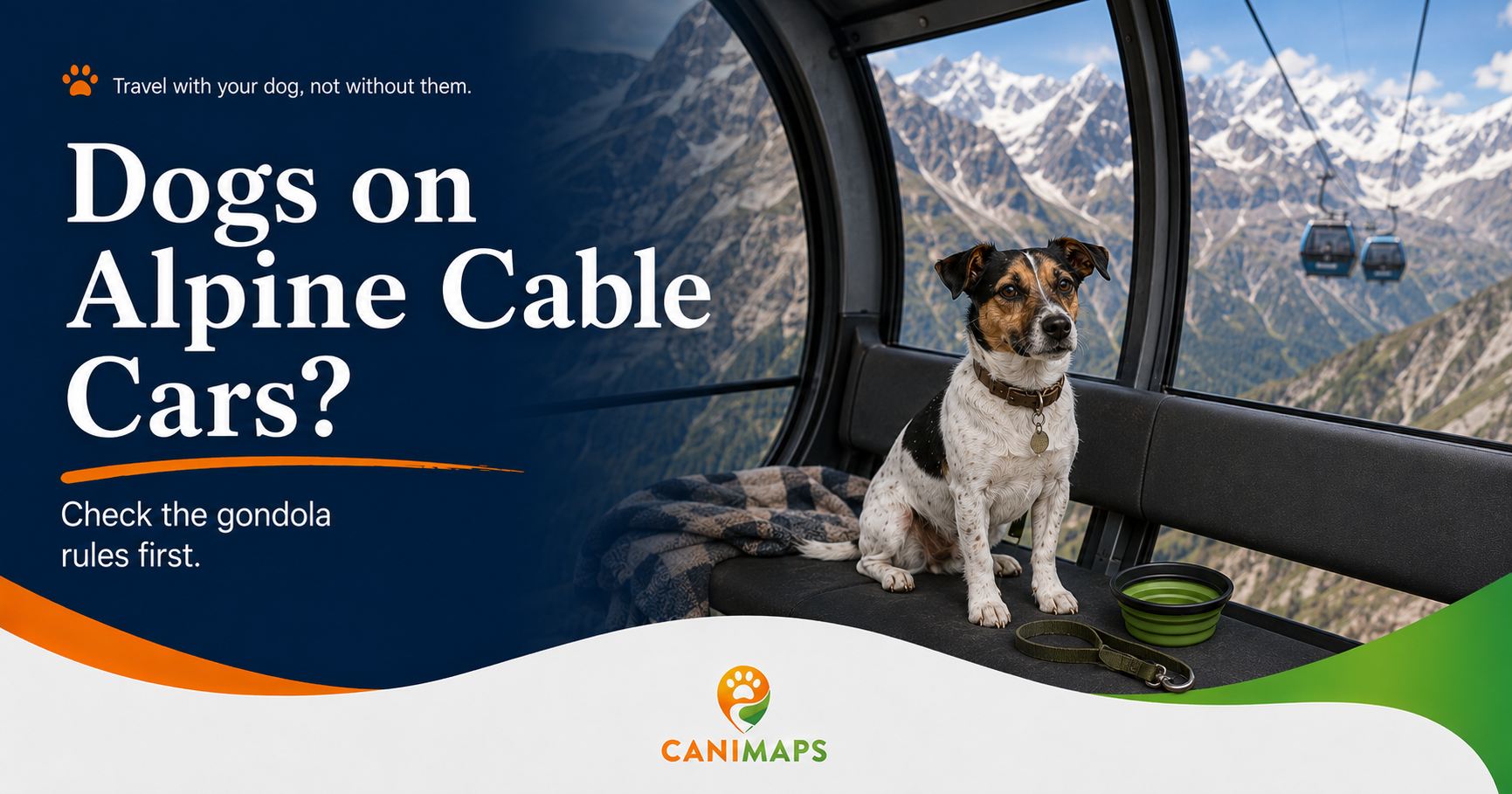
Planning the Alps with a dog feels extremely cinematic.
Fresh mountain air. Giant views. Tiny alpine villages. Your dog standing heroically beside a glacier like they personally invented nature.
Then the gondola doors open.
The cabin swings slightly.
The floor is metal.
Twelve hikers enter at once.
Someone has ski poles.
Someone has cheese.
Your dog suddenly questions every life decision.
This is the alpine travel detail many dog owners forget:
The hike may be dog-friendly, but the transport to the hike may not feel dog-friendly at all.
Cable cars, gondolas, funiculars and mountain railways across the Alps often have separate rules, safety expectations and operator policies for dogs.
And yes, this can absolutely become the moment your confident trail dog turns into a trembling potato.
Quick Answer
Yes, many Alpine cable cars, gondolas and mountain railways allow dogs, but the rules vary by operator, country, route and dog size. Some dogs may need a ticket, leash or muzzle, and some cabins may be stressful because of crowding, movement, metal floors, heat and enclosed spaces. Before booking a mountain day with your dog, check the exact lift or railway rules, ticket requirements, muzzle policy, cabin crowding and whether your dog can calmly handle the ride.
The Big Mistake: Planning the Hike but Not the Gondola
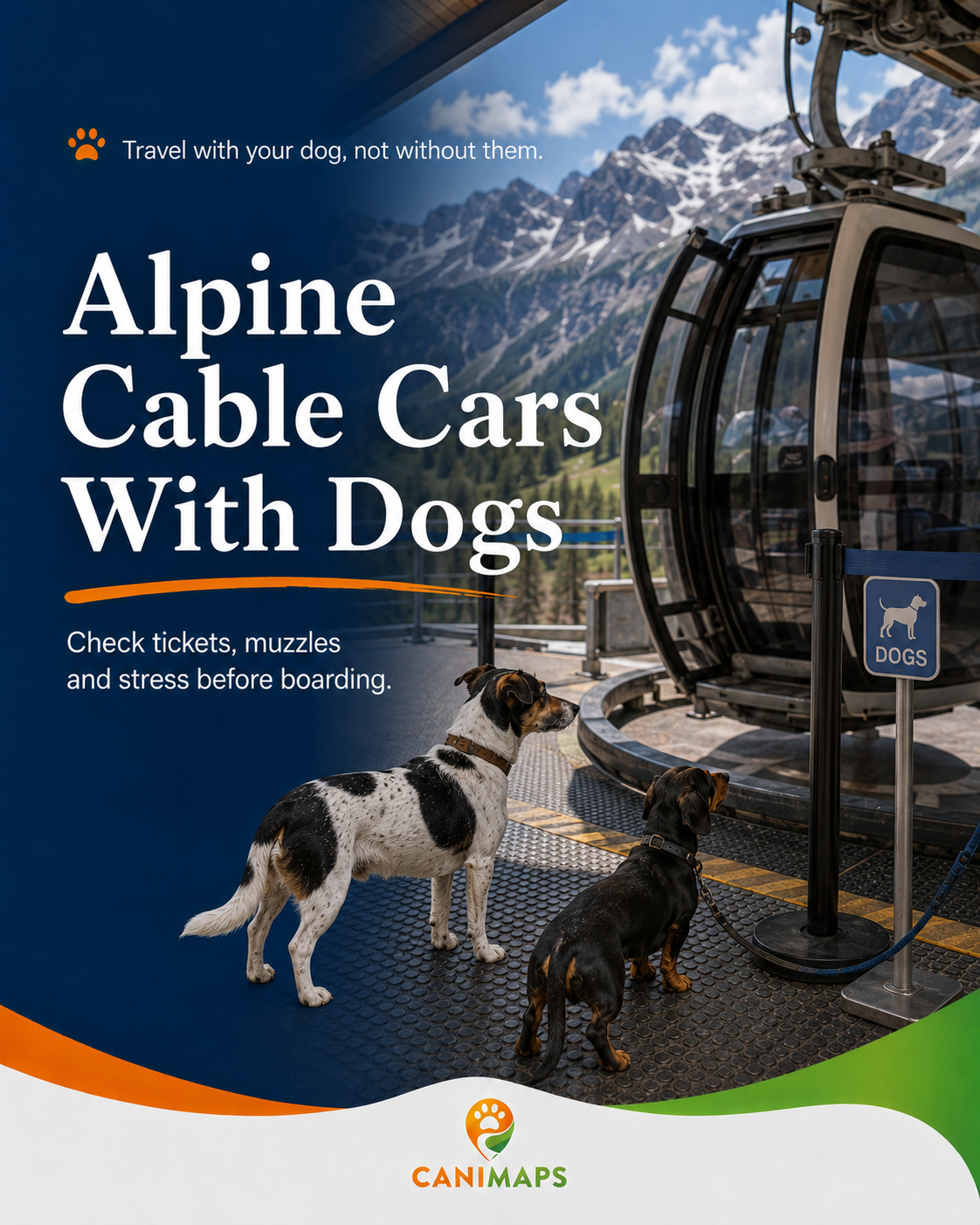
Most people research trails, lakes, mountain cafés, viewpoints and parking.
Very few people research cabin crowding, dog ticket rules, muzzle requirements, moving platforms, enclosed transport stress, steep loading ramps, altitude heat or return-trip timing.
That is the real alpine dog-travel trap.
Because your dog may love mountains and still hate gondolas with the emotional intensity of a Victorian ghost.
Not All Mountain Transport Works the Same Way
This is important.
The Alps do not have one universal dog policy.
A gondola may allow dogs freely. A mountain railway may require tickets. A cable car may require leashes. A crowded cabin may strongly encourage muzzles. A panoramic train may have different rules from the lift connected to it.
Swiss Federal Railways, for example, says dogs under 30 cm at shoulder height may travel free in carriers, while larger dogs require a valid dog ticket or dog travelcard.
That rule alone surprises many tourists.
Your dog may technically ride.
Your dog may not technically ride for free.
Noodle considers this discrimination against short kings.
Swiss Mountain Routes: Usually Possible, Never Identical
Switzerland is generally excellent for dog travel, but “excellent” does not mean “identical everywhere.”
Jungfrau railway guidance says dogs travel free on many routes but must remain under owner supervision and may require leash control in transport areas.
Zermatt Bergbahnen also says dogs are transported free of charge while remaining under owner supervision.
Notice the pattern:
Supervision matters.
That usually means controlled leash handling, no blocking exits, calm behaviour in cabins, no jumping onto benches and no barking panic concerts.
A gondola is public transport, not your dog’s private observation deck.
Even if Noodle disagrees strongly.
The Muzzle Issue Catches People by Surprise
This is the moment many tourists discover “mountain freedom” still contains rules.
Some Austrian alpine lift operators specify leash rules and reserve the right to require muzzles in crowded cabins or station areas.
This does not necessarily mean:
“Your dog must wear a muzzle all day.”
It may mean:
“The operator can require one during transport.”
And honestly? In a crowded moving cabin full of strangers, backpacks and ski boots, this is not the worst idea on Earth.
The practical problem is that many dog owners do not bring one at all.
Then suddenly the gondola operator becomes the final boss of the hiking trip.
Small Dogs and Large Dogs Experience Gondolas Differently
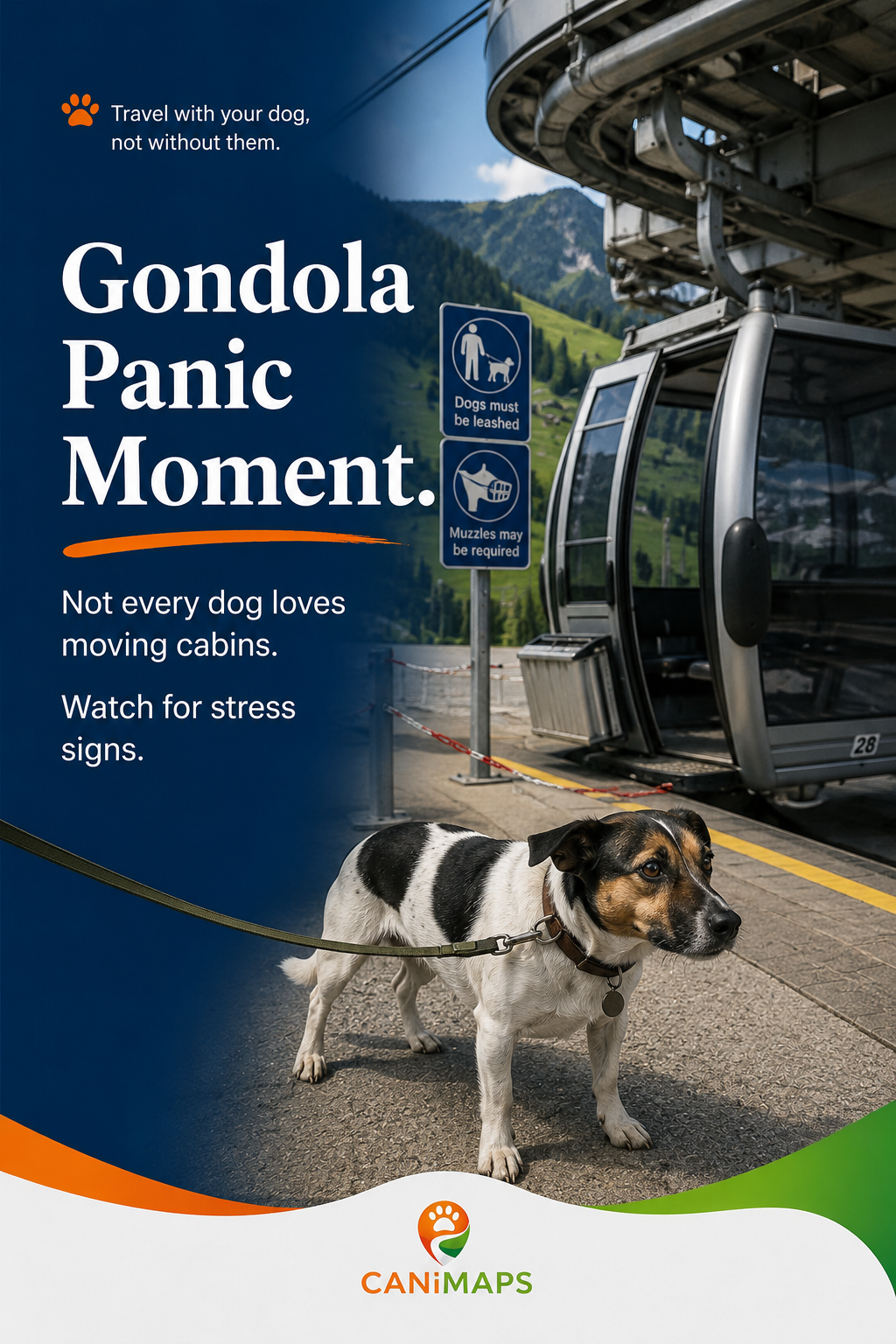
This matters more than people expect.
A calm Labrador may stand quietly and tolerate movement.
A tiny dog may panic because cabins swing, strangers lean over them, platforms move suddenly, backpacks appear at face level and children squeal unexpectedly.
Meanwhile a giant fluffy dog may simply occupy 78% of the cabin’s available democracy.
There is no perfect size.
The key question is:
Can your dog stay calm in an enclosed moving space with strangers?
If the answer is “absolutely not,” the scenic viewpoint may not be worth the stress.
Heat, Altitude and Metal Floors Are Real Problems
People imagine Alpine cold constantly.
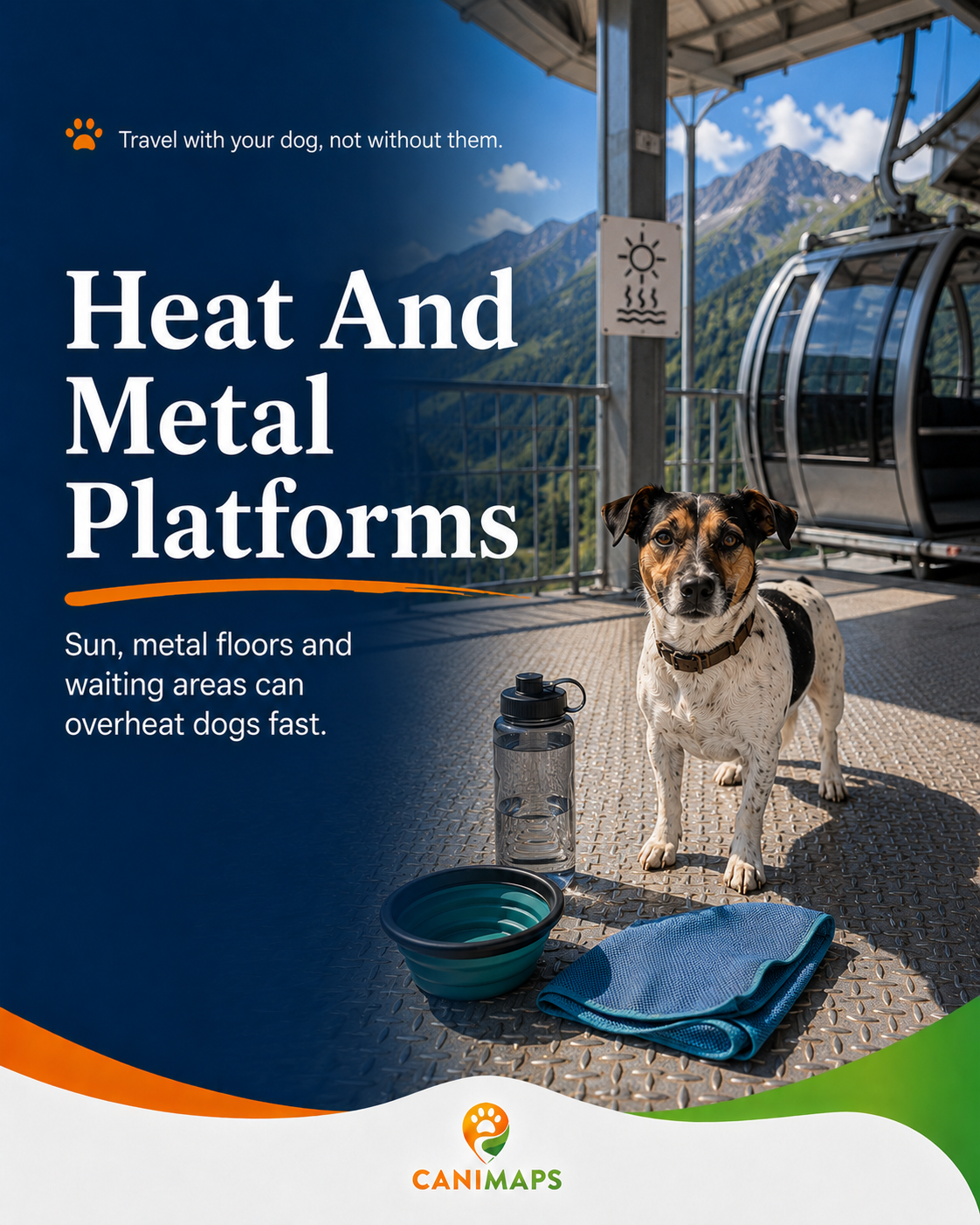
Summer reality can look very different: hot cabins, strong sun, reflective platforms, metal surfaces, crowded queues and limited shade.
Your dog can overheat surprisingly fast at mountain stations, especially while waiting.
Bring water, a collapsible bowl, a cooling towel, paw awareness, shade breaks and realistic timing.
Early morning rides are usually calmer and cooler.
Midday alpine tourism can feel like an international backpack convention inside a toaster.
The Return Journey Is Where Dogs Often Fail
This is a very real pattern.
The uphill ride is exciting.
The downhill ride happens after hours of hiking, heat exposure, crowds, overstimulation and tired paws.
Suddenly your dog enters the return gondola emotionally bankrupt.
This is why hydration matters, rest breaks matter, route length matters and realistic pacing matters.
Rasel plans energy carefully.
Noodle spends all available energy immediately and negotiates consequences later.
Ask These Questions Before Booking
Before planning an Alpine gondola day with your dog, check the practical details first.
Are dogs allowed at all? Is a dog ticket required? Are muzzles required or recommended? Can large dogs ride safely? Are cabins crowded during peak hours? Are dogs allowed on all connected transport? Are there metal or steep loading platforms? Can your dog handle enclosed moving spaces? Is water available at the top station? Can the return route be done without transport if needed?
This last question matters enormously.
Because “my dog refuses the gondola downhill” is not the adventure story you wanted.
EU Travel Paperwork Is Separate From Mountain Transport Rules
Cross-border dog travel rules still apply before the gondola question even begins.
EU guidance explains that a European pet passport can be issued by an authorised vet and remains valid while vaccination information remains current.
That paperwork allows legal travel.
It does not guarantee your dog will emotionally survive a swinging glass cabin full of hikers named Lukas.
Best Dogs for Alpine Transport
Again, this is personality, not breed.
The best cable-car dogs are usually calm around strangers, stable on moving surfaces, comfortable in enclosed spaces, not reactive, physically fit, okay with noise and patient in queues.
Dogs who may struggle include noise-sensitive dogs, reactive dogs, heat-sensitive dogs, dogs with joint issues, dogs afraid of movement and dogs who panic in elevators.
A gondola is basically a flying elevator with tourists.
That sentence alone explains many things.
The CANIMAPS Alpine Gondola Rule
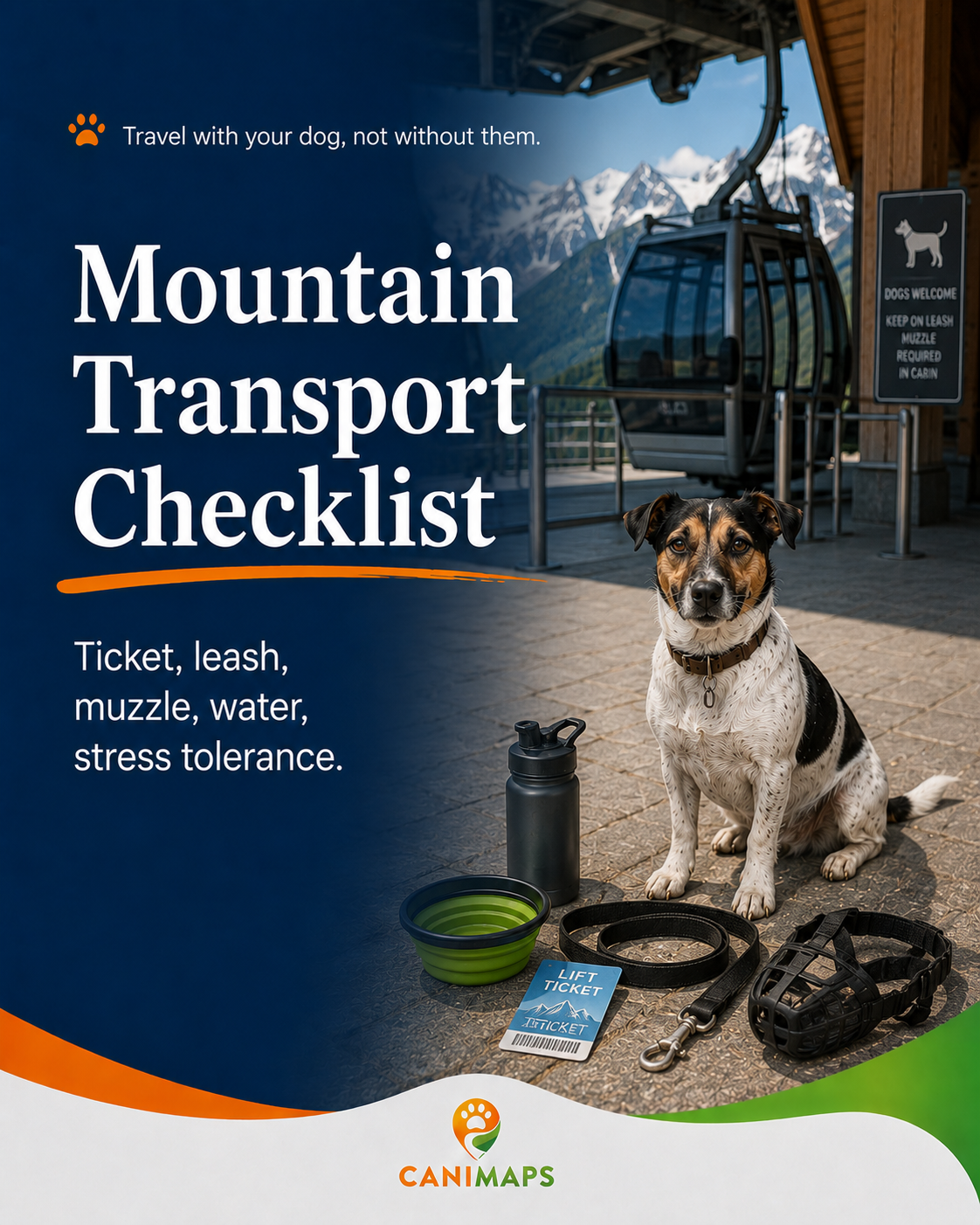
Before taking your dog into Alpine mountain transport, check five things:
Ticket rules.
Leash or muzzle rules.
Cabin crowding.
Heat and platform safety.
Your dog’s actual stress tolerance.
That is the practical core.
Because the best Alpine memory is beautiful mountain views, calm transport and a successful hike.
Not negotiating with a terrified dog inside a swinging glass cabin while twelve hikers pretend not to notice.
Save this before your next mountain trip with your dog, and follow CANIMAPS for real-world dog travel tips across Europe.
FAQ
Can dogs ride cable cars in the Alps?
Many Alpine cable cars, gondolas and mountain railways allow dogs, but rules vary by operator, route and country.
Do dogs need tickets on Alpine cable cars?
Sometimes yes. Some mountain railways and cable car operators require a dog ticket, while others allow dogs to travel free or have different rules for small dogs in carriers.
Do dogs need muzzles on Alpine gondolas?
Some operators may require or recommend muzzles, especially in crowded cabins or station areas. Always check the exact lift or railway rules before travelling.
Are gondolas stressful for dogs?
They can be. Some dogs struggle with swinging cabins, metal floors, moving platforms, crowds, enclosed spaces and noise.
Are small dogs easier on gondolas?
Not always. Small dogs may be easier to carry, but they can still become stressed by swinging cabins, strangers, backpacks and movement.
What should I bring for a dog on Alpine cable cars?
Bring a leash, muzzle if required, water, a collapsible bowl, cooling towel, paw protection awareness and a realistic backup plan.
Can dogs overheat at mountain stations?
Yes. Summer mountain stations can involve strong sun, hot cabins, reflective platforms, queues and limited shade, so dogs may overheat faster than expected.
What should I check before taking my dog on a gondola?
Check ticket rules, leash or muzzle rules, cabin crowding, heat and platform safety, connected transport rules and your dog’s real stress tolerance.

Europe Dog Travel Checklist and Top Dog Longevity Supplements
Get the Europe Dog Travel Checklist plus the free Top Dog Longevity Supplements e-book — travel smarter and support your dog’s long-term health.