
Scotland Castles With a Dog: What “Dog-Friendly” Might Actually Mean?
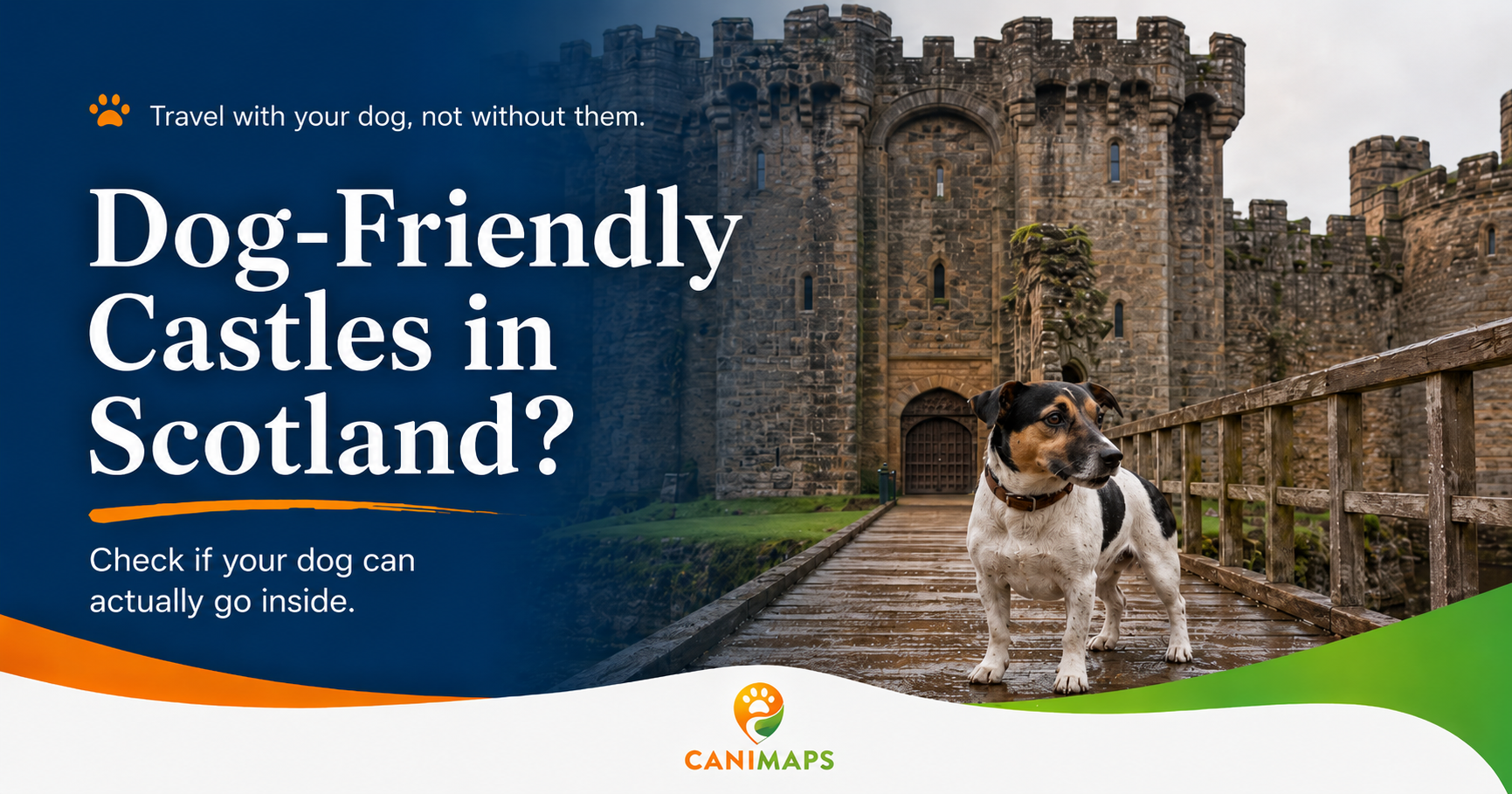
Scotland with a dog feels like a cinematic decision.
Castles. Fog. Stone walls. Winds dramatic enough to improve your personality. Your dog staring into the distance like they personally inherited the Highlands.
Then you arrive at the entrance.
“Dogs welcome in grounds only.”
Your dog did not drive three hours for “grounds only.”
This is one of the most common dog-travel misunderstandings in Scotland. A castle or historic site may appear dog-friendly online, but the actual rule may mean dogs are allowed outside only, allowed in gardens only, allowed on leads only, excluded from indoor exhibits, excluded from cafés, or excluded entirely except assistance dogs.
The important thing is not whether the attraction is “dog-friendly.” The important thing is what parts your dog can actually access.
Because “historic atmosphere” feels very different from the car park.
Quick Answer
Some Scottish castles and historic sites allow dogs, but access can vary a lot. “Dog-friendly” may mean grounds-only access, lead required, no indoor rooms, no exhibitions, no cafés or assistance dogs only. Before visiting, check the exact property rules for grounds access, indoor access, lead rules, café access and any livestock or wildlife restrictions nearby.
The Big Mistake: “Dog-Friendly Castle” Does Not Mean Indoor Access
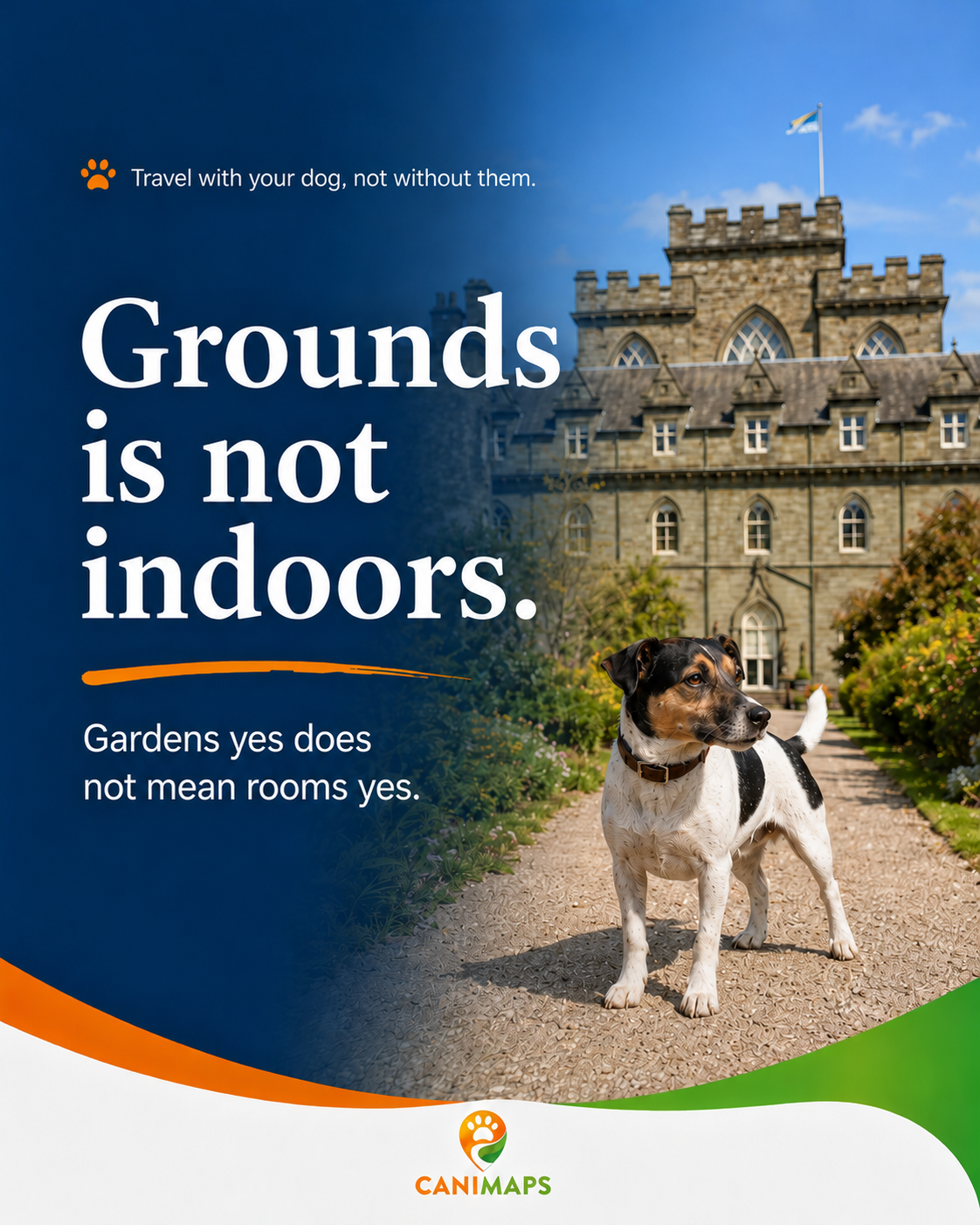
This is where many travel plans collapse politely.
A castle website might mention dogs. A blog might say the place is dog-friendly. A map listing may even show a dog icon.
But that does not necessarily mean your dog can enter furnished rooms, museums, cafés, ticketed exhibitions, towers or indoor visitor centres.
Historic Environment Scotland says dogs are welcome at many properties in its care, but not all properties allow dogs into roofed areas or indoor spaces. Assistance dogs are allowed everywhere.
This distinction matters more than people expect.
Especially after buying tickets while your terrier is vibrating with medieval enthusiasm.
Edinburgh Castle: Famous Example, Very Different Reality
Many visitors assume Edinburgh Castle must be dog-friendly because it is outdoors in parts.
But Edinburgh Castle states that only assistance dogs are permitted inside the castle grounds and buildings.
That means ordinary pet dogs cannot simply stroll through the castle complex.
This is exactly why checking the exact property matters.
One Scottish ruin may welcome dogs happily on leads.
Another major attraction may restrict entry almost entirely.
Scotland is not one rule. Historic sites are not one category.
And your dog does not care that the website wording sounded optimistic.
Noodle would still try to negotiate with the guards.
Rasel would quietly read the policy first like a responsible tax accountant in a raincoat.
Grounds-Only Access Is Extremely Common
This is the phrase dog owners need to watch carefully:
“Dogs allowed in grounds only.”
That usually means gardens yes, paths yes, outdoor ruins maybe, indoor rooms no, cafés maybe not and exhibitions no.
National Trust for Scotland says many properties welcome dogs in grounds and outdoor areas, but indoor access varies by property.
This is not anti-dog behaviour. Historic buildings can contain fragile interiors, narrow staircases, historic furniture, food areas, crowd-management issues and conservation restrictions.
The practical lesson is simple:
Never assume “castle” means the same rule everywhere.
Ruins Are Often Easier Than Furnished Castles
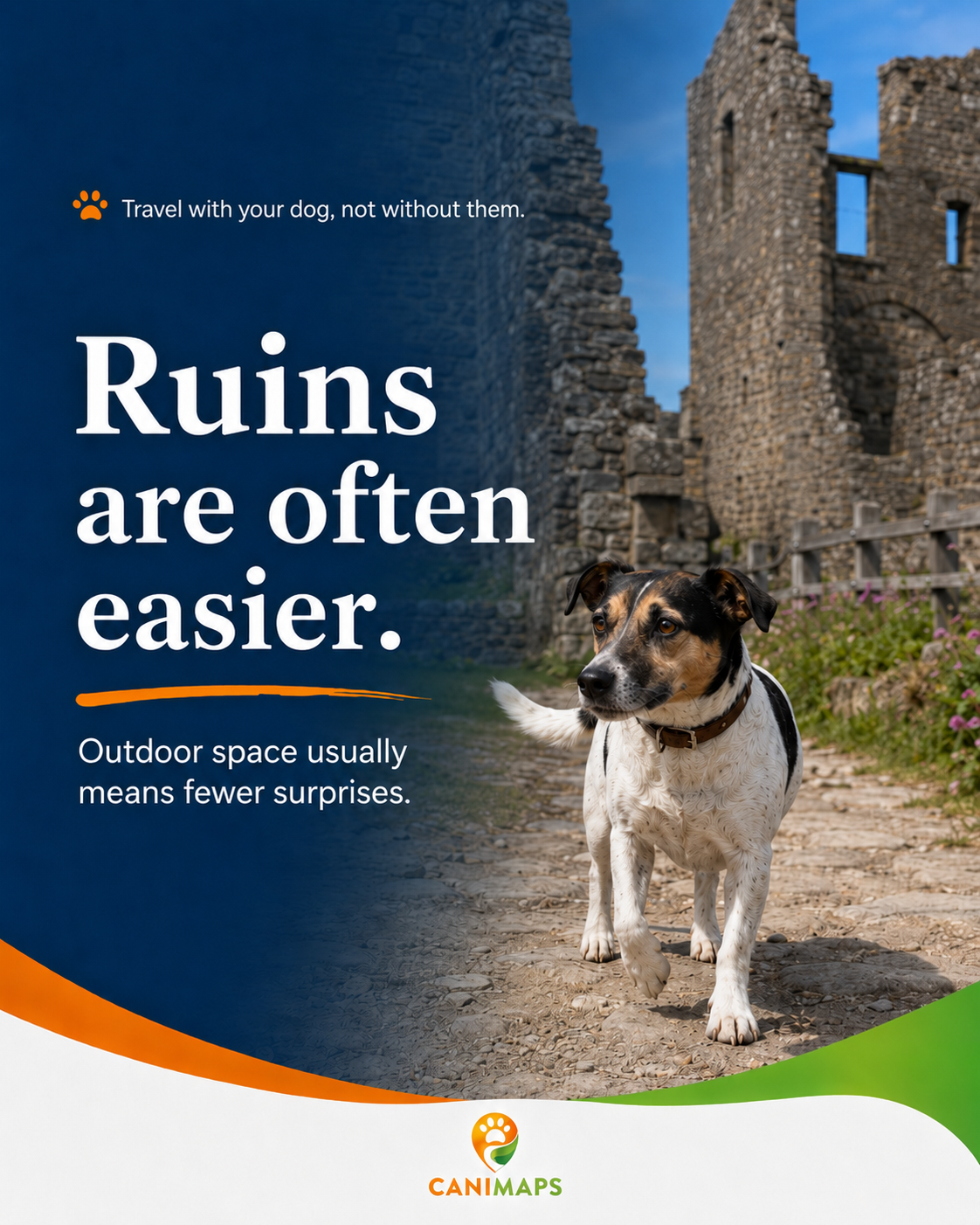
This is a useful Scotland travel pattern.
Outdoor ruins and open historic landscapes are often more dog-friendly than fully furnished castles or museum-style attractions.
For example, Urquhart Castle guidance says dogs are welcome if kept on a lead, although access rules can differ for indoor visitor facilities.
That tends to be easier for dog owners because there is more space, fewer fragile interiors, fewer narrow staircases, easier crowd movement and less conservation risk.
So if your dog enjoys sniffing dramatic stone walls while pretending to defend the Highlands, ruins may be your best category.
Noodle would defend the Highlands from sandwiches specifically.
Leads Are Not Optional Decoration
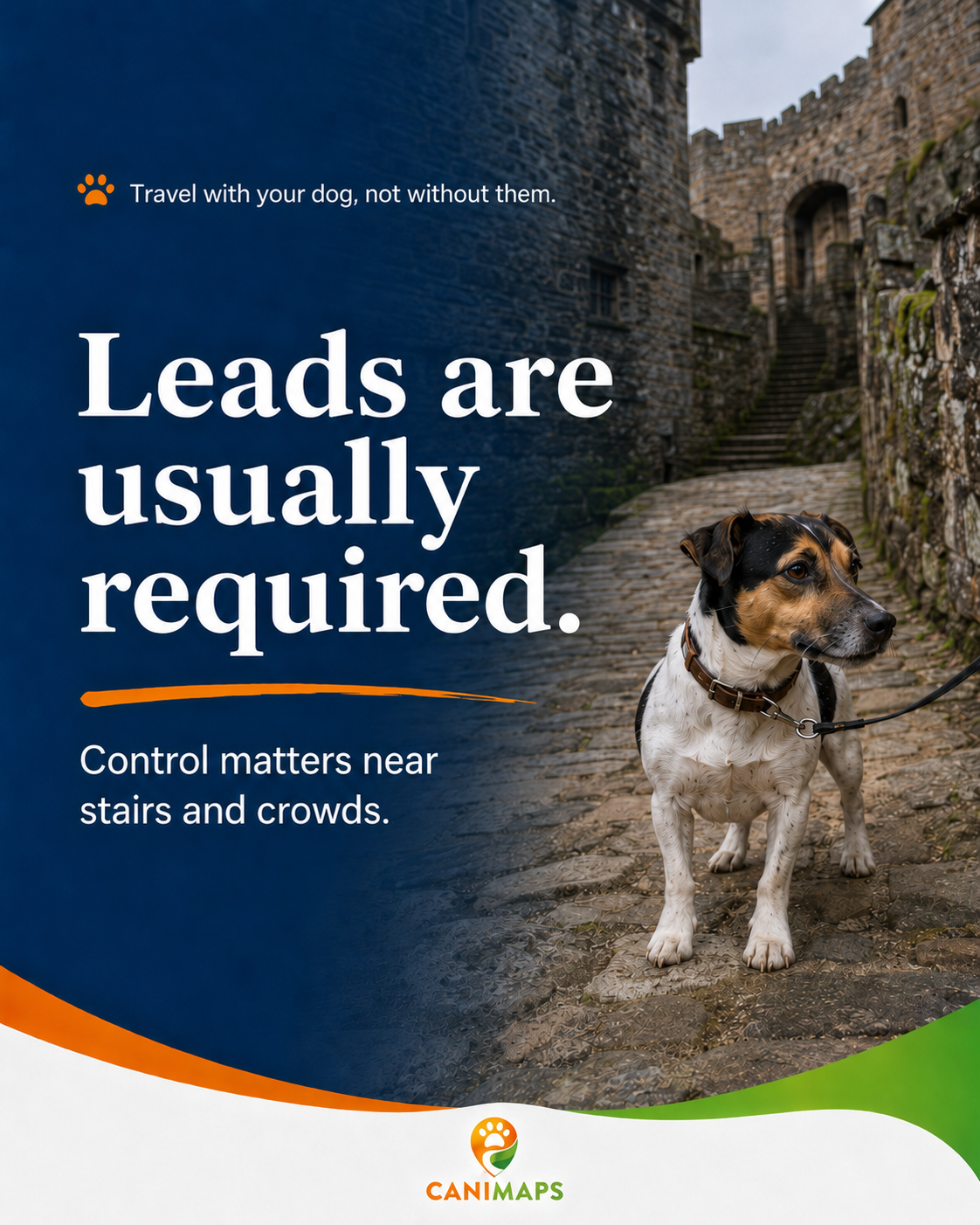
Scottish historic sites and outdoor heritage areas almost always expect dogs to be controlled.
Historic Environment Scotland visitor guidance says dogs should be kept on a lead and under control at all times.
NatureScot’s Scottish Outdoor Access Code also reminds dog owners to keep dogs under close control around livestock and wildlife.
This matters because many castle grounds are not isolated parks. They may include sheep nearby, nesting birds, steep drops, ruins, tourists carrying snacks with no tactical awareness and other dogs with very strong opinions.
A retractable leash plus medieval stairs is how travel stories become emergency stories.
Check Cafés Separately
Dog owners often forget this part.
A site may allow dogs outdoors but not inside the café. Another may allow dogs in one café area but not another. Another may allow dogs only on patios.
This becomes very important in Scottish weather, where “quick coffee stop” can become “horizontal rain survival strategy.”
Before visiting, check indoor café access, covered seating, water bowls, dog tie-up areas, queue rules and seasonal opening times.
Because your dog will absolutely choose rain as the moment to become emotionally attached to sitting outside.
Historic Sites Are Not Ideal for Every Dog
This is not about breed. It is about personality and stress level.
Historic attractions can involve crowds, narrow pathways, echoing rooms, stairs, uneven stone, children running unpredictably, other dogs, food smells and loud tour groups.
Some dogs thrive.
Some dogs look at one bagpipe and spiritually resign.
The best castle dogs are usually calm on lead, comfortable around strangers, patient in queues, not reactive, not obsessed with pigeons and okay with uneven surfaces.
If your dog hates crowds or confined paths, a coastal walk or woodland trail may create a much happier Scotland day.
UK Travel Paperwork Still Matters
If travelling into Great Britain with a dog, border paperwork rules still apply before the castle question even begins.
UK government guidance includes rules covering microchipping, approved pet travel documents, tapeworm treatment where required and entry requirements depending on country of origin.
That paperwork has nothing to do with castle access rules.
Your dog can be perfectly legal for UK entry and still banned from the indoor medieval kitchen.
Travel contains layers.
Ask These Questions Before Visiting
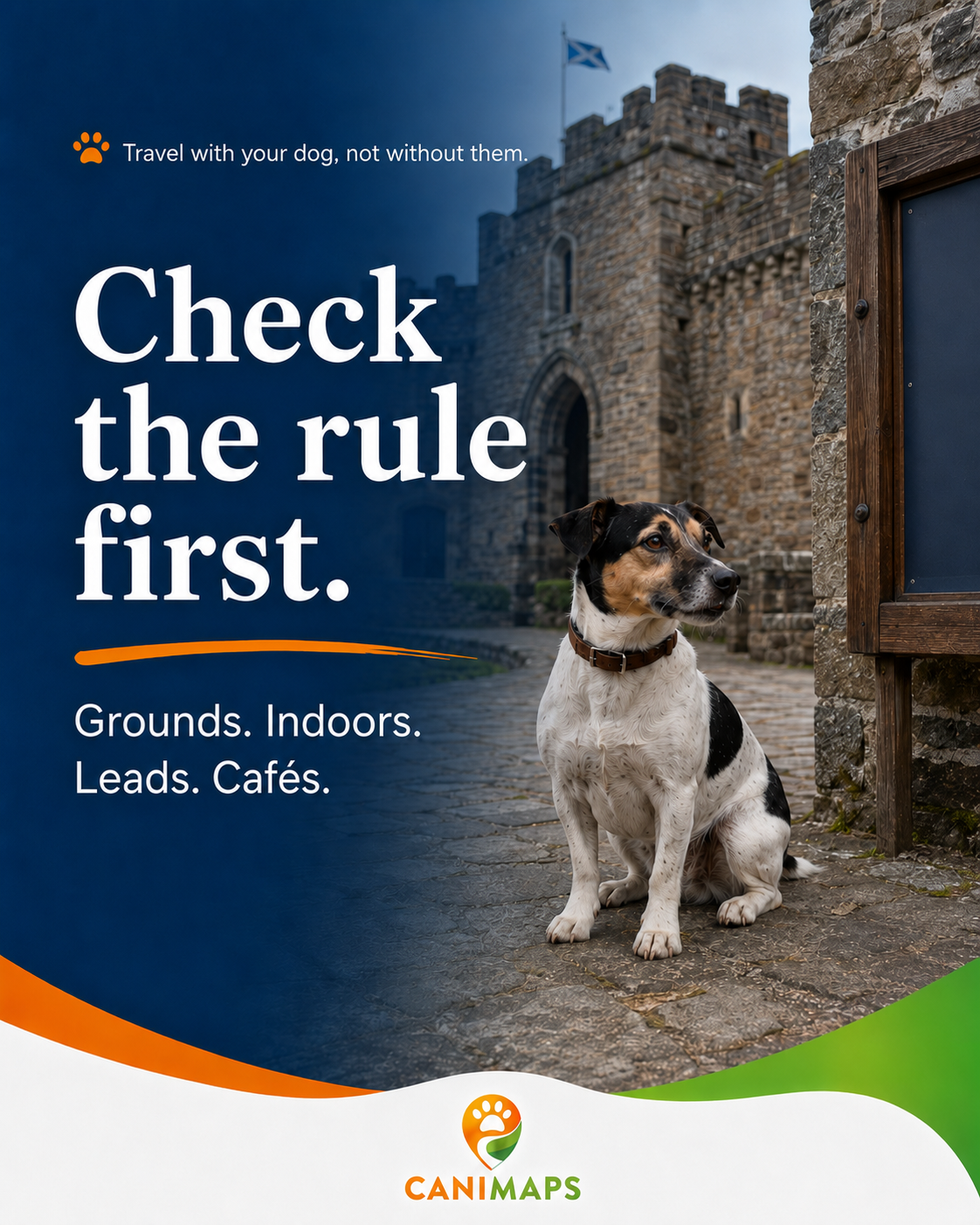
Before driving to a Scottish historic site with your dog, check the practical details first.
Can dogs enter the site at all? Are dogs allowed indoors? Are dogs allowed only in grounds? Are leads mandatory? Can dogs enter cafés? Are dogs allowed in visitor centres? Are there livestock or wildlife restrictions nearby? Are stairs or steep paths involved? Is there shade or water nearby? Does the site become crowded during peak hours?
This takes five minutes online and prevents one hour of confused parking-lot disappointment.
The CANIMAPS Scotland Castle Rule
Before visiting any castle or historic site with your dog, check four things:
Grounds access.
Indoor access.
Lead rules.
Café rules.
That is the practical core.
“Dog-friendly” is not a complete answer. In Scotland’s historic attractions, the details matter more than the label.
Because the ideal castle trip is beautiful scenery, calm dog, dramatic photos and a successful coffee stop.
Not Rasel reading the rules while Noodle attempts to invade a 14th-century staircase.
Save this before your Scotland trip, and follow CANIMAPS for real-world dog travel tips across Europe.
FAQ
Are dogs allowed in Scottish castles?
Some Scottish castles and historic sites allow dogs, but access depends on the exact property. Dogs may be allowed in grounds only, outdoor areas only or specific dog-friendly areas.
Can dogs go inside castles in Scotland?
Often not. Many castles and historic sites restrict ordinary pet dogs from indoor rooms, exhibitions, towers, cafés or visitor centres.
What does “dogs welcome in grounds only” mean?
It usually means dogs may access outdoor areas such as gardens, paths or ruins, but not indoor rooms, exhibitions or cafés.
Are dogs allowed at Edinburgh Castle?
Ordinary pet dogs are not generally allowed inside Edinburgh Castle. The official policy allows assistance dogs.
Do dogs need to be on leads at Scottish castles?
Usually yes. Many Scottish historic sites require dogs to stay on lead and under control, especially around visitors, livestock, wildlife and fragile areas.
Are ruins better than furnished castles for dogs?
Often yes. Outdoor ruins and open historic landscapes are usually easier with dogs than furnished castles or indoor museum-style attractions.
Are assistance dogs treated differently at Scottish historic sites?
Yes. Assistance dogs usually have broader access rights than ordinary pet dogs, but travellers should still check documentation and site-specific guidance.
What should I check before visiting a Scottish castle with my dog?
Check grounds access, indoor access, lead rules, café access, visitor centre rules, livestock or wildlife restrictions, stairs, crowds, shade and water availability.

Europe Dog Travel Checklist and Top Dog Longevity Supplements
Get the Europe Dog Travel Checklist plus the free Top Dog Longevity Supplements e-book — travel smarter and support your dog’s long-term health.