
Why Dogs Eat Grass: Normal Habit or Vet Warning?
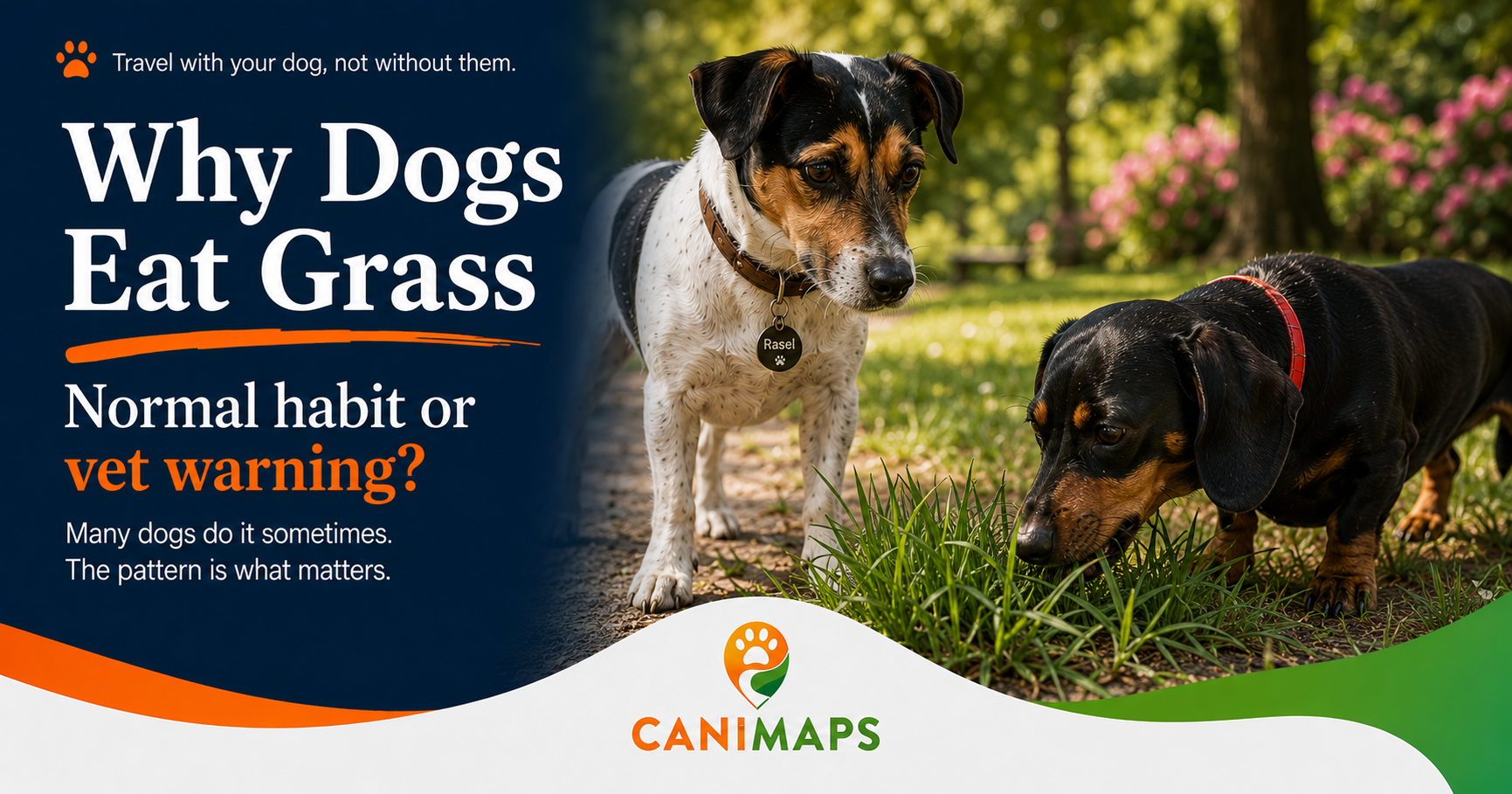
Your dog is on a walk. The sun is out. The birds are singing. Life feels peaceful.
Then your dog lowers their head and starts eating grass like a tiny cow with unresolved business.
You stare.
They chew.
You wonder if this is normal dog behaviour or the opening scene of a vet bill.
Good news first: many dogs eat grass sometimes. It does not automatically mean something is wrong.
But grass eating is also not something to ignore blindly, especially if it is obsessive, paired with vomiting, or happening alongside other health signs.
So let’s fix the big myth.
Quick Answer
Many dogs eat grass occasionally, and in an otherwise healthy dog it is often not an emergency.
But you should pay attention if your dog eats grass excessively, vomits repeatedly, seems unwell, refuses food, has diarrhoea or constipation, may have eaten treated grass, or shows signs of pain or bloating.
This is not veterinary advice. If your dog has repeated vomiting, blood in vomit, a bloated stomach, retching without producing vomit, weakness, collapse, pain, toxin exposure or sudden major behaviour changes, contact a veterinarian urgently.
Best For
This guide is best for owners who see occasional grass eating on walks, dogs who eat grass and otherwise act normal, and owners who need to know when “normal dog weirdness” becomes a vet question.
Because dogs bring the mystery.
You bring the pattern recognition.
Honestly, a very fair division of labour.
Myth 1: Dogs Only Eat Grass Because They Are Sick
This is the classic owner theory.
Dog eats grass.
Dog must feel sick.
Human starts Googling.
Dog continues salad service.
The truth is more mixed.
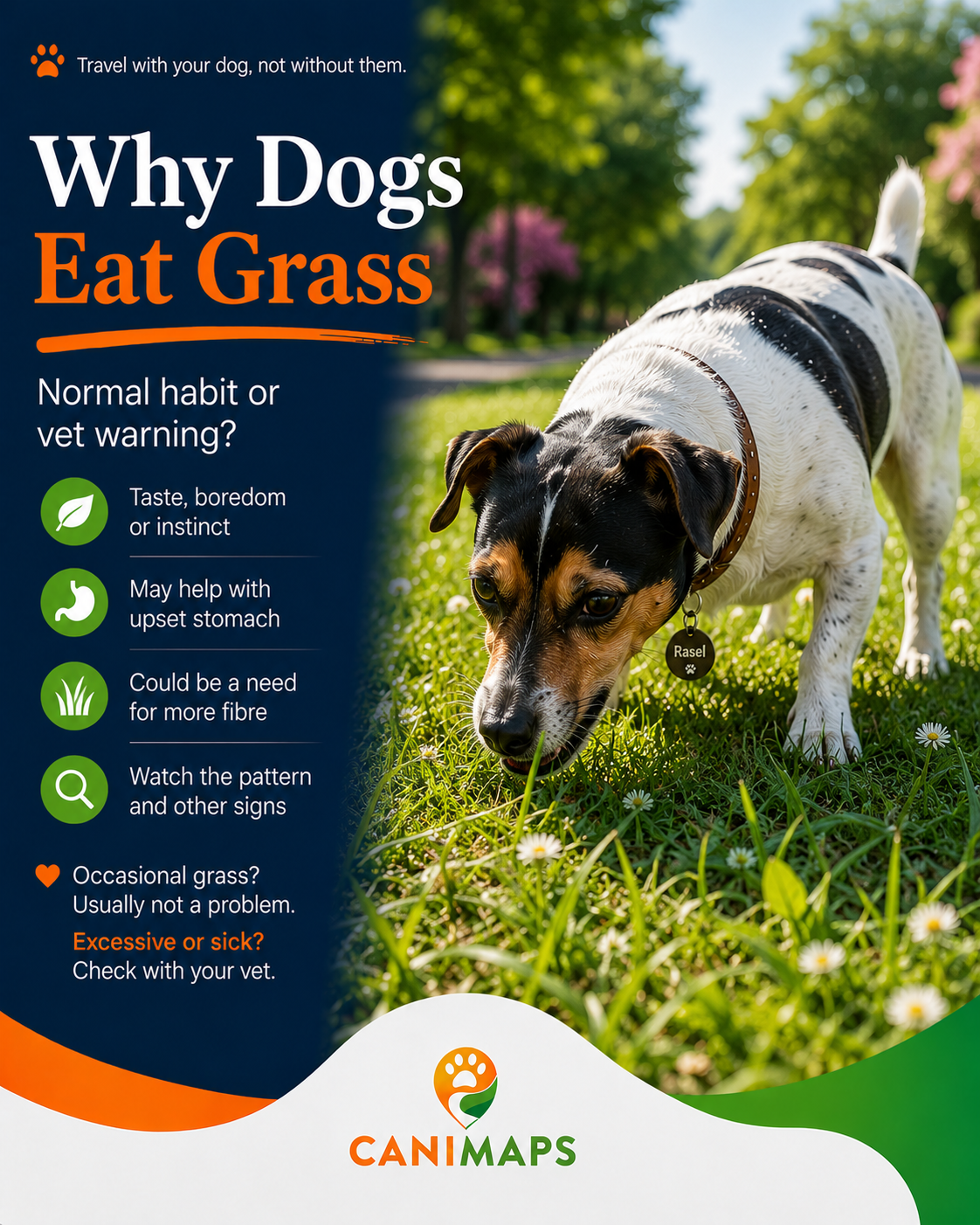
AKC says grass eating may be linked to several possibilities, including taste, boredom, instinct, or possibly a need for more fiber.
The Royal Kennel Club says eating grass every now and then is natural for many dogs and is unlikely to be a worry in an otherwise healthy, regularly wormed dog.
So no, grass eating does not always mean your dog is ill.
Some dogs just like grass.
This is rude, because you buy them food.
But dogs are not known for respecting grocery budgets.
Myth 2: Vomiting After Grass Always Means Emergency
Sometimes dogs eat grass and then vomit.
Sometimes they eat grass because they already feel nauseous.
Sometimes grass simply shows up in vomit because, well, they ate grass.
PDSA says dog vomit may contain grass and notes that dogs often eat grass, especially if they are feeling sick.
One episode of vomiting in a dog who quickly returns to normal may not be an emergency.
But repeated vomiting is different.
Watch for:
vomiting more than once
blood in vomit
trying to vomit but nothing comes out
bloated stomach
pain or restlessness
collapse or weakness
not eating
diarrhoea
constipation
unusual tiredness
PDSA says to contact a vet immediately if there is blood in your dog’s vomit. It also says retching without producing vomit, especially with a bloated stomach, needs immediate vet contact because it can be a sign of GDV, a life-threatening emergency.
PetMD also says immediate veterinary care is needed if vomiting continues or worsens, vomit contains blood, toxin ingestion is possible, a foreign object may have been swallowed, or signs of bloat are present.
So the useful rule is not:
“Grass equals panic.”
The useful rule is:
What happened before, during and after the grass?
Myth 3: All Grass Is Safe Because It Is Natural
“Natural” is one of those words humans trust too much.
Grass may be natural.
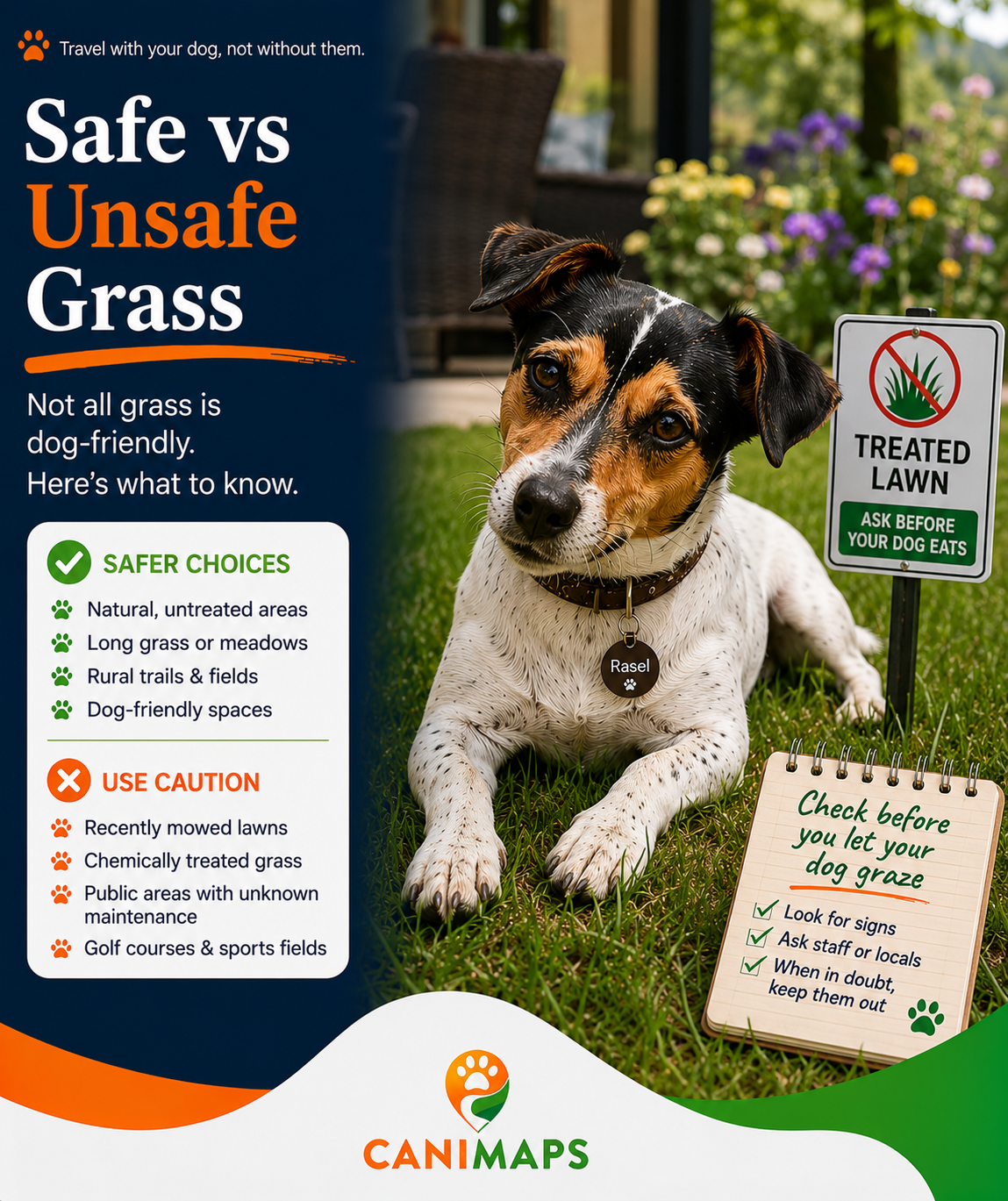
But lawns can be treated with fertilisers, herbicides or pesticides.
The Royal Kennel Club says dogs should not be allowed to eat grass treated with fertilisers, herbicides or pesticides. It also notes that slugs or snails that have travelled over grass could expose dogs to lungworm risk.
That matters in real life.
Think about:
city parks
hotel lawns
campsite grass
apartment courtyards
road verges
golf-course edges
recently treated gardens
unfamiliar public spaces
CANIMAPS travel-adjacent note:
“Green” does not always mean “safe snack bar.”
A dog-friendly place may still have treated grass. A hotel may allow dogs in the garden but use lawn chemicals. A campsite may be beautiful and still full of mystery patches your dog should not eat.
Very unfair, because dogs believe every blade of grass has been placed there for personal use.
What to Watch Before Calling the Vet
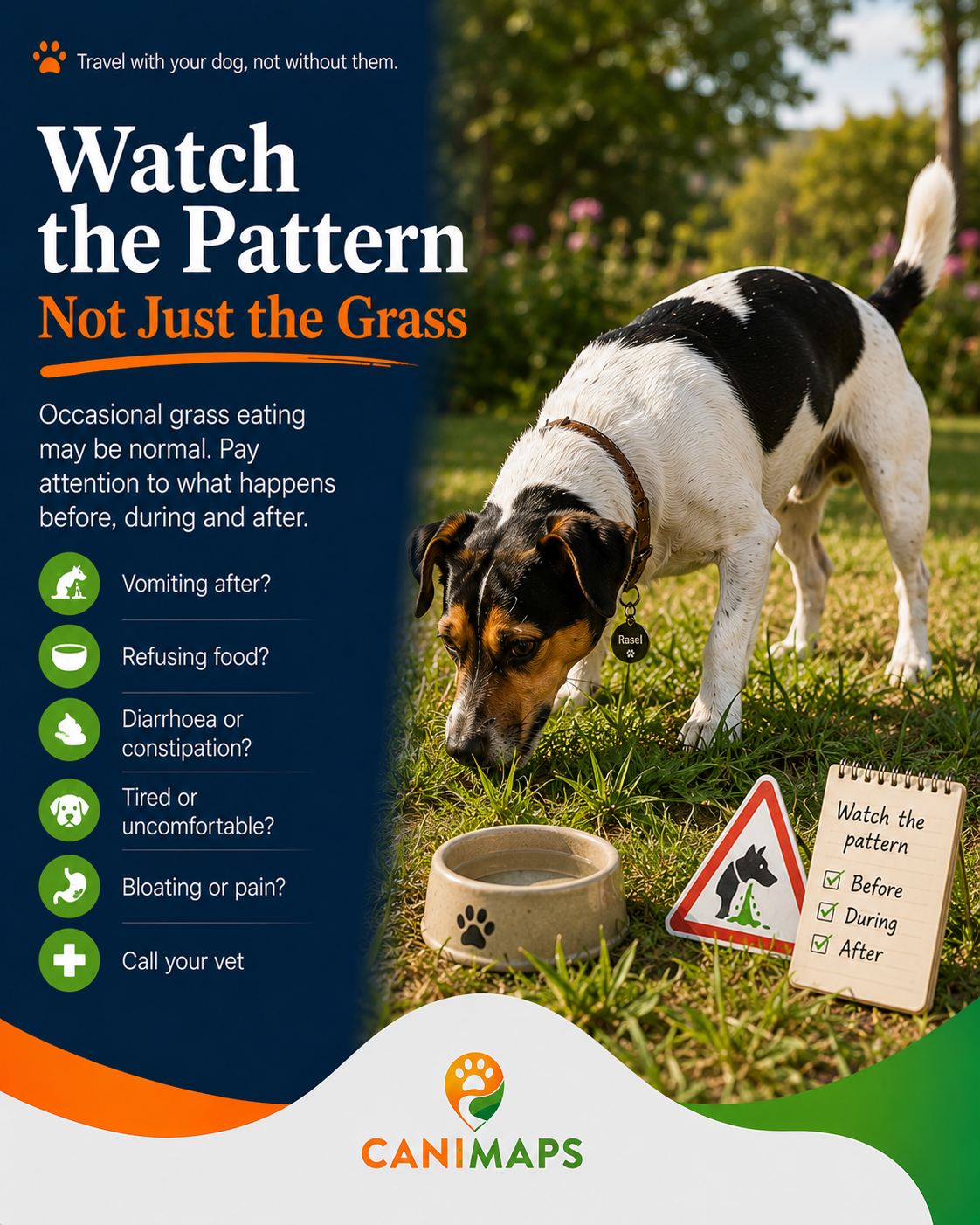
If your dog eats a little grass and then acts completely normal, you can usually observe.
But make notes if the behaviour changes.
Ask:
Is this new?
Is it happening every day?
Is your dog eating grass obsessively?
Are they vomiting after?
Are they refusing normal food?
Are stools normal?
Are they tired or uncomfortable?
Are they eating only grass and not their meal?
Could the grass be treated?
Could they have swallowed a foreign object?
Are they trying to vomit but nothing comes out?
VCA cautions that if a dog shows signs of stomach discomfort while eating grass, there may be a medical problem such as gastric reflux, inflammatory bowel disease or pancreatitis, and a veterinarian should rule out serious conditions.
The Royal Kennel Club also recommends contacting a vet if a dog eats grass excessively, keeps eating grass and being sick, or shows other signs such as not eating, tiredness, diarrhoea or constipation.
That is the real value of watching the pattern.
Not:
“My dog ate grass once.”
But:
“My dog has eaten grass every morning this week, vomited twice, and now refuses breakfast.”
That second version gives your vet something useful.
What Not to Do
Do not punish your dog for eating grass.
If they are bored, punishment does not solve boredom.
If they are nauseous, punishment does not solve nausea.
If the grass is treated, punishment comes too late.
If they just like the taste, congratulations, you own a tiny lawn critic.
Instead:
calmly interrupt if the grass may be unsafe
move away from treated or unknown areas
offer appropriate enrichment at home
watch for illness signs
keep routine parasite prevention and worming guidance current with your vet
call your vet if the pattern worries you
Do not turn the walk into a shouting match with a salad bar.
When Grass Eating Is Probably Less Worrying
Grass eating is usually less worrying when your dog eats a small amount occasionally, acts normal afterwards, keeps eating their normal food, has normal stool, has no repeated vomiting, has normal energy and is not eating from treated or unknown grass.
That does not mean you need to celebrate your dog’s new hobby.
It just means you may not need to panic every time they inspect the lawn.
Rasel would observe the pattern.
Noodle would ask if the grass pairs well with chicken.
When Grass Eating Becomes a Vet Question
Grass eating deserves more attention when it becomes frequent, intense, obsessive or paired with other symptoms.
Call your vet if your dog:
vomits repeatedly
vomits blood
tries to vomit but nothing comes out
has a bloated or painful-looking belly
refuses food
has diarrhoea or constipation
seems weak, restless or unusually tired
eats grass every day in a new pattern
may have eaten treated grass
may have swallowed a foreign object
has sudden appetite or behaviour changes
has known digestive disease or other medical conditions
If your dog is trying to vomit but cannot, especially with a swollen or painful belly, treat it as urgent.
That is not a “wait and see after coffee” situation.
CANIMAPS Grass-Eating Checklist
When your dog starts grazing, check:
Is this occasional or happening often?
Is the grass from a safe, untreated area?
Did your dog vomit afterwards?
Did they vomit once or repeatedly?
Are they eating normal food?
Are stools normal?
Do they seem painful, bloated, weak or restless?
Did they possibly eat chemicals, plants, rubbish or a foreign object?
Is this a sudden new behaviour?
Would this pattern be useful to describe to your vet?
The boring useful thing is not to panic.
The boring useful thing is to notice context.
Dogs are experts at creating confusing little incidents.
Owners need notes.
Final CANIMAPS Takeaway
Occasional grass eating in a healthy dog is usually not the drama your brain creates at midnight.
But repeated grass eating with vomiting, illness, pain, appetite changes or unsafe grass exposure is different.
So next time your dog starts grazing, do the boring useful thing:
Notice the context.
Check the grass.
Watch what happens after.
Call the vet if warning signs appear.
Your dog brings the mystery.
You bring the pattern recognition.
Save this before your next dog walk, and follow CANIMAPS for more real-world dog health, safety and behaviour tips.
FAQ
Why do dogs eat grass?
Dogs may eat grass for several reasons, including taste, boredom, instinct, curiosity, nausea or possibly a need for more fibre. Occasional grass eating in an otherwise healthy dog is often not an emergency.
Is it normal for dogs to eat grass?
Yes, many dogs eat grass from time to time. It becomes more concerning if the behaviour is excessive, sudden, obsessive or linked with vomiting, appetite changes, diarrhoea, constipation, pain or tiredness.
Does eating grass mean my dog is sick?
Not always. Some dogs eat grass and act completely normal. But if your dog eats grass repeatedly, seems unwell or vomits often, speak with your vet.
Should I worry if my dog vomits after eating grass?
One isolated vomit followed by normal behaviour may not be an emergency, but repeated vomiting, blood, weakness, bloating, pain or retching without producing vomit needs veterinary attention.
Can treated grass be dangerous for dogs?
Yes. Grass treated with fertilisers, herbicides or pesticides may be unsafe. Avoid letting your dog eat grass in unfamiliar public areas, treated lawns, road verges or places where chemicals may have been used.
Should I stop my dog from eating grass?
If the grass may be treated, contaminated or unsafe, calmly move your dog away. If grass eating is occasional and your dog is otherwise healthy, observe the pattern. Do not punish your dog for grazing.
When should I call the vet about grass eating?
Call your vet if your dog eats grass excessively, vomits repeatedly, refuses food, has diarrhoea or constipation, seems tired or painful, has a bloated belly, may have eaten toxins, or shows sudden behaviour changes.
What should I tell the vet?
Tell your vet how often your dog eats grass, whether they vomit afterwards, whether appetite and stool are normal, whether the grass may have been treated, and whether there are signs of pain, bloating, weakness or behaviour change.

Europe Dog Travel Checklist and Top Dog Longevity Supplements
Get the Europe Dog Travel Checklist plus the free Top Dog Longevity Supplements e-book — travel smarter and support your dog’s long-term health.