
Dog Bad Breath: Normal “Dog Breath” or Vet Warning?
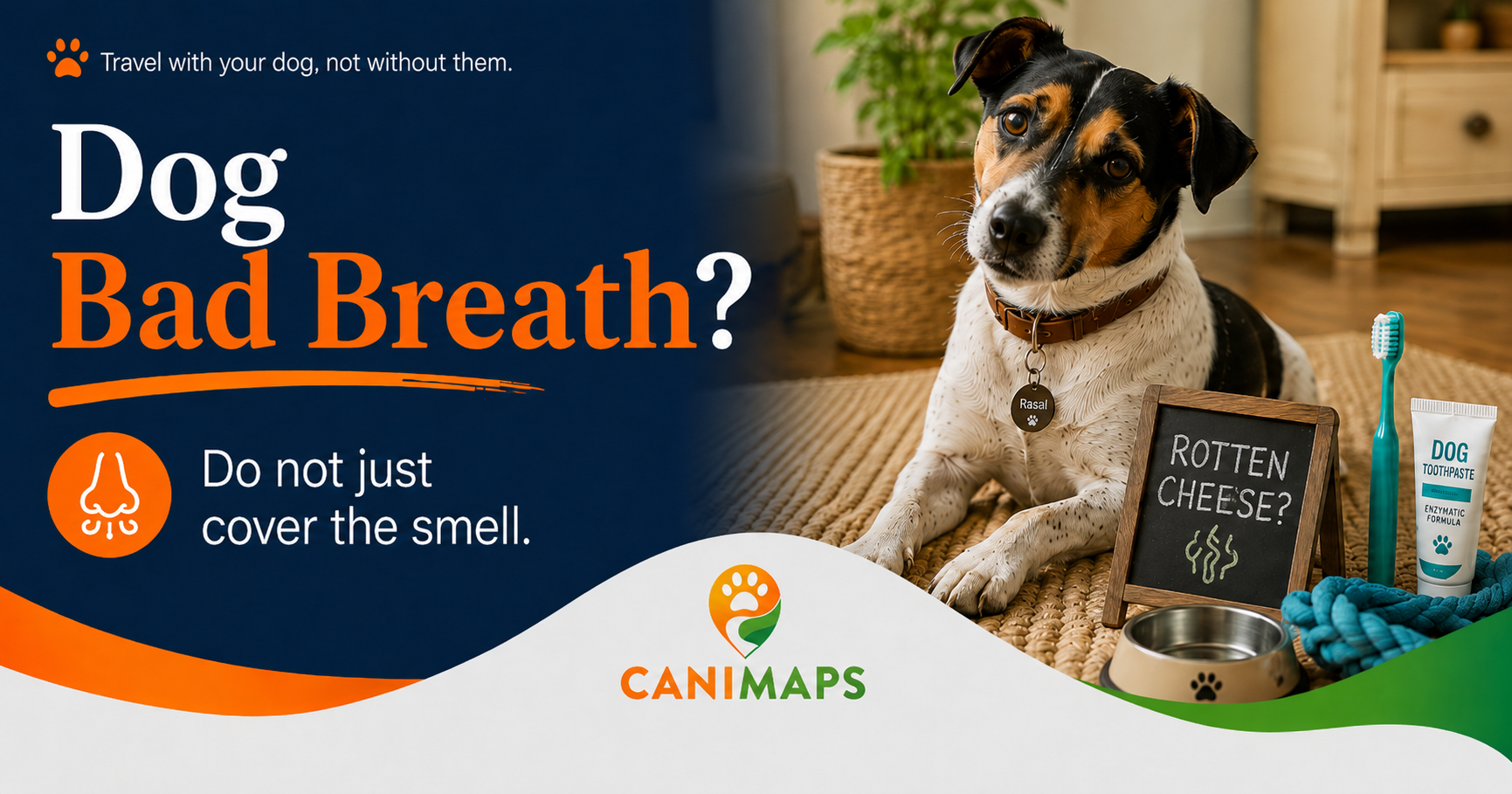
If your dog’s breath suddenly smells worse, do not immediately blame “dog breath.”
A little smell after food is one thing.
A deep, rotten, sour, metallic or worsening smell is different.
That is not your dog developing a more mature personality.
That is a clue.
Many owners try to solve bad breath with chews, treats or sprays first.
Understandable.
Nobody wants their dog to breathe directly into their soul with fish-market confidence.
But the better question is not:
“How do I cover the smell?”
It is:
“What is causing it?”
Quick Answer
A little smell after food or chewing can happen.
But persistent, rotten, sudden or worsening bad breath is not something to ignore.
In dogs, bad breath is often linked to dental disease, especially plaque, tartar and gum problems.
Call your vet if the smell changes, gets worse, or comes with pain, red gums, bleeding, loose teeth, drooling, appetite changes or your dog seeming unwell.
This is not veterinary advice. If your dog seems painful, stops eating, has swelling, bleeding, weakness, vomiting, major behaviour changes or sudden severe breath changes, contact your veterinarian.
Who This Guide Is For
This guide is for owners who joke about “dog breath,” dogs whose breath suddenly smells worse, and dogs who also show eating, gum or mouth-pain signs.
Because “dog breath” should not become a personality trait.
Sometimes it is information.
Very stinky information.
The Smell Owners Should Not Ignore
Bad breath in dogs has a medical name: halitosis.
VCA says the most common cause of halitosis in dogs is periodontal disease caused by plaque and tartar build-up. It also explains that plaque can mineralise into rough tartar, which allows more plaque to accumulate and contributes to gum inflammation.
That does not mean every smelly breath moment is a crisis.
But it does mean persistent bad breath deserves attention.
If the smell is ongoing, worsening or new, treat it as information.
Your dog’s mouth may be trying to send an email.
Unfortunately, the subject line is “rotting cheese.”
Red Flag 1: The Smell Is Persistent or Getting Worse
Temporary breath after food or chewing something weird can happen.
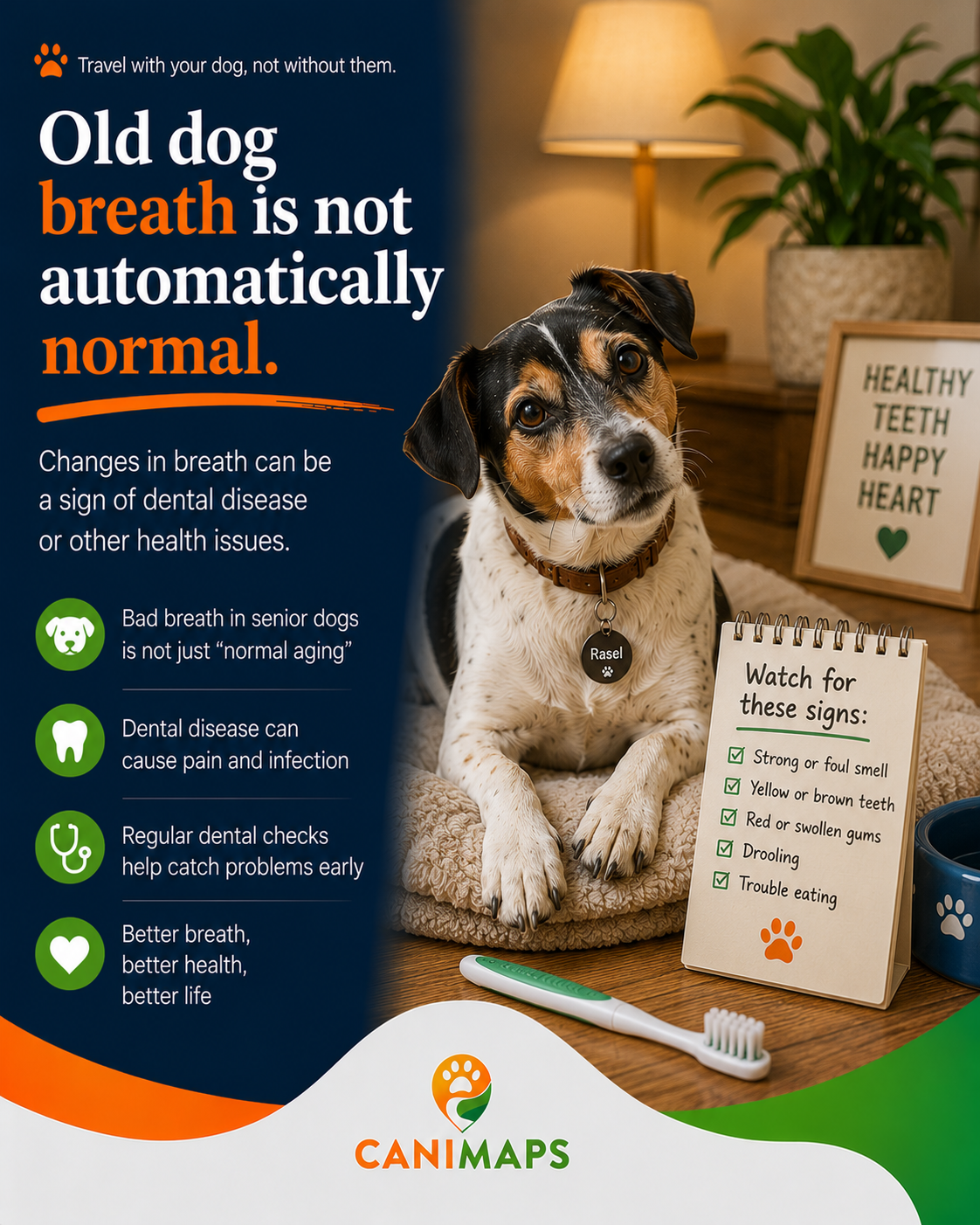
But pay attention if the smell:
stays every day
gets stronger
smells rotten
smells metallic
smells sour
suddenly changes
returns quickly after chewing or brushing attempts
PDSA says bad breath in dogs is commonly due to dental disease, but can also be caused by other conditions. It also says owners should contact a vet if they notice a change in their dog’s breath, especially if the dog seems in pain, has stopped eating or seems unwell.
That last point matters.
“Old dog breath” is not automatically normal.
Senior dogs may be more likely to have dental issues, but that does not mean the smell should be dismissed.
Age is not a diagnosis.
It is just your dog having more life experience and potentially more dental drama.
Red Flag 2: Eating Changes or Mouth Pain
Bad breath becomes more concerning when your dog also changes how they eat.
Watch for:
dropping food
chewing on one side
avoiding hard food
refusing chews
pawing at the mouth
rubbing the face
drooling more than usual
pulling away when the mouth is touched
reduced appetite
seeming grumpy around meals
Dogs can be annoyingly talented at hiding discomfort.
A dog with mouth pain may still eat, because dogs are committed professionals.
But they may eat slower, chew differently, stop enjoying hard treats or become oddly selective.
If your dog suddenly rejects a chew they used to love, do not assume they are becoming fancy.
Check the mouth.
Red Flag 3: Red Gums, Bleeding or Loose Teeth
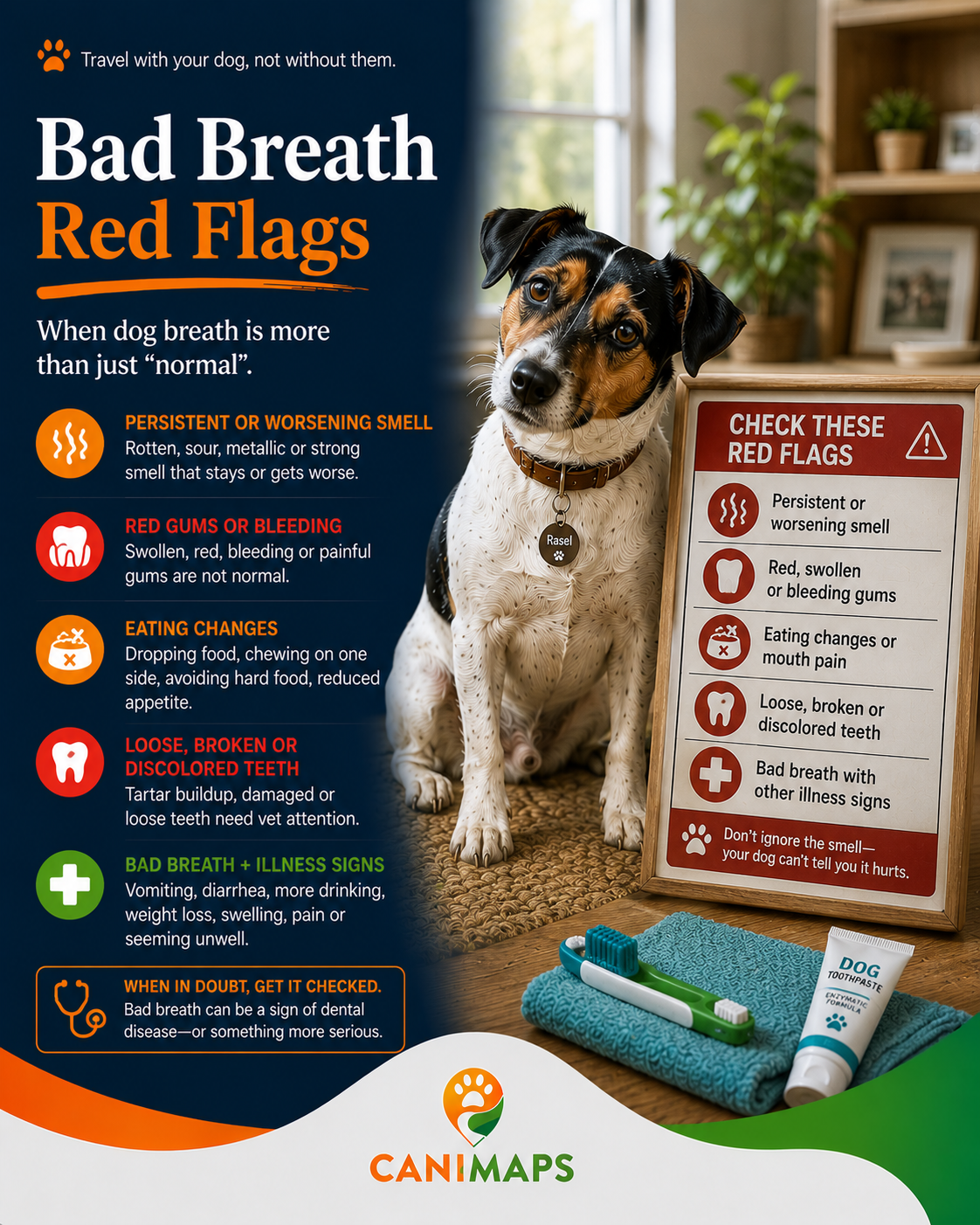
You do not need to perform a full dental exam at home.
Please do not become “Dr. Sofa Dentist.”
But you can look for obvious warning signs if your dog allows gentle handling:
red gums
swollen gums
bleeding
brown or yellow tartar
broken teeth
loose teeth
missing teeth
pus or discharge
swelling around the face or jaw
VCA explains that halitosis can be linked to bacteria associated with plaque or tartar, food particles retained in periodontal pockets, persistent bleeding, or tissue death from oral tumours. It also notes that treatment starts with identifying and eliminating the cause, often including a proper oral exam and dental cleaning.
So the common dog issue is often not “cavities like humans.”
It is plaque, tartar, gums and the support structures around the teeth.
Very glamorous stuff.
Extremely not glamorous when ignored.
Red Flag 4: Bad Breath Plus Illness Signs
Sometimes bad breath is not only about the teeth.
If your dog has bad breath plus other symptoms, do not treat it as a simple dental-smell problem.
Call your vet if bad breath appears with:
vomiting
diarrhoea
drinking much more
urinating more
weight loss
weakness
collapse
obvious pain
not eating
swelling in the mouth or face
bleeding
your dog seeming generally unwell
PDSA lists dental disease as the most common cause of halitosis, but also notes that kidney disease, diabetes, something stuck in the mouth, oral lumps and diet can affect breath smell.
The owner rule is simple:
Bad smell alone can deserve a dental check.
Bad smell plus illness signs deserves faster attention.
Your dog is not supposed to smell like a haunted bin and act weird at the same time.
What Not to Do
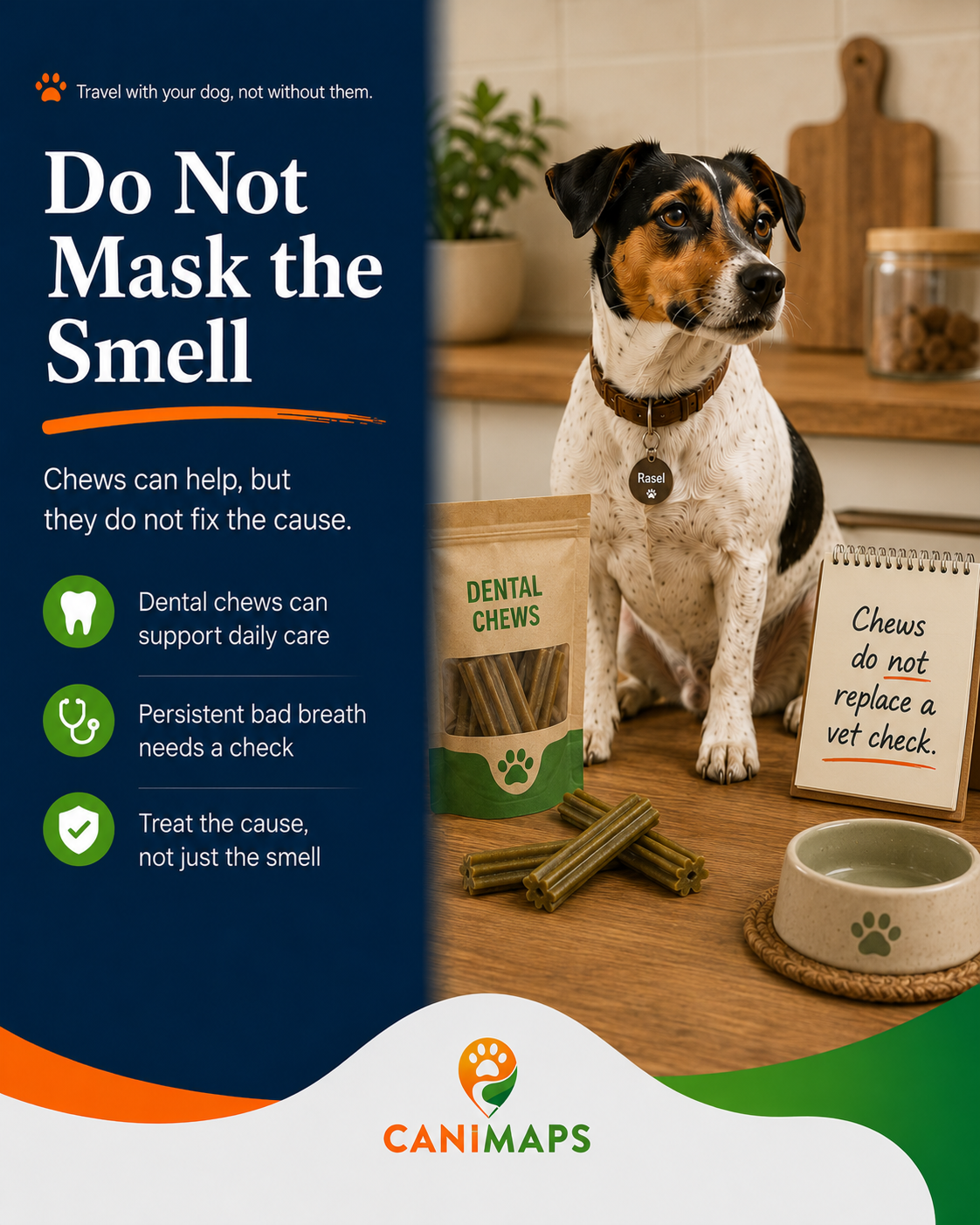
Do not only mask the smell.
Dental chews, sprays, powders and water additives may have a role in some routines, but they should not replace a vet check when bad breath is persistent, worsening or paired with red flags.
Do not use human toothpaste.
Do not scrape teeth with random tools.
Do not ignore bleeding gums.
Do not assume “still eating” means “not in pain.”
Do not wait months if the smell is changing.
Home care can be useful.
But home care is not a magic invisibility cloak for dental disease.
What to Ask Your Vet
If you book a dental check, go in with useful notes.
Tell your vet:
when the smell started
whether it changed suddenly
what the smell is like
whether your dog is eating normally
whether they drop food
whether there is drooling
whether you saw bleeding or red gums
whether your dog resists mouth handling
whether any teeth look broken or loose
what dental products you already use
Ask:
Do the teeth and gums look healthy?
Is dental cleaning needed?
Is there pain?
Should we start home tooth brushing?
Which products are appropriate for this dog?
How often should we recheck?
Are there breed, age or health factors that matter?
That is a much better plan than buying the strongest-smelling dental chew and hoping your dog’s mouth negotiates with bacteria privately.
CANIMAPS Bad Breath Checklist
Tonight, do not panic.
Do this instead:
Smell.
Look.
Watch behaviour.
Check if the breath is new, persistent or worsening.
Look for red gums, tartar, bleeding or swelling if your dog allows it.
Notice whether your dog eats normally.
Watch for drooling, pawing, chewing changes or mouth sensitivity.
Book a vet check if the smell persists or changes.
Contact your vet faster if your dog seems painful, stops eating or seems unwell.
If the breath is mild and temporary, note it.
If the breath is persistent, rotten, sudden or worsening, book a vet check.
If your dog has bad breath plus pain, bleeding, red gums, loose teeth, appetite change or seems unwell, do not wait.
Final CANIMAPS Takeaway
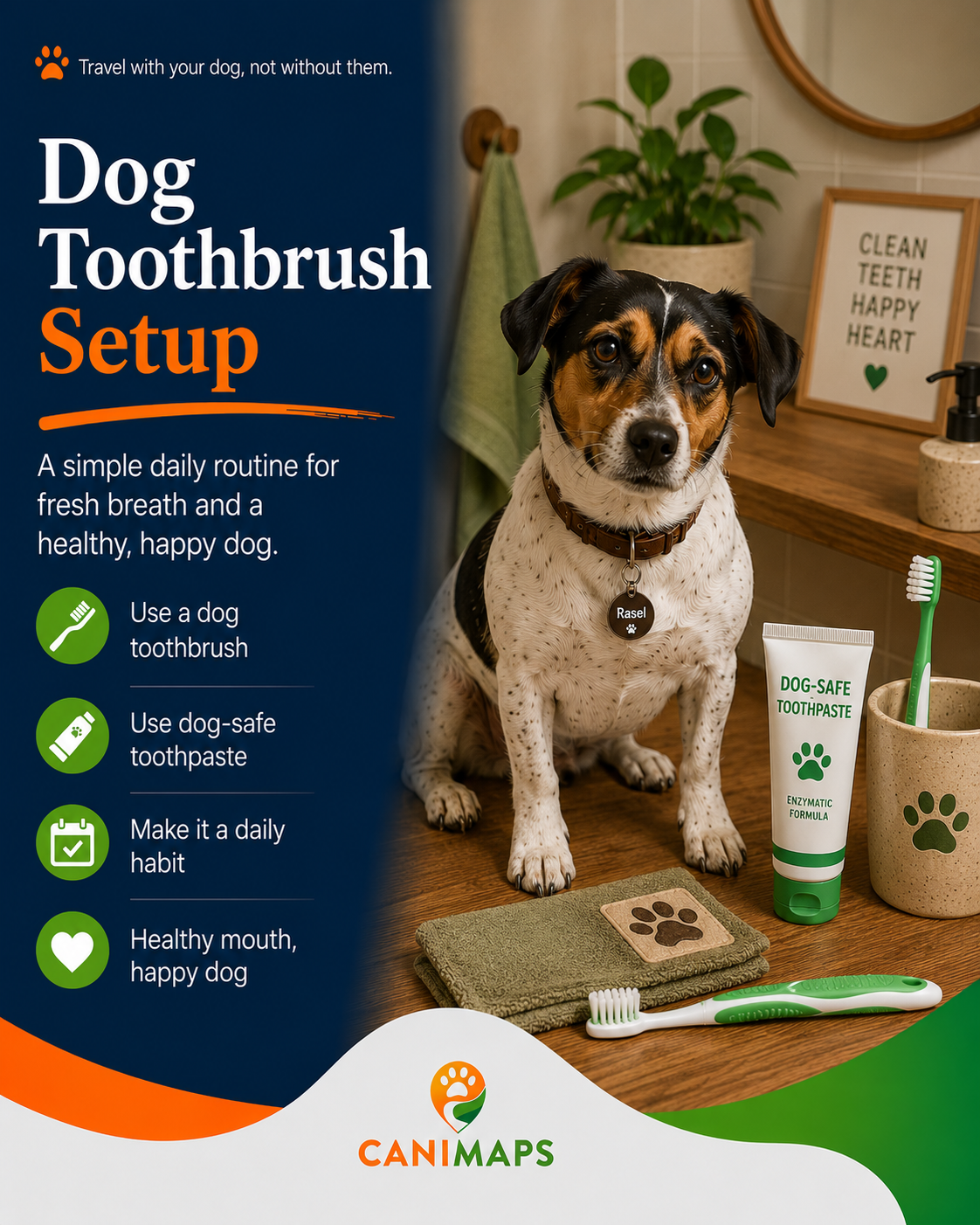
Your dog’s breath should not be treated as a personality trait.
A little food smell can happen.
But persistent, rotten, sudden or worsening bad breath can be a clue that something is happening in the mouth or body.
Do not just cover the smell.
Find the cause.
Rasel would book the dental check.
Noodle would try to solve it with one suspicious chew from under the sofa.
Save this before your next dog health check, and follow CANIMAPS for more real-world dog health and safety tips.
FAQ
Is dog bad breath normal?
A little smell after food or chewing can happen, but persistent, rotten, sudden or worsening bad breath should not be ignored.
What causes bad breath in dogs?
Bad breath in dogs is often linked to dental disease, especially plaque, tartar and gum problems. Other possible causes can include something stuck in the mouth, oral lumps, diet changes or other health conditions.
When should I call the vet about dog bad breath?
Call your vet if your dog’s breath suddenly changes, gets worse, smells rotten, or comes with pain, red gums, bleeding, loose teeth, drooling, appetite changes or your dog seeming unwell.
Can dental chews fix dog bad breath?
Dental chews may help some routines, but they should not replace a vet check if bad breath is persistent, worsening or paired with warning signs.
Is bad breath normal in older dogs?
No. Older dogs may be more likely to have dental issues, but bad breath should not automatically be dismissed as normal ageing.
What mouth signs should I look for?
Look for red or swollen gums, bleeding, brown or yellow tartar, broken teeth, loose teeth, missing teeth, swelling, drooling, pawing at the mouth or chewing changes.
Can bad breath mean something other than dental disease?
Yes. Dental disease is common, but bad breath can also be linked to other health problems, something stuck in the mouth, oral lumps or diet changes.
What should I ask my vet about bad breath?
Ask whether your dog’s teeth and gums look healthy, whether dental cleaning is needed, whether there is pain, which home dental care is appropriate and how often your dog should have dental checks

Europe Dog Travel Checklist and Top Dog Longevity Supplements
Get the Europe Dog Travel Checklist plus the free Top Dog Longevity Supplements e-book — travel smarter and support your dog’s long-term health.