
Dog Drinking More Water Than Usual? What to Track Before You Panic
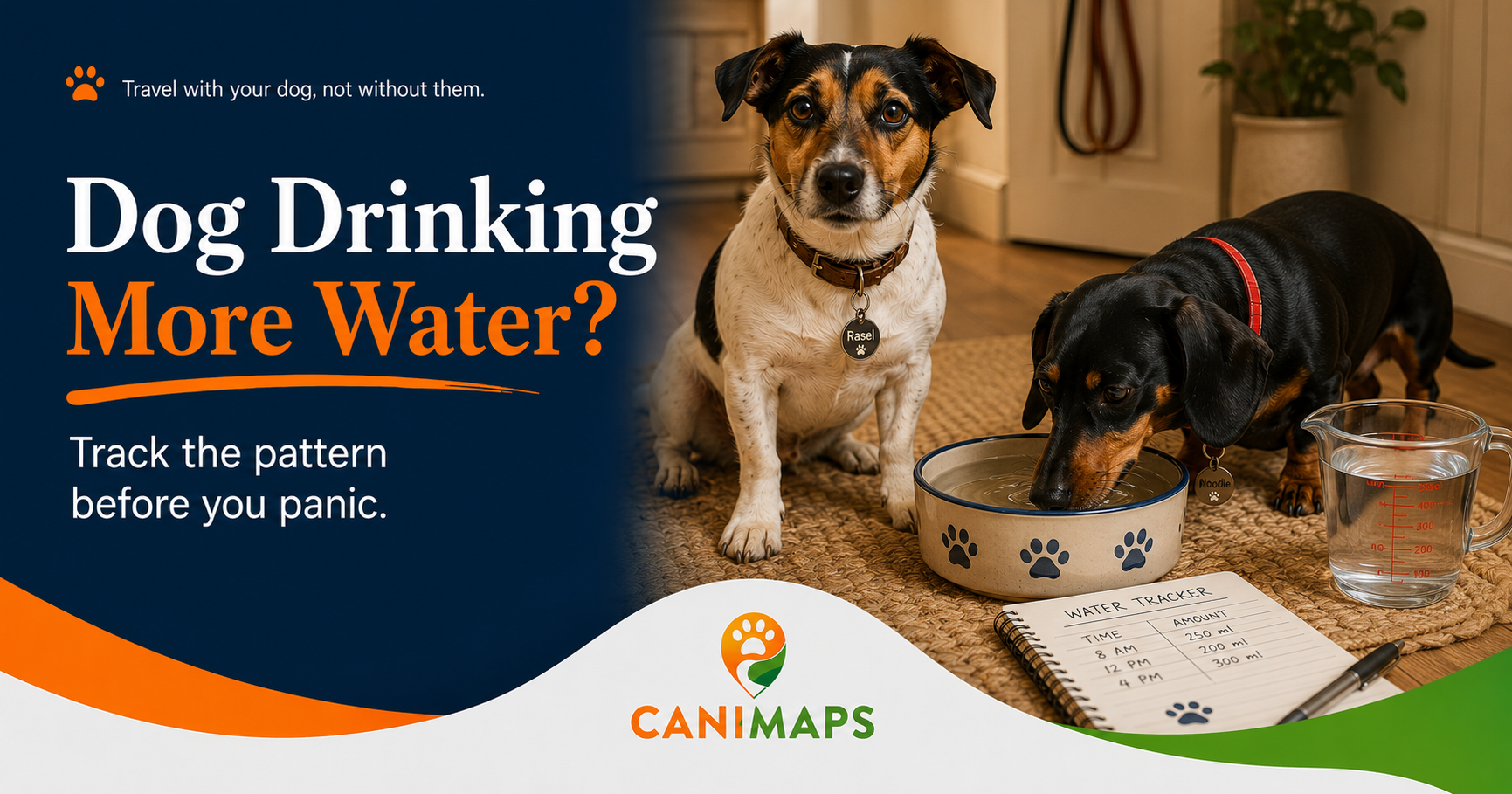
You fill the water bowl.
Your dog drinks.
You fill it again.
Your dog drinks again.
At first, it feels normal. Maybe it is warm. Maybe the walk was longer. Maybe your dog has simply decided hydration is a personality now.
Then you notice the second part.
More peeing. More trips outside. Maybe an accident indoors. Maybe the water bowl is empty at weird times. Maybe your dog wakes you at night with the face that says, “Bathroom business, human. Immediately.”
This is where owners often jump between two bad options: panic, or ignore it completely.
The better CANIMAPS option is boring but useful: notice the pattern, measure what you can, and know when the vet should be involved.
Quick Answer
If your dog is drinking more water than usual for one obvious reason, such as a hot day, more exercise or a switch to dry food, it may be temporary.
But if the thirst is sudden, persistent, unexplained, or paired with more peeing, accidents, weight loss, vomiting, diarrhoea, tiredness, appetite changes or your dog seeming unwell, contact your vet.
Do not restrict your dog’s water to “test” the problem. PDSA advises owners never to restrict water to control drinking and peeing more than usual, and to keep fresh drinking water available.
This article is practical guidance, not veterinary diagnosis. Increased thirst can have many possible causes, from harmless short-term changes to medical problems that need testing.
Why “More Water” Is About Pattern, Not One Bowl
One empty water bowl does not automatically mean disaster.
Dogs may drink more after a longer walk, warm weather, active play, dry food, salty treats, stress, excitement, or a change in routine.
So the question is not:
“Did my dog drink more once?”
The question is:
“Is my dog consistently drinking more than their normal pattern?”
That is the important part.
You know your dog’s rhythm better than anyone. Some dogs sip politely. Some drink like they have just returned from crossing a desert, even after walking from the sofa to the kitchen.
What matters is change.
The Peeing Clue Owners Should Not Miss
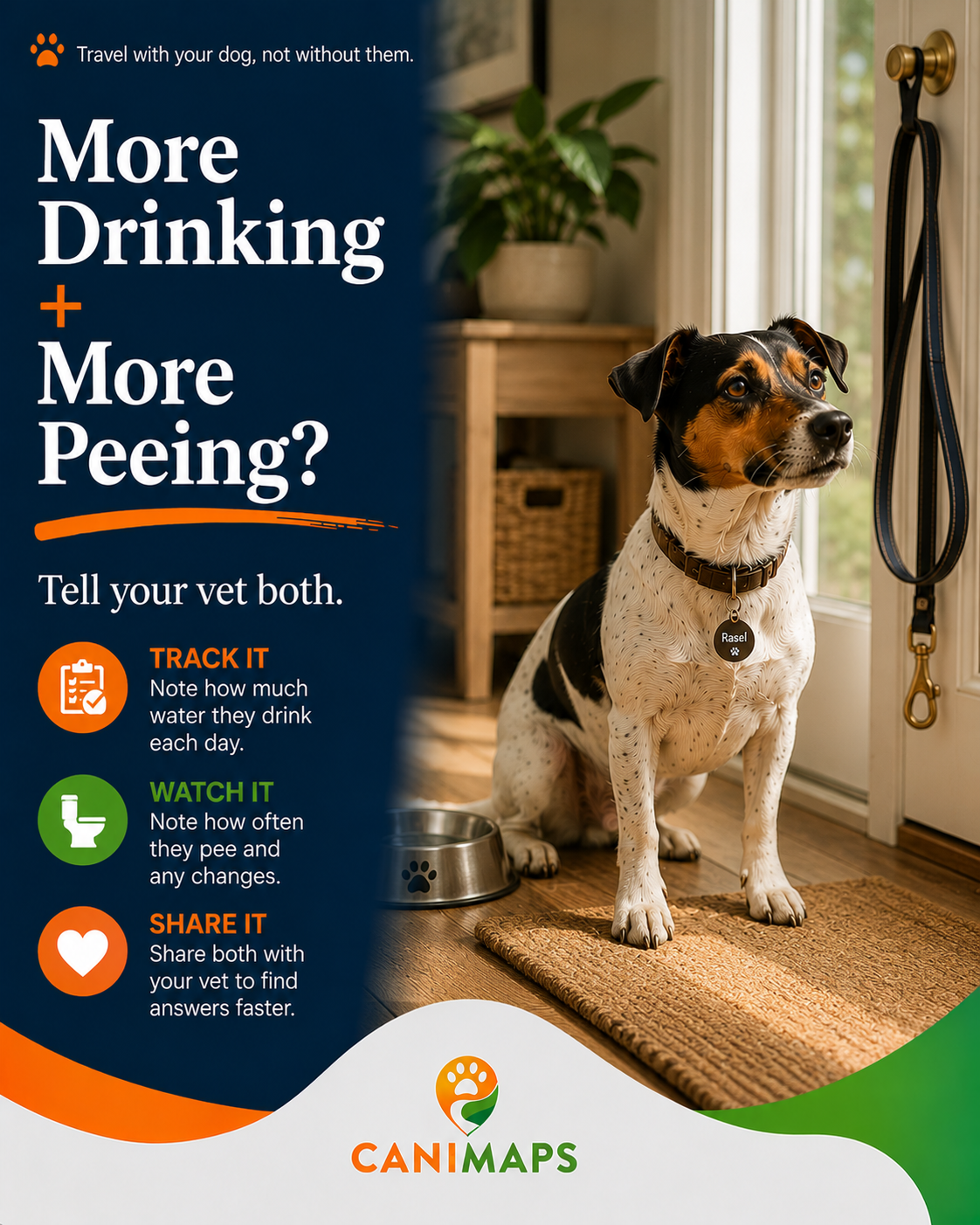
Increased drinking and increased urination often appear together.
If your dog drinks more, they may need to pee more. If your dog pees more, they may need to drink more to replace fluid. That loop is why drinking and peeing changes should be tracked together.
Watch for:
needing to go outside more often
larger wees than normal
overnight accidents
accidents in a previously house-trained dog
stopping more often on walks to pee
waking you at night to go out
suddenly drinking from taps, puddles or streams
drinking so much they vomit
Those details help your vet understand whether the issue is mainly thirst, mainly urination, or both.
The medical word for drinking more than normal is polydipsia. The related increase in urination is called polyuria.
You do not need to use the medical words perfectly.
But if you tell your vet, “My dog is drinking more and peeing more,” that is much more useful than “something is weird.”
Although, to be fair, “something is weird” is how half of dog ownership begins.
Normal Short-Term Reasons Your Dog May Drink More
Before assuming the worst, check the simple explanations.
Has it been hot?
Was the walk longer?
Did your dog play harder?
Did you switch from wet food to dry food?
Did they eat something saltier than usual?
Did travel or stress change the day?
Exercise, warm weather, age and diet changes can all affect water intake. A dog may also drink more if their food is drier or saltier than usual.
If there is a clear reason and the pattern quickly returns to normal, you can usually keep observing.
But if there is no clear reason, or the increased drinking continues, do not keep explaining it away forever.
Your dog’s water bowl should not need a project manager.
When Increased Thirst Becomes a Vet Clue
Increased thirst can be linked to medical problems.
That does not mean your dog definitely has one. It means persistent increased thirst is worth checking because guessing from home is not enough.
Call your vet if your dog is drinking more and also has:
more urination
house accidents
vomiting
diarrhoea
reduced appetite
increased appetite with weight loss
weight loss
tiredness
weakness
pot-bellied appearance
pain
fever signs
discharge in an unspayed female
confusion or collapse
any sudden major change
Increased thirst and urination can be associated with conditions such as kidney problems, diabetes mellitus, Cushing’s disease, pyometra in unspayed females, liver disease, some cancers and certain medications. Only a vet can investigate what is actually going on.
Do not diagnose from an article.
But do not ignore a pattern either.
What to Track for 24 Hours
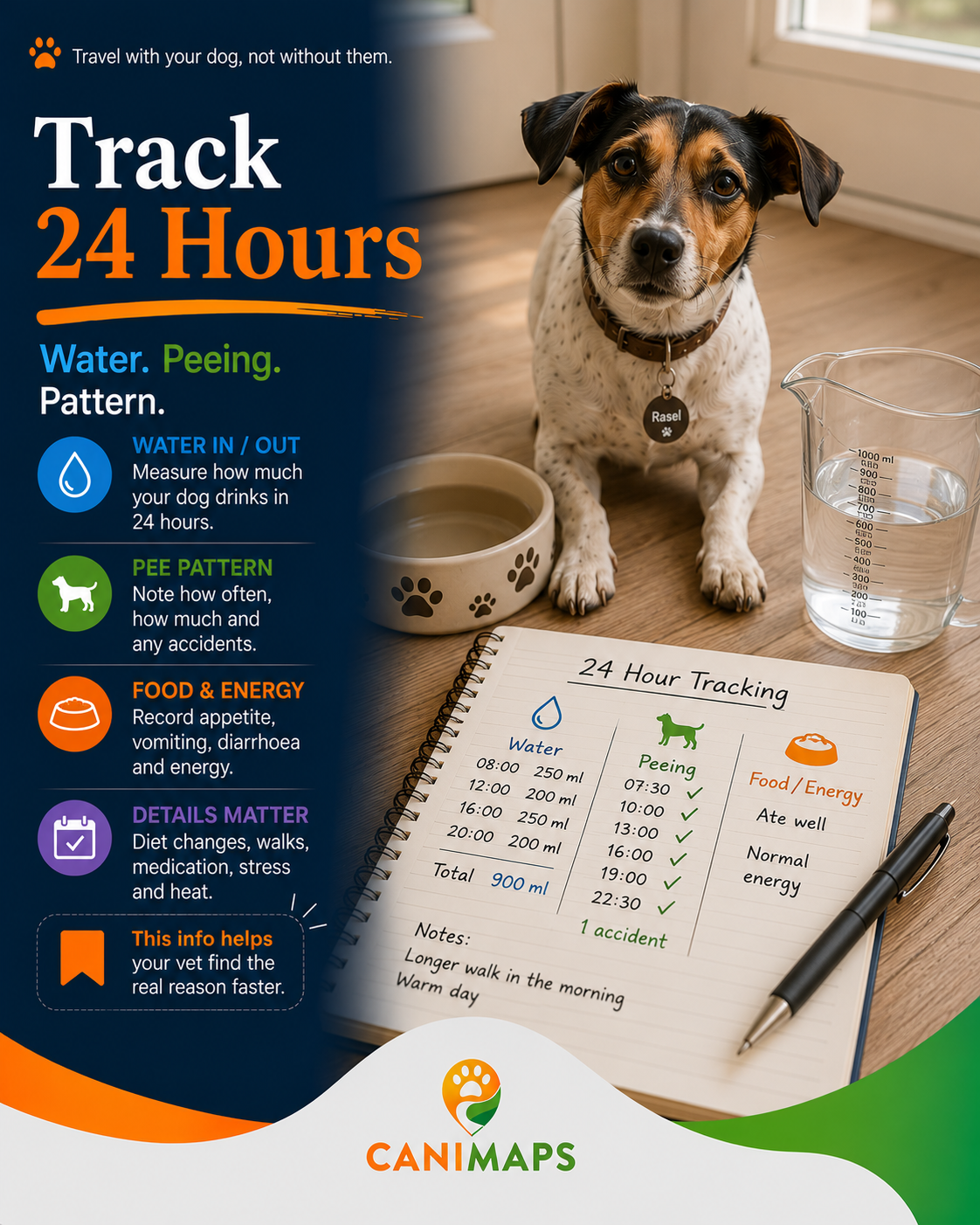
If your dog seems otherwise stable and you are preparing to call or visit your vet, tracking can help.
Try this simple routine:
Start with a known amount of water.
Use one main bowl if possible.
Measure how much you put in.
Measure what is left after 24 hours.
Note spills separately.
Write down how often your dog pees.
Note accidents or night waking.
Record appetite, energy and any vomiting or diarrhoea.
List any medication changes.
Note diet changes, treats, travel, heat or extra activity.
This is not about becoming a spreadsheet parent.
Although, honestly, some dogs deserve a spreadsheet.
It is about giving your vet better information.
Instead of saying:
“He drinks loads.”
You can say:
“He drank about X in 24 hours, peed six times, woke twice overnight, and this started three days ago after no diet change.”
That is useful.
What Not to Do
Do not restrict water.
This is important enough to repeat.
Do not restrict water.
If your dog is drinking more because they are losing more fluid through urination or because of an underlying medical issue, taking water away can make things worse.
Also avoid:
waiting weeks to see if it disappears
assuming it is “just age”
blaming behaviour before checking health
using human medication
changing medication without your vet
ignoring weight loss or vomiting
punishing house accidents
forcing long walks if your dog seems unwell
If your dog has accidents because they need to pee more, that is not a moral failure.
That is a clue.
Your rug may disagree, but your vet will want the clue.
CANIMAPS Water-Bowl Routine
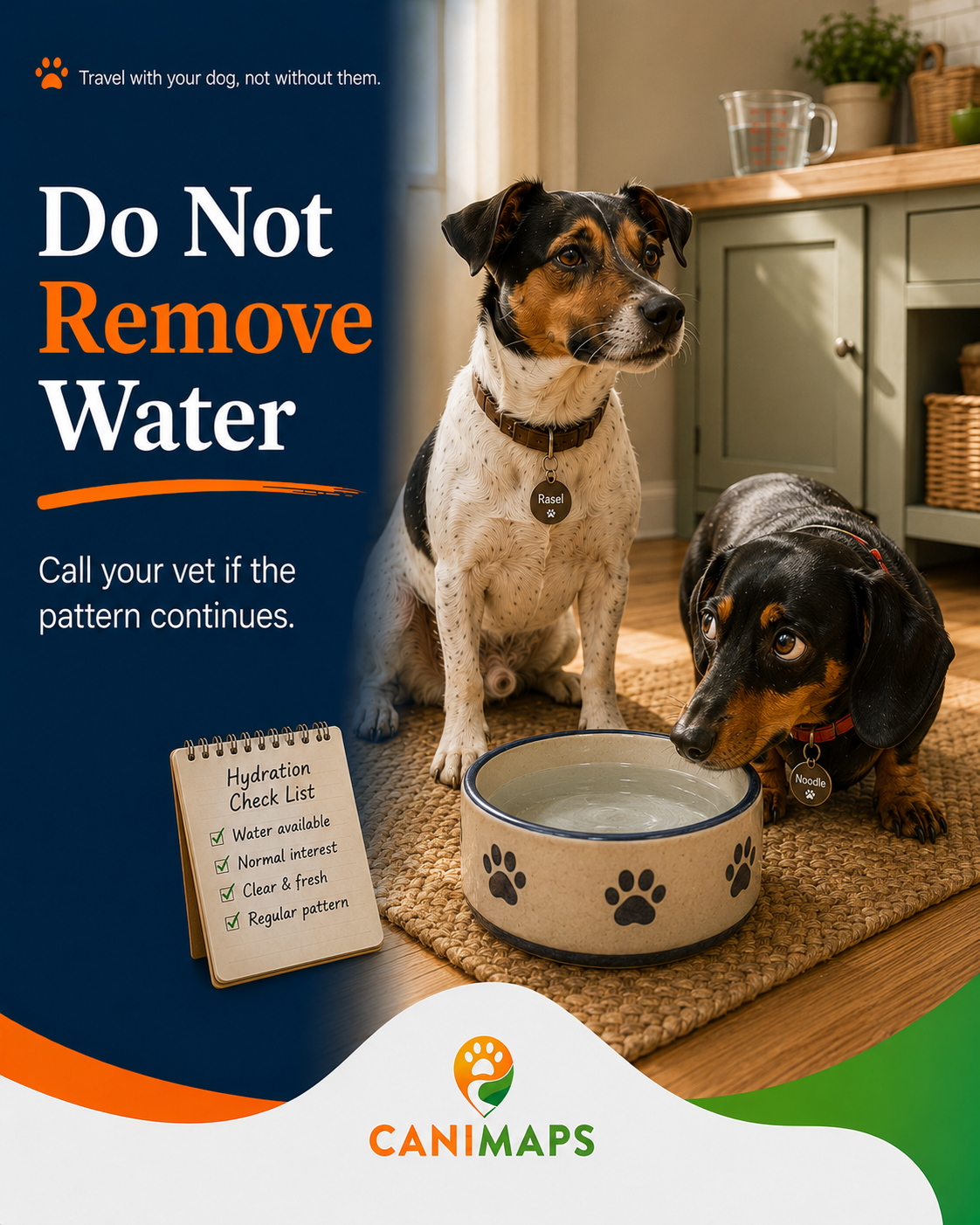
Here is a practical CANIMAPS routine for the next day.
Step 1: Notice the trigger
Was it heat, exercise, dry food, travel, stress or salty treats?
Step 2: Measure for 24 hours
Use a measuring jug or marked bottle. Write it down.
Step 3: Track peeing
Count toilet trips, bigger wees, night waking and accidents.
Step 4: Check the whole dog
Energy, appetite, weight, vomiting, diarrhoea, pain, behaviour and sleep.
Step 5: Call the vet if the pattern continues
Especially if thirst is sudden, persistent, unexplained or paired with other signs.
Step 6: Do not remove water
Fresh water stays available.
Simple. Boring. Helpful.
The holy triangle of dog-owner problem solving.
Final CANIMAPS Takeaway
A dog drinking more water is not always an emergency.
Sometimes it is heat, dry food, exercise or a busy day.
But persistent, sudden or unexplained thirst, especially with more peeing, accidents or illness signs, is not something to shrug off.
Your best move is not panic.
It is pattern tracking.
Measure the water. Count the wees. Notice changes. Keep fresh water available. Call your vet when the pattern does not make sense.
Your dog cannot say:
“I think my thirst regulation requires professional investigation.”
So they empty the bowl.
You bring the notes.
FAQ SECTION
Why is my dog drinking more water than usual?
Dogs may drink more because of hot weather, extra exercise, dry food, salty treats, stress or routine changes. But persistent or unexplained increased thirst can also be linked to medical issues, so contact your vet if the pattern continues or comes with other symptoms.
Should I worry if my dog is drinking and peeing more?
Yes, it is worth paying attention. Drinking and peeing more often can happen together and may point to an underlying problem. Contact your vet if you think your dog is drinking or peeing more than normal.
Should I restrict my dog’s water if they drink too much?
No. Do not restrict your dog’s water to control the problem. Keep fresh water available and contact your vet.
What should I track before calling the vet?
Track how much water your dog drinks in 24 hours, how often they pee, whether there are accidents, and any appetite, weight, energy, vomiting, diarrhoea, medication or diet changes.
Can increased thirst be a sign of diabetes or kidney disease in dogs?
It can be one possible sign among many. Kidney disorders and diabetes mellitus are among conditions associated with increased thirst and urination, but only a vet can investigate the cause.

Europe Dog Travel Checklist and Top Dog Longevity Supplements
Get the Europe Dog Travel Checklist plus the free Top Dog Longevity Supplements e-book — travel smarter and support your dog’s long-term health.