
Dog Food Labels: What “Complete” and “Complementary” Really Mean
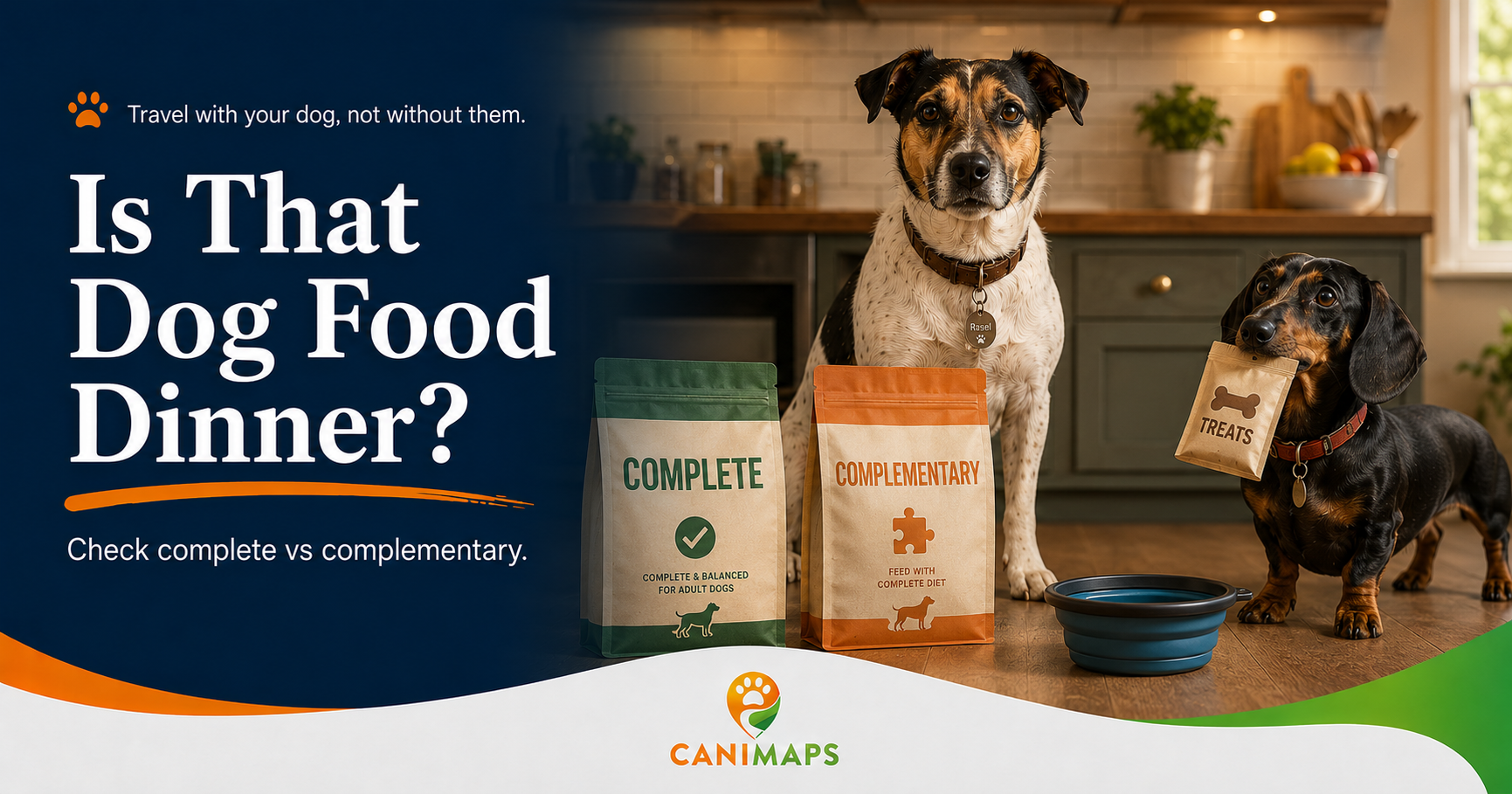
The most important word on a dog food label is often not “natural”, “premium” or “with chicken”.
It is usually much smaller:
Complete or complementary.
That one word can tell you whether the product is meant to be your dog’s main food or only part of the diet.
And yes, this matters.
A pouch can look like dinner, smell like dinner, cost like dinner, and still not be intended as the whole meal.
Very rude behaviour from packaging.
Quick Answer
Complete dog food is intended to provide the nutrients your dog needs as their main diet when fed according to the label instructions.
Complementary dog food is not designed to be the whole diet on its own. It may be a treat, topper, mixer, snack, chew, broth or add-on that should be fed alongside other suitable food.
Before buying dog food, check whether the label says complete or complementary, whether it is made for dogs and the right life stage, and what the feeding instructions say.
This is not veterinary nutrition advice. If your dog has a medical condition, allergies, pancreatitis, kidney disease, digestive issues, obesity, pregnancy or special dietary needs, ask your vet before changing food.
The 10-Second Label Check
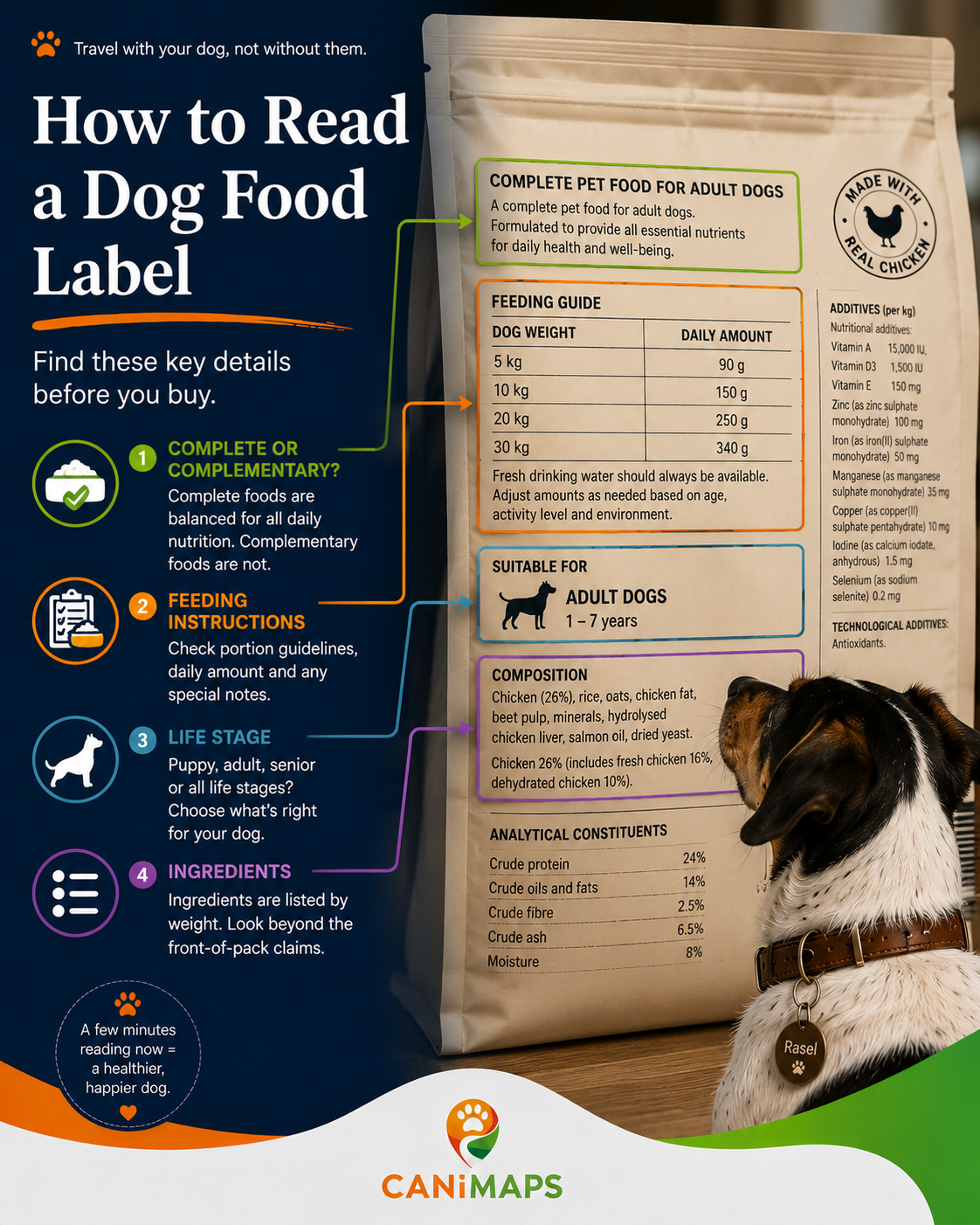
Before buying any dog food, treat, wet tray, topper or mixer, find these three things:
Is it complete or complementary?
Is it for dogs, and for which life stage?
What are the feeding instructions?
UK Pet Food says labels must clearly state whether the product is complete or complementary, the species it is intended for, and directions for use or feeding instructions.
That is your starting point.
Not the picture of the chicken.
Not the mountain landscape.
Not the word “premium” doing yoga on the front of the bag.
“Complete” Means It Is Meant to Be the Meal
A complete dog food is designed to provide the nutrients a dog needs when it is fed according to instructions.
That does not automatically mean every complete food is perfect for every dog.
It means the product is intended to stand alone as the main diet for the dog it is labelled for.
You still need to check:
adult or puppy
weight guidance
portion size
activity level
health conditions
allergies or sensitivities
whether your vet has given special advice
FEDIAF publishes nutritional guidelines for complete and complementary pet food for cats and dogs. Its current guidance is described as peer-reviewed by independent veterinary nutritionists across Europe and used as a practical reference for manufacturers.
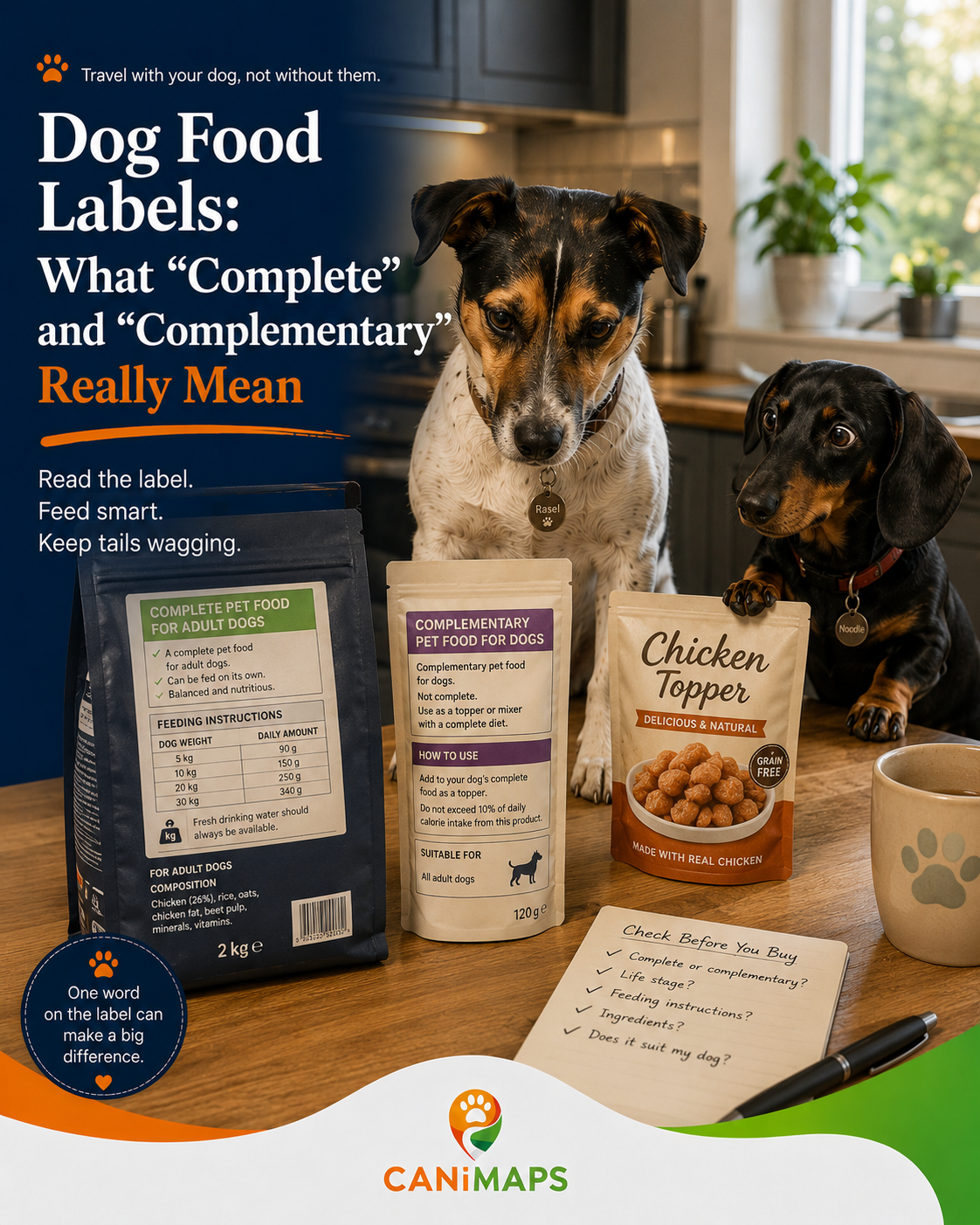
The useful owner version:
If the label says complete, it is trying to be dinner.
If your dog has kidney disease, pancreatitis, allergies, obesity, digestive issues, pregnancy, or other medical needs, do not choose food by label alone.
Ask your vet.
“Complementary” Means Do Not Treat It Like the Whole Diet
Complementary food is not meant to be the dog’s whole diet on its own.
It may be:
a treat
a topper
a mixer
a snack
a chew
a broth
a pâté-style add-on
a raw-style product intended to be combined with something else
This is where owners get caught.
Some complementary foods look very meal-like. They may come in trays, tins or pouches. They may show meat, vegetables and fancy ingredients. They may look more “real food” than the complete kibble sitting beside them.
But if the label says complementary, it needs context.
WSAVA says foods labelled for short-term, intermittent or complementary feeding should only be a small portion of the diet, or used under veterinarian supervision if it is a therapeutic diet.
Simple owner rule:
Complementary means “with something else”.
Not:
“This is automatically dinner.”
Marketing Words Are Not the Same as Nutrition
Labels are part information, part sales pitch.
WSAVA says pet food labels may include marketing images and phrases designed to promote sales rather than communicate nutritional information, and notes that terms such as “holistic” or “premium” are of little practical value for nutritional assessment.
That does not mean every product using those words is bad.
It means those words should not be your first decision point.
Better questions:
Is it complete or complementary?
What life stage is it for?
What are the feeding instructions?
Who makes it?
Can you contact the company?
Does your dog do well on it?
Does your vet have concerns?
“Premium” is a vibe.
“Complete” is useful label information.
Rasel would read the label.
Noodle would trust the picture of chicken.
The Ingredient List: Useful, but Easy to Misread
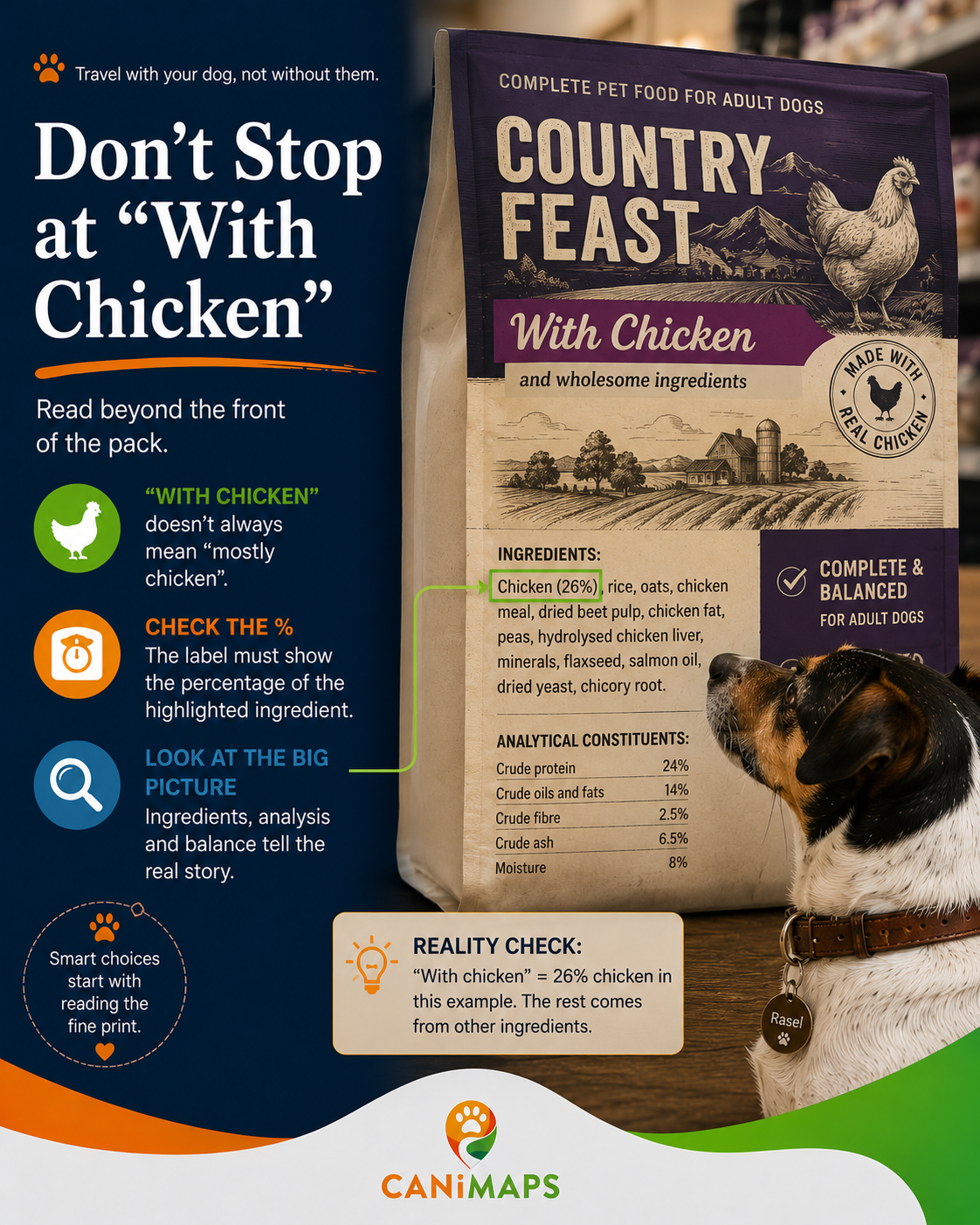
Ingredient lists matter, but they can be misunderstood.
UK Pet Food says ingredients must be listed in descending order by weight. It also says if attention is drawn to a specific ingredient, such as “with chicken”, the percentage of that ingredient component must also be listed.
That means “with chicken” does not always mean “mostly chicken”.
It means the label should show the relevant percentage.
Also, ingredients are only one part of the picture. Nutrition depends on formulation, digestibility, nutrient balance, quality control and whether the food suits your dog.
An ingredient list can tell you what went in.
It does not automatically tell you whether the diet is the right choice for your dog.
Analytical Constituents: The Boring Box Worth Knowing
Many owners skip the analytical constituents box because it looks like homework.
Fair.
It does look like the label is trying to become a spreadsheet.
UK Pet Food says labels list percentages such as crude protein, crude oils and fats, crude fibre, moisture when it exceeds 14%, and crude ash.
These numbers can help compare products, but they are not always simple to compare directly, especially between wet and dry food because moisture content is so different.
A wet food may look lower in protein by percentage simply because it contains much more water.
So do not panic-read one number.
Use the analytical section as part of the picture, not the whole story.
Life Stage Matters More Than the Front-of-Pack Mood
Puppies, adult dogs and senior dogs do not always need the same diet.
WSAVA says pet food should match the nutritional needs of the individual dog or cat, and that AAFCO and FEDIAF provide recommended nutrient levels for different life stages such as growth, reproduction and adult maintenance.
So check whether the food is meant for:
puppies
adult dogs
seniors
all life stages
specific size groups
weight control
sensitive digestion
veterinary diets
If a product is labelled “all life stages”, do not assume it is automatically the best choice for every adult dog. It may be formulated to meet higher growth or reproduction needs.
If your dog has a medical condition, use your vet’s advice before switching.
Travel Shop Scenario: The CANIMAPS Use Case
Imagine you are on a road trip.
You forgot dog food.
The local pet shop has ten beautiful pouches. One says “with beef and garden vegetables”. Another says “natural topper”. Another says “complete adult dog food”.
Your dog is standing there like the purchasing director.
What do you buy?
Do this:
Look for “complete” if you need a full meal.
Check it is for dogs.
Check adult or puppy suitability.
Read feeding instructions.
Avoid sudden rich changes if your dog has a sensitive stomach.
Use complementary products only as toppers or treats, not the entire dinner.
If your dog needs a medical diet, do not improvise.
The travel rule is boring but powerful:
If you need dinner, buy dinner.
Not a fancy topper wearing dinner clothes.
What to Do in the Shop
Here is the shortest version:
Pick up the pack.
Ignore the front for five seconds.
Turn it around.
Find:
complete or complementary
species
life stage
feeding guide
ingredients
analytical constituents
company contact details
best before date
If you cannot figure out whether the product is a full meal, do not make it your dog’s only food.
And if the label makes you feel like you need a law degree and a microscope, choose a clearer product.
Your dog does not need packaging poetry.
They need food that actually fits the job.
CANIMAPS Dog Food Label Checklist
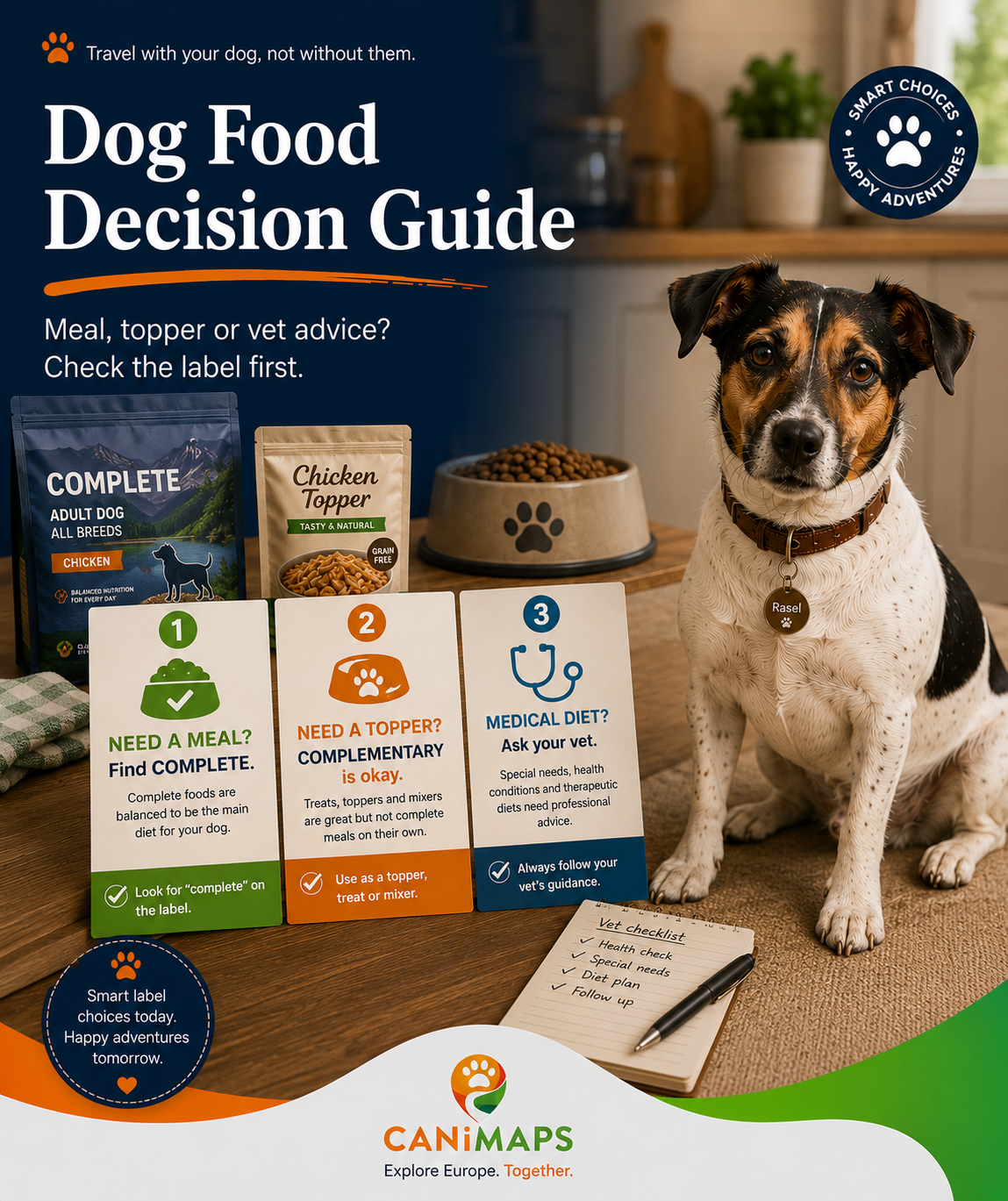
Before buying dog food, ask:
Does the label say complete or complementary?
Is it made for dogs?
Is it right for your dog’s life stage?
Is it intended as a main meal, treat, topper or mixer?
Are the feeding instructions clear?
Does the ingredient list support what the front of the pack claims?
Are the analytical constituents listed?
Can you contact the company if needed?
Is the food familiar enough for your dog’s stomach?
Does your dog have medical needs that require vet advice?
If you need a daily main food, look for a suitable complete food.
If the product is complementary, treat it as part of the diet — not the whole plan.
Final CANIMAPS Takeaway
Dog food labels can look confusing, but one small word can save a lot of trouble.
Complete means the food is intended to be the main diet when fed correctly.
Complementary means it is only part of the diet.
Marketing words can sound impressive, but they do not replace the basics: species, life stage, feeding instructions, ingredients, analytical constituents and your dog’s actual health needs.
So before trusting the front of the pack, turn it around.
Rasel would read the label.
Noodle would still vote for chicken.
Save this before your next pet shop visit, and follow CANIMAPS for more real-world dog care and lifestyle tips.
FAQ
What does complete dog food mean?
Complete dog food is designed to provide the nutrients a dog needs as their main diet when fed according to the label instructions.
What does complementary dog food mean?
Complementary dog food is not meant to be the whole diet on its own. It is usually a treat, topper, mixer, snack, chew, broth or add-on.
Can I feed complementary dog food as a full meal?
Usually no. If a product is labelled complementary, it should not be used as the dog’s only food unless your vet specifically advises it.
Is premium dog food the same as complete dog food?
No. Premium is a marketing term. Complete is useful label information showing the food is intended to be nutritionally complete for the stated dog and life stage.
What should I check first on a dog food label?
Check whether the food is complete or complementary, whether it is intended for dogs, the life stage, and the feeding instructions.
Does “with chicken” mean the food is mostly chicken?
Not necessarily. Ingredients are listed by weight, and if the label highlights chicken, the percentage should be shown. Always check the ingredient list.
Why are wet and dry food percentages hard to compare?
Wet food contains much more moisture, so protein and fat percentages can look lower than dry food even when the nutrient picture is different. Compare carefully and ask your vet if unsure.
When should I ask a vet about dog food?
Ask your vet if your dog has allergies, digestive issues, kidney disease, pancreatitis, obesity, pregnancy, medical needs or if you are unsure whether a food is suitable.
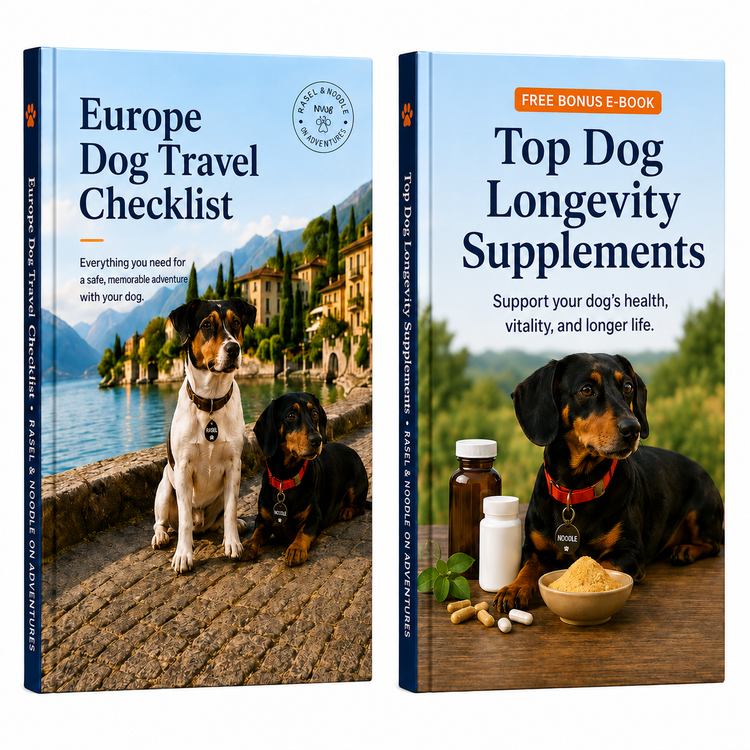
Europe Dog Travel Checklist and Top Dog Longevity Supplements
Get the Europe Dog Travel Checklist plus the free Top Dog Longevity Supplements e-book — travel smarter and support your dog’s long-term health.