
Dog Enrichment Ideas for Bored Dogs at Home
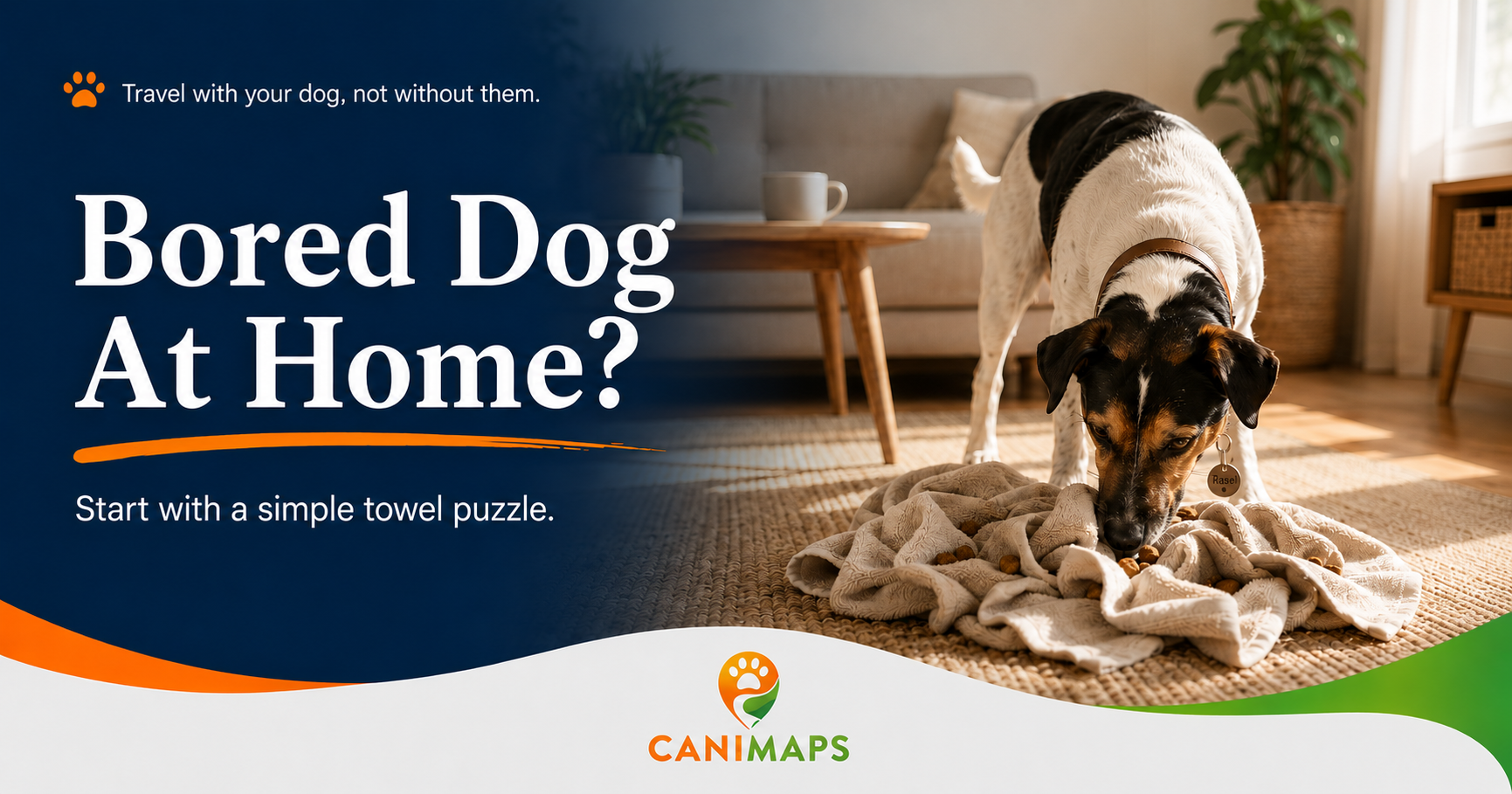
A bored dog does not always look “sad.”
Sometimes a bored dog looks loud, restless, clingy, destructive or impossible to tire out.
If your dog is chewing things they should not, barking for attention, digging, stealing socks or following you from room to room, they may not need more toys.
They may need better enrichment.
Dog enrichment means giving your dog safe ways to use their brain, nose, mouth and body. It helps dogs do normal dog things: sniff, forage, chew, lick, search, solve, move and rest.
The good news?
You do not need a house full of expensive gadgets. Many of the best dog enrichment ideas for bored dogs can be made from things you already have at home.
Quick Answer
Dog enrichment is any safe activity that gives your dog mental stimulation, choice and an outlet for natural behaviour.
Good enrichment ideas for bored dogs include scatter feeding, towel puzzles, cup search games, cardboard box treasure hunts, food puzzles, snuffle mats, lick mats, frozen treat toys, short training games, “find it” games, toy rotation and calm watching spots.
Start easy, supervise new activities and choose games that match your dog’s age, health, chewing style and stress level.
If your dog’s behaviour changes suddenly, becomes severe, or includes anxiety, pain, aggression or destructive behaviour when left alone, speak with your veterinarian or a qualified behaviour professional.
What Is Dog Enrichment?
Dog enrichment is any safe activity that improves your dog’s day by giving them choice, stimulation and an outlet for natural behavior.
For dogs, enrichment can include sniffing games, food puzzles, chewing, licking activities, short training games, problem-solving tasks, exploring new textures, calm observation, gentle movement and rest after activity.
Think of enrichment as the difference between simply putting food in a bowl and turning breakfast into a five-minute sniffing game.
Same food.
Better experience.
ASPCA describes enrichment as a way to keep a pet’s environment safe and exciting while allowing natural behaviours such as sniffing and chewing.
Signs Your Dog Might Be Bored
A bored dog may not show every sign. Some dogs become loud and destructive. Others become clingy, restless or demanding.
Common signs of boredom can include chewing furniture, shoes or household items, barking more than usual, digging indoors or outside, tipping over bins, stealing objects, pacing, jumping on people, constantly asking for attention, struggling to settle or becoming destructive when left alone.
AKC notes that big messes, digging, trash tipping, restlessness, excessive barking and jumping can all be signs that a dog needs more to do.
Important: boredom is only one possible cause.
Pain, anxiety, lack of exercise, separation distress or medical issues can also change behaviour. If the behaviour is sudden, intense or worrying, speak with your veterinarian or a qualified behaviour professional.
Why Enrichment Works Better Than “More Toys”
Many dogs have a basket full of toys and still act bored.
That is because toys sitting on the floor are not always enriching.
A toy becomes enrichment when it gives the dog something to do.
A ball lying in the corner is just an object. A ball used in a short search game becomes enrichment. A towel in the laundry basket is just a towel. A towel rolled with a few pieces of kibble becomes a sniffing puzzle.
The goal is not to exhaust your dog.
The goal is to meet your dog’s needs in a calm, safe and satisfying way.
Easy Dog Enrichment Ideas for Bored Dogs
1. Scatter Feeding
Scatter feeding is one of the easiest enrichment activities.
Instead of putting all your dog’s food in a bowl, scatter part of the meal on a clean floor, towel, mat or patch of grass. Your dog has to sniff and search for each piece.
This can work well for dogs who eat too fast, young dogs with lots of energy, rainy days, dogs who enjoy sniffing and quick morning enrichment.
Start with a small area so your dog understands the game. Once they get better, make the search area larger.
Safety tip: use this only in clean areas and avoid places treated with chemicals.
2. Towel Roll Puzzle
Take an old towel, place a few pieces of kibble or treats inside, then roll it loosely. Let your dog sniff, nudge and unroll it.
To make it easier, roll it loosely. To make it harder, fold the towel or hide food in several layers.
This is a good beginner enrichment idea for dogs new to puzzles, indoor play and calm food-based activity.
Supervise this game, especially if your dog likes shredding fabric.
3. Cup Search Game
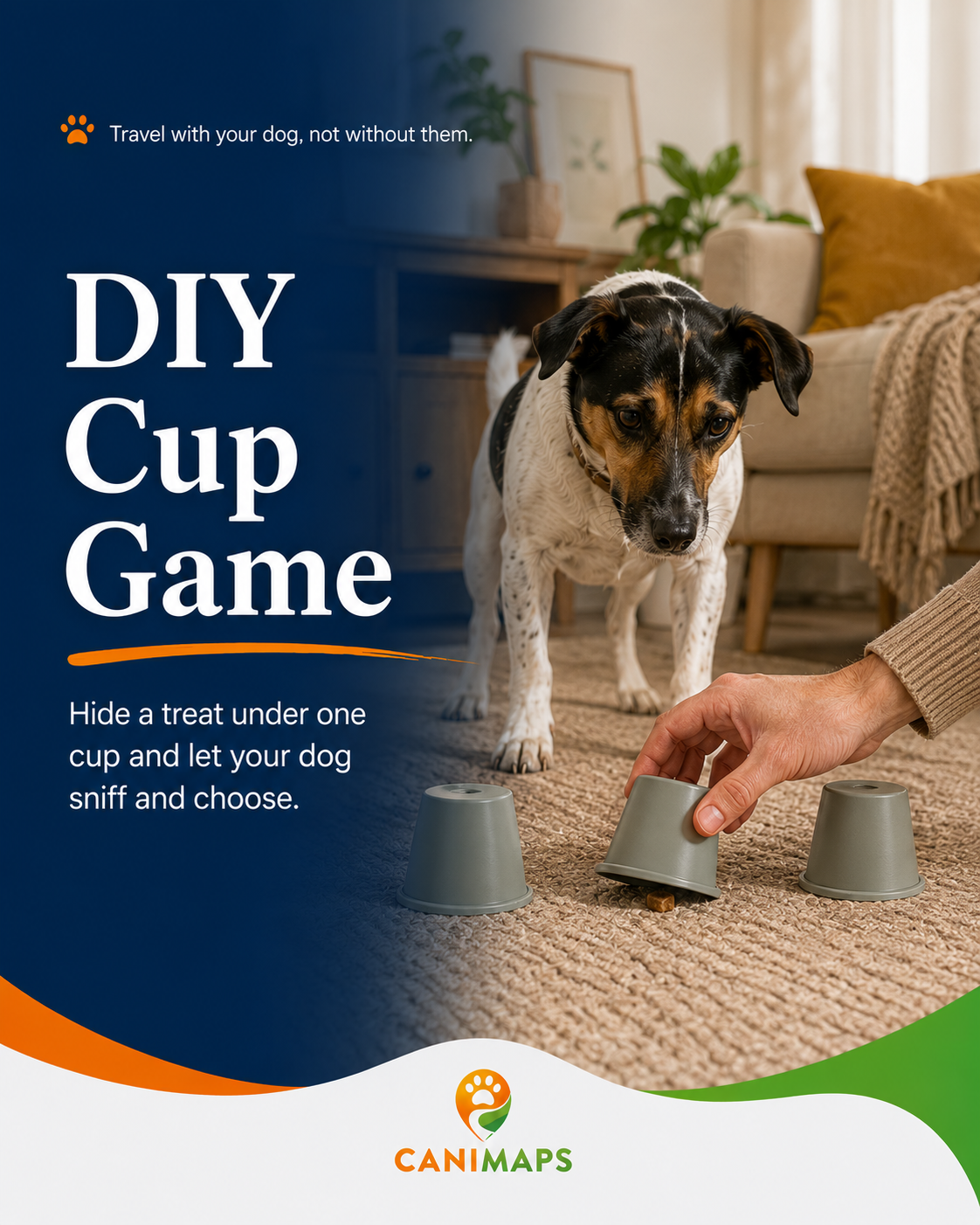
Place three cups upside down. Hide a treat under one cup. Let your dog sniff and choose.
At first, make it very easy. Let your dog see you place the treat. Once they understand, you can gently shuffle the cups.
This can help with nose work, confidence building, short training breaks and food-based play.
Keep it light.
This should feel like a fun game, not an exam.
4. Cardboard Box Treasure Hunt
Put a few pieces of kibble inside a cardboard box with crumpled paper. Let your dog search through it.
This is excellent for dogs who like investigating textures and smells.
It can work well for curious dogs, dogs who enjoy sniffing, confidence building and low-cost enrichment.
Safety tip: remove tape, staples and small pieces that could be swallowed. Supervise closely. If your dog eats cardboard, choose another activity.
5. Food Puzzle or Slow Feeder
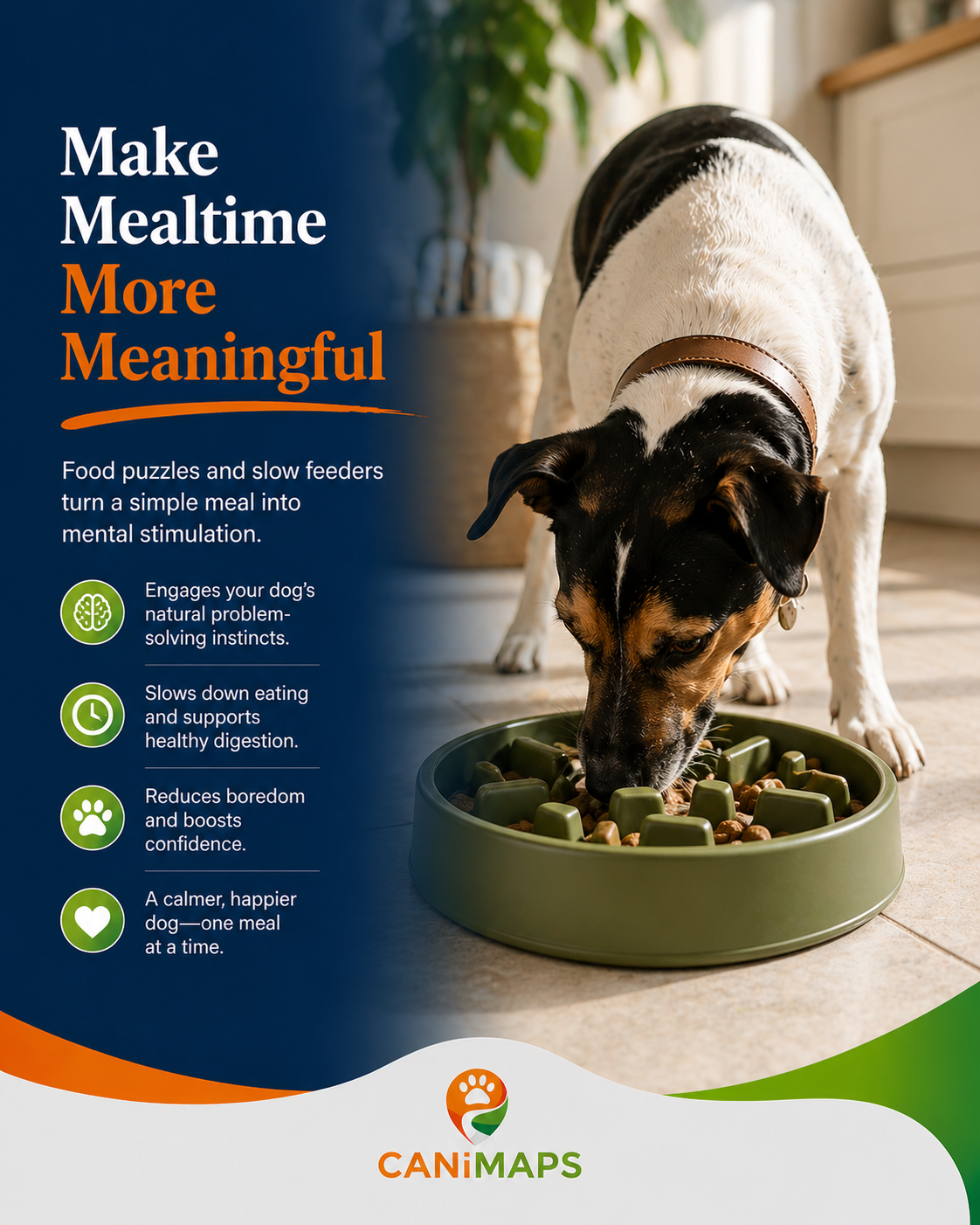
Food puzzles can make mealtime last longer and give your dog’s brain a job.
VCA explains that food puzzles can slow eating while also keeping pets mentally engaged. Some dogs may need help learning how to use them at first.
Food puzzles can be useful for fast eaters, dogs who need mental stimulation, dogs who enjoy solving problems and daily routine enrichment.
Start with easy puzzles.
If the puzzle is too hard, your dog may get frustrated and give up.
6. Snuffle Mat
A snuffle mat lets your dog use their nose to search for food hidden between fabric strips.
It mimics foraging and can be calming for many dogs.
This can be useful for sniffy dogs, small spaces, rainy days and calm evening enrichment.
You can buy one or make a simple version with a towel.
Always supervise dogs who chew fabric.
7. Lick Mat
Spread a thin layer of dog-safe food on a lick mat.
Good options may include plain wet food, soaked kibble, pumpkin puree or plain unsweetened yogurt if your dog tolerates dairy.
Licking can be soothing for some dogs and can help create a calm moment.
This can work well for calm time, grooming practice, post-walk decompression and dogs who need help settling.
Safety tip: avoid xylitol, chocolate, grapes, raisins, onions and anything unsafe for dogs.
8. Frozen Treat Toy
Stuff a dog-safe rubber toy with soaked kibble or wet food, then freeze it.
This can keep some dogs busy longer than dry treats.
Frozen treat toys may be useful for warm days, crate training support, dogs who enjoy licking and chewing, and calm independent activity.
Supervise your dog and choose a toy size and material appropriate for their chewing style.
9. Five-Minute Training Game
Training is enrichment when it is short, positive and fun.
Try simple cues like touch, sit, down, spin, find it, wait, hand target or go to mat.
Keep sessions short.
End while your dog is still enjoying it.
Short training games can support bonding, impulse control, confidence and mental stimulation.
10. “Find It” Game
Say “find it” and toss one treat a short distance. Let your dog search for it.
Once they understand, hide treats behind furniture legs, under a towel edge or around one room.
This is one of the easiest games to teach and can be played almost anywhere.
It can work well for beginner scent work, indoor energy, nervous dogs and quick enrichment breaks.
11. Toy Rotation
Instead of leaving every toy out all the time, keep a few available and rotate them every few days.
This makes old toys feel new again.
Toy rotation is useful for dogs with too many toys, dogs who lose interest quickly and budget-friendly enrichment.
A toy your dog ignored last week may suddenly feel exciting after a few days away.
Very relatable. Many humans also rediscover old hobbies after hiding them in a cupboard.
12. Calm Watching Spot
Not every enrichment activity needs food.
Some dogs enjoy watching the world from a safe window spot, balcony door or garden area. This can be enriching, especially for calm dogs who do not become overstimulated.
This may work well for relaxed dogs, senior dogs, dogs who enjoy observing and low-energy enrichment.
If your dog barks at everything outside, this may not be the best option.
Some dogs watch the world.
Some dogs audit the world and file complaints.
Choose accordingly.
A Simple Daily Enrichment Routine
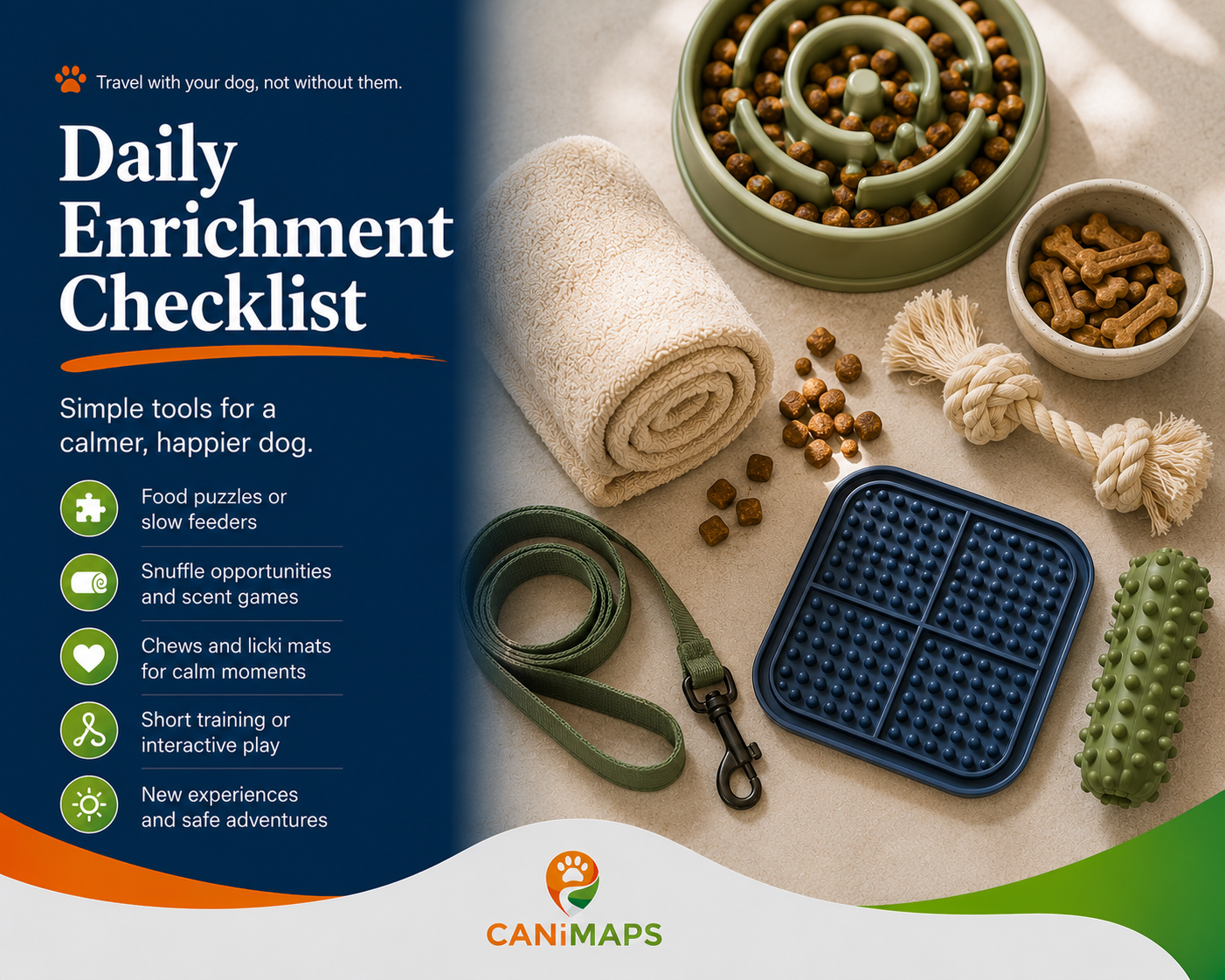
Enrichment does not need to take hours.
A simple day might look like this:
Morning: scatter part of breakfast or use a slow feeder.
Midday: play a five-minute training game.
Afternoon: do a short sniff walk or indoor “find it” game.
Evening: offer a lick mat, chew or towel puzzle.
Before bed: calm rest, no intense play.
Even 10 to 20 minutes of thoughtful enrichment spread across the day can make a difference for many dogs.
The goal is not to turn your home into a dog escape room.
The goal is to give your dog small, satisfying jobs.
Safety Rules for Dog Enrichment
Enrichment should be fun, but it should also be safe.
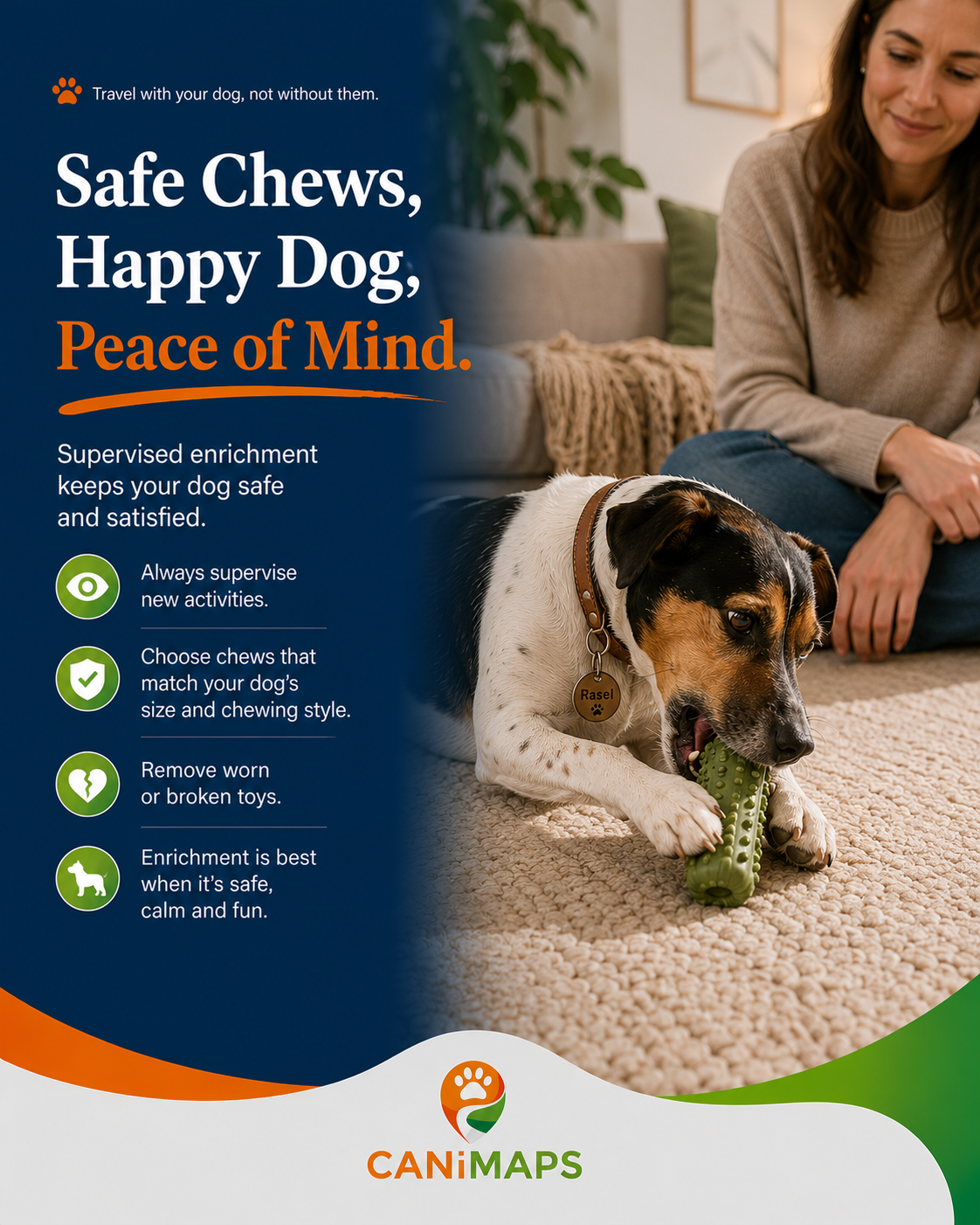
Supervise new activities. Choose toys that match your dog’s size and chewing style. Remove broken toys. Avoid small parts that can be swallowed. Do not let your dog eat fabric, cardboard or plastic. Avoid unsafe foods. Keep sessions short at first. Stop if your dog becomes frustrated. Ask your vet about chews if your dog has dental issues.
VCA Canada warns that chewing, shredding and dissecting activities should be supervised because of choking and swallowing risks. They also recommend asking your veterinarian about the benefits and risks of specific toys.
Simple rule:
If your dog is likely to swallow it, do not leave them alone with it.
Best Enrichment by Dog Type
For Puppies
Choose soft, easy puzzles and short games. Puppies explore with their mouths, so supervision is essential.
Good choices include towel rolls, beginner food puzzles, short training games and gentle sniffing games.
Avoid anything they can tear apart and swallow.
For High-Energy Dogs
High-energy dogs often need both physical exercise and mental work.
Good choices include find it games, training drills, food puzzles, scatter feeding and sniff walks.
Do not rely only on running.
Brain work can help them settle more effectively.
For Senior Dogs
Senior dogs can still enjoy enrichment, but it may need to be gentler.
Good choices include soft snuffle mats, easy food puzzles, calm sniffing, slow training refreshers and lick mats.
VCA notes that senior dogs may benefit cognitively from puzzles and enriching activities.
The goal is not to make your senior dog work hard.
The goal is to keep their day interesting, safe and kind.
For Anxious Dogs
Keep enrichment predictable and easy. Avoid frustrating puzzles or high-arousal games.
Good choices include lick mats, simple find it games, calm sniffing, gentle food puzzles and routine-based enrichment.
If anxiety is severe, work with a veterinarian or qualified behaviour professional.
Common Mistakes to Avoid
Making It Too Hard
If your dog cannot solve the puzzle, they may get frustrated.
Start easy.
Using Too Many Treats
Use part of your dog’s normal meal when possible.
Enrichment should not accidentally become a snack avalanche.
Noodle disagrees, but Noodle is not in charge of nutrition.
Leaving Unsafe Items Unsupervised
DIY enrichment is useful, but cardboard, towels and plastic can become dangerous if swallowed.
Supervise new activities and remove anything your dog starts destroying in an unsafe way.
Skipping Rest
Dogs need rest too.
A dog who is constantly entertained may become overtired.
Enrichment should help your dog settle, not turn them into a furry project manager with no off switch.
Expecting One Game to Fix Everything
Enrichment helps, but dogs also need exercise, training, sleep, social connection and health care.
If your dog is suddenly destructive, extremely anxious, aggressive, unusually clingy or impossible to settle, look deeper.
Boredom may be part of the story.
It may not be the whole story.
Final CANIMAPS Takeaway
Dog enrichment is not about buying the most complicated toy.
It is about giving your dog small, safe, satisfying jobs throughout the day.
Let them sniff. Let them search. Let them chew safely. Let them solve simple problems. Then let them rest.
A bored dog often does not need more excitement.
They need better outlets.
Start with one easy idea today: scatter breakfast, roll kibble in a towel or play “find it” for five minutes.
Small changes can make your dog’s day feel much bigger.
FAQ
What are the signs of a bored dog?
Common signs include chewing, barking, digging, stealing items, restlessness, attention-seeking and destructive behaviour. These can also have medical or anxiety-related causes, so sudden or severe changes should be checked by a professional.
How much enrichment does a dog need each day?
Many dogs benefit from several short enrichment moments per day rather than one long session. Start with 5 to 10 minutes and adjust based on your dog’s age, health and energy level.
What is the easiest dog enrichment activity?
Scatter feeding is one of the easiest. Take part of your dog’s meal and scatter it on a clean surface so they can sniff and search.
Can food puzzles help bored dogs?
Yes, food puzzles can help dogs work for their food, slow down eating and add mental stimulation. Start with easy puzzles before moving to harder ones.
Are DIY dog enrichment toys safe?
They can be safe when supervised and matched to your dog. Avoid anything your dog may swallow, shred or choke on.
How do I keep my dog busy while I work?
Try a snuffle mat, frozen treat toy, lick mat or food puzzle during calm work periods. Supervise new activities until you know your dog uses them safely.
What enrichment is best for high-energy dogs?
High-energy dogs often benefit from a mix of sniffing games, training games, food puzzles, scatter feeding and physical exercise.
Can senior dogs do enrichment games?
Yes. Senior dogs may enjoy gentler enrichment such as easy puzzles, soft snuffle mats, calm sniffing and short training refreshers.

Europe Dog Travel Checklist and Top Dog Longevity Supplements
Get the Europe Dog Travel Checklist plus the free Top Dog Longevity Supplements e-book — travel smarter and support your dog’s long-term health.