
What to Feed Your Dog Before a Long Car Ride?
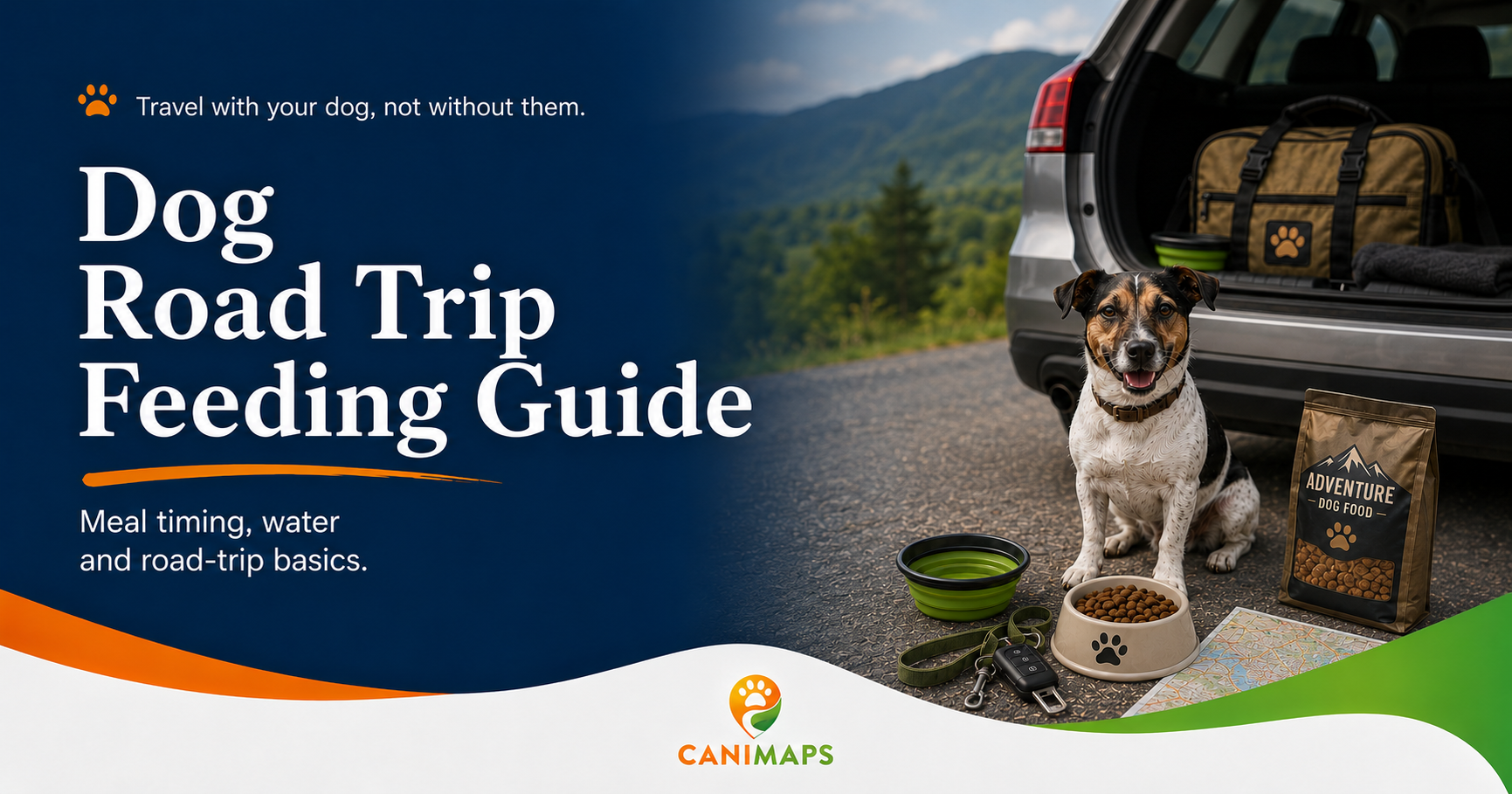
You packed the leash. You packed the poop bags. You packed the tiny travel bowl that somehow cost more than your lunch.
Then your dog looks at you like:
“Great. Where is breakfast?”
And now the real question begins.
Should you feed your dog before a long car ride, or is that just asking for a back-seat disaster?
This is one of those dog travel questions that sounds small until you are cleaning the car seat at a petrol station with one napkin and deep regret.
Quick Answer
Many dogs do better with a light, familiar meal a few hours before travel, not a full breakfast right before getting into the car.
Some dogs who are prone to motion sickness may need a longer gap before travel, and dogs with medical conditions should follow their vet’s advice.
This is not veterinary advice. If your dog has repeated vomiting, severe drooling, sudden illness, anxiety, a chronic condition, or a history of travel sickness, contact your vet before your trip.
The Quick Rule: Avoid the Full Meal Right Before Leaving
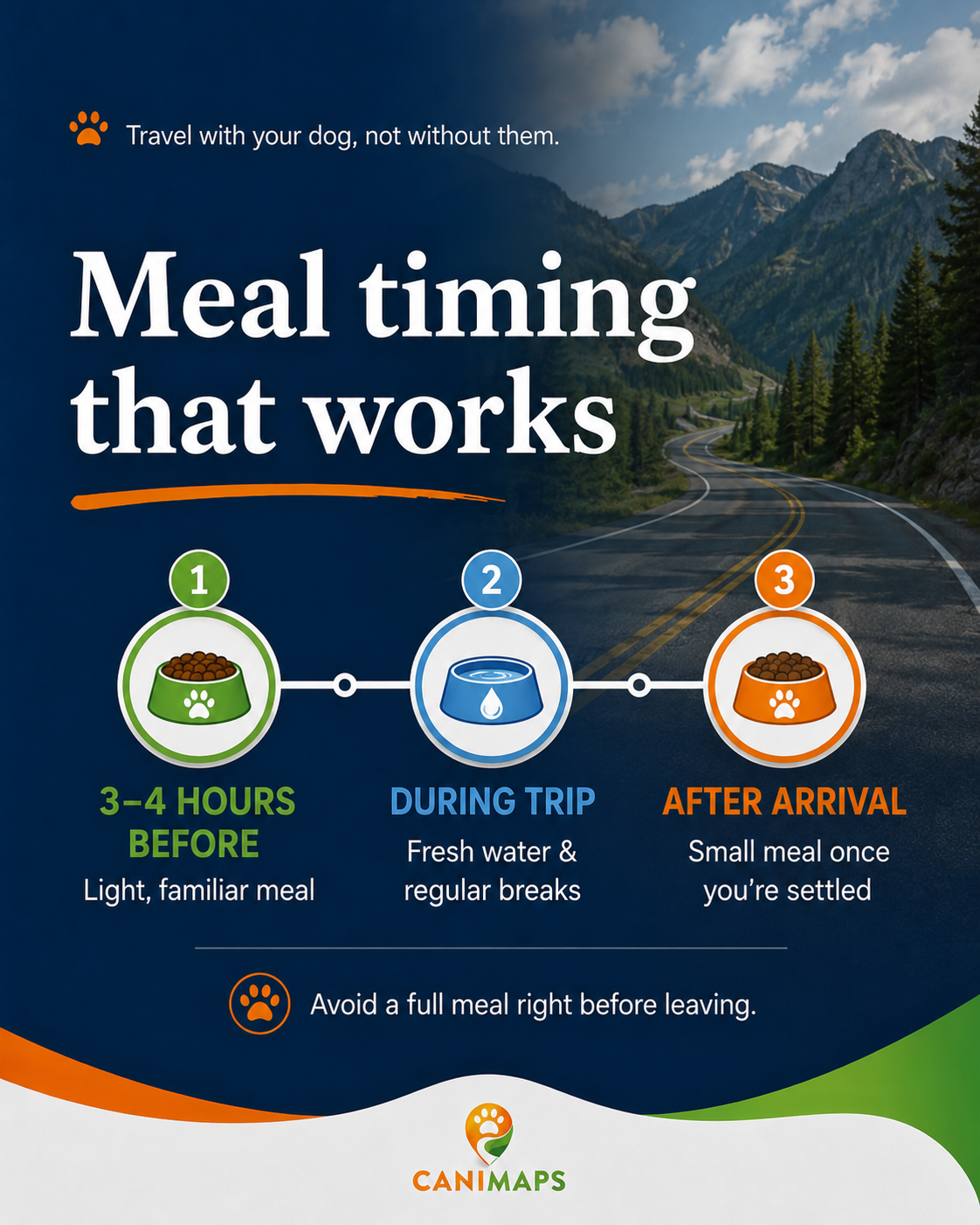
For most healthy dogs, the safest starting point is simple: do not feed a large meal right before the car ride.
CDC guidance recommends feeding pets 3 to 4 hours before leaving to help prevent car sickness or vomiting. ASPCA also suggests a light meal 3 to 4 hours before departure and says owners should avoid feeding pets in a moving vehicle.
That does not mean every dog needs to travel hungry all day.
It means timing matters.
A full stomach plus a moving car plus turns, stops, heat, excitement and stress can become a very dramatic combination.
And not in the cute movie way.
What if Your Dog Gets Car Sick?
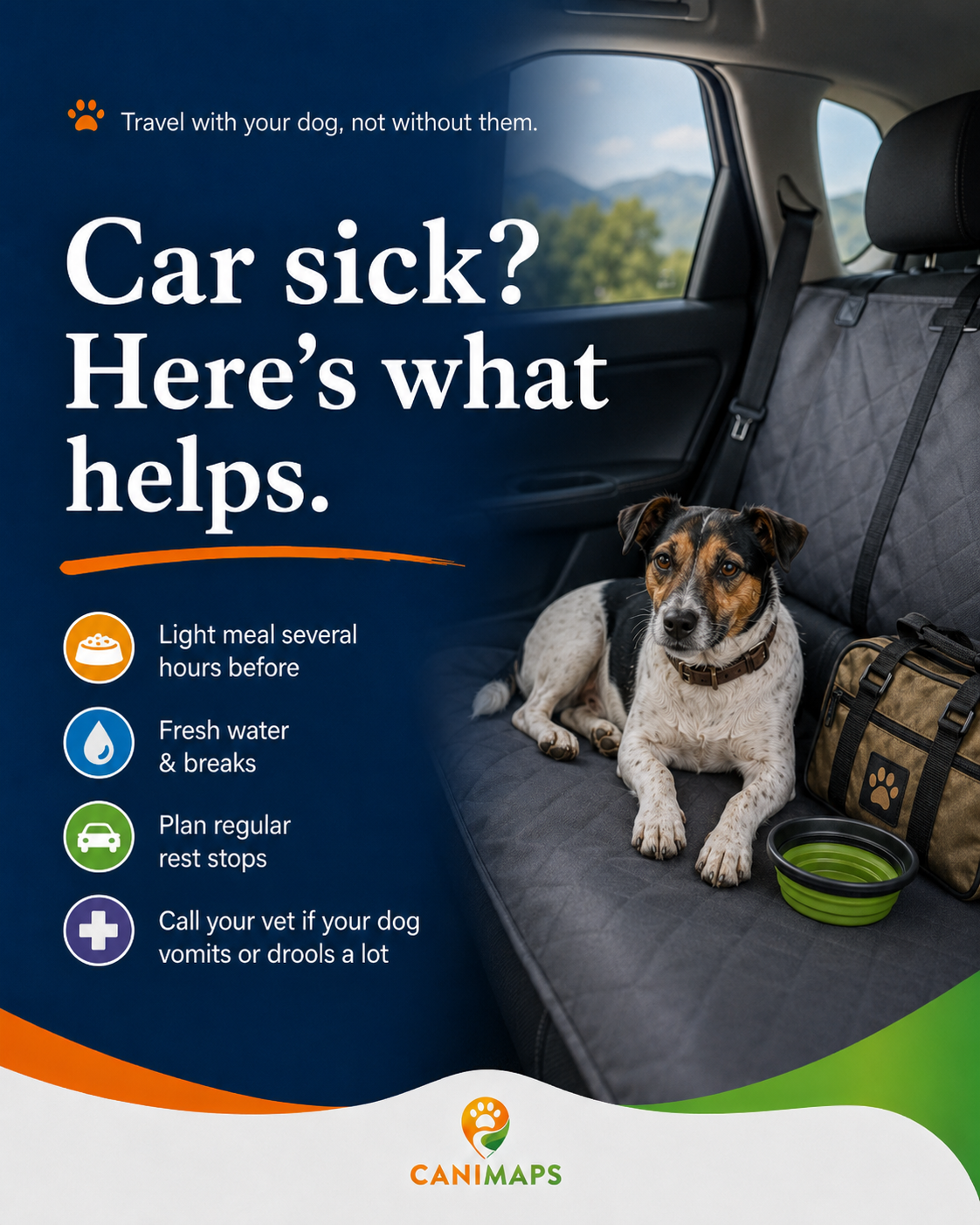
If your dog drools heavily, lip-licks, yawns, whines, trembles, vomits, or looks miserable in the car, they may be experiencing motion sickness or travel anxiety.
Cornell’s Riney Canine Health Center notes that many dogs, especially puppies, can experience nausea or motion sickness during travel. To reduce nausea, Cornell suggests avoiding food 4 to 6 hours before travel and talking to a veterinarian if the dog drools or vomits when travelling.
VCA Animal Hospitals gives an even wider option for some dogs, saying that if it is not too stressful, withholding food for up to 8 hours before travel may help reduce nausea. VCA also emphasizes access to fresh water whenever possible.
So the practical CANIMAPS version is this:
If your dog normally travels well, a light meal 3 to 4 hours before departure may be fine.
If your dog often gets sick in the car, ask your vet whether a longer food gap, anti-nausea medication, or a training plan would be better.
If your dog is a puppy, senior dog, tiny breed, diabetic, has stomach issues, or takes medication, do not guess.
Ask your vet.
What Should the Meal Actually Be?
Travel day is not the moment to test new gourmet duck snacks from a market stall.
Keep it boring.
Boring is beautiful before a road trip.
A good pre-travel meal is usually familiar, plain, smaller than normal, given several hours before leaving, and not fatty, spicy, rich or new.
Use your dog’s normal food if they tolerate it well. If your dog has a sensitive stomach, stick to the food routine your vet already knows about.
Avoid giving lots of treats in the car, especially while the vehicle is moving.
Even “just one little snack” can become “why is the back seat wet?” very quickly.
What About Water?
Do not remove water completely unless your vet has told you to manage water for a specific medical reason.
Dogs still need hydration, especially during summer trips, mountain drives, beach days, ferry waits and long border-crossing-style travel days.
CDC recommends bringing plenty of water, a bowl and other travel essentials. ASPCA also recommends packing plenty of water and notes that drinking unfamiliar water may cause stomach discomfort for some pets.
A simple approach:
Offer water before leaving. Bring your own water. Use a travel bowl. Offer small drinks during stops. Do not let your dog gulp a huge amount right before jumping back into the car.
Small, calm breaks usually work better than chaotic “everyone panic hydrate now” moments.
Plan Stops Before Your Dog Demands Them
Your dog cannot read your road trip schedule.
Sadly, this remains one of their few weaknesses.
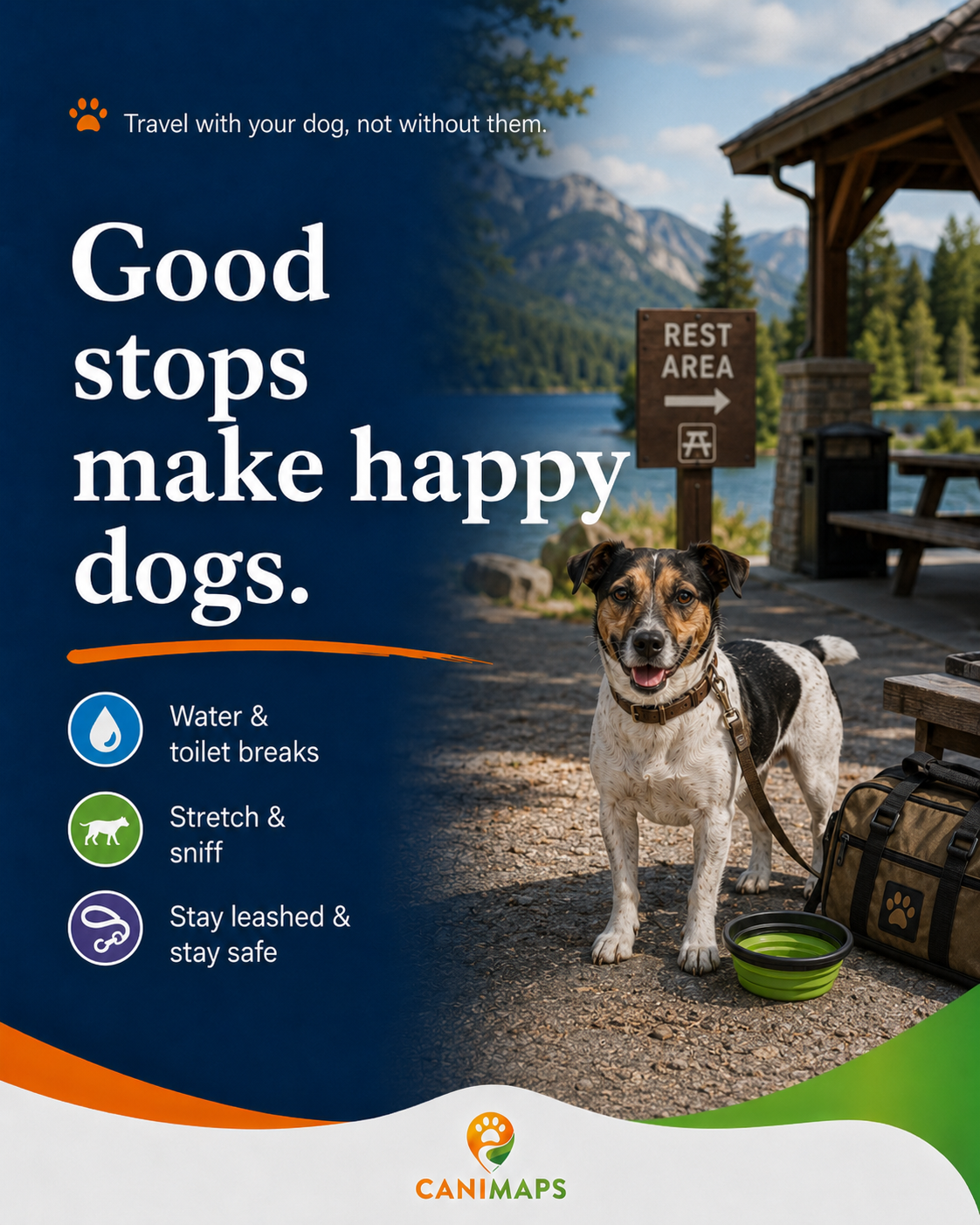
For long drives, plan regular breaks for toilet time, stretching and water. MSD Veterinary Manual recommends stopping at a safe rest area every 2 hours so pets can drink water and go to the bathroom.
That does not mean every dog needs a full adventure every 2 hours.
Some just need a quick sniff, a pee, a sip, and a little reset.
Keep your dog leashed at every stop. New places can be exciting, noisy and unpredictable.
A motorway rest stop is not the ideal place to discover your dog has developed a passion for chasing pigeons.
Do Not Sedate Your Dog Without Vet Advice
If your dog panics in the car, it is tempting to search for calming pills, sedatives or “natural travel remedies.”
Be careful.
The FDA advises against giving pets sedatives for car or plane travel unless discussed with a veterinarian, because sedatives can dull their senses and reduce their ability to react in an emergency.
If your dog struggles with car travel, talk to your vet. There may be safer options, including anti-nausea medication, anxiety support, training, gradual exposure, or referral to a qualified behaviour professional.
Do not borrow another dog’s medication.
Do not guess a dose.
Do not mix calming products.
Do not trust random internet comments that start with “works for my dog.”
That is how road trips turn into emergency vet trips.
The Common Mistake: Feeding Out of Guilt
This is the big one.
Owners often feel bad when a dog skips breakfast before travel.
The dog stares.
The owner weakens.
The bowl appears.
The car leaves 12 minutes later.
Then the dog looks betrayed by physics.
Skipping or delaying a full meal before travel is not being mean when it is done safely and thoughtfully. It is often about preventing nausea, stress and vomiting.
You can still bring your dog’s food. You can still feed them later. You can still reward them at stops.
You are not running a dog prison.
You are managing travel comfort.
CANIMAPS Travel-Day Feeding Checklist
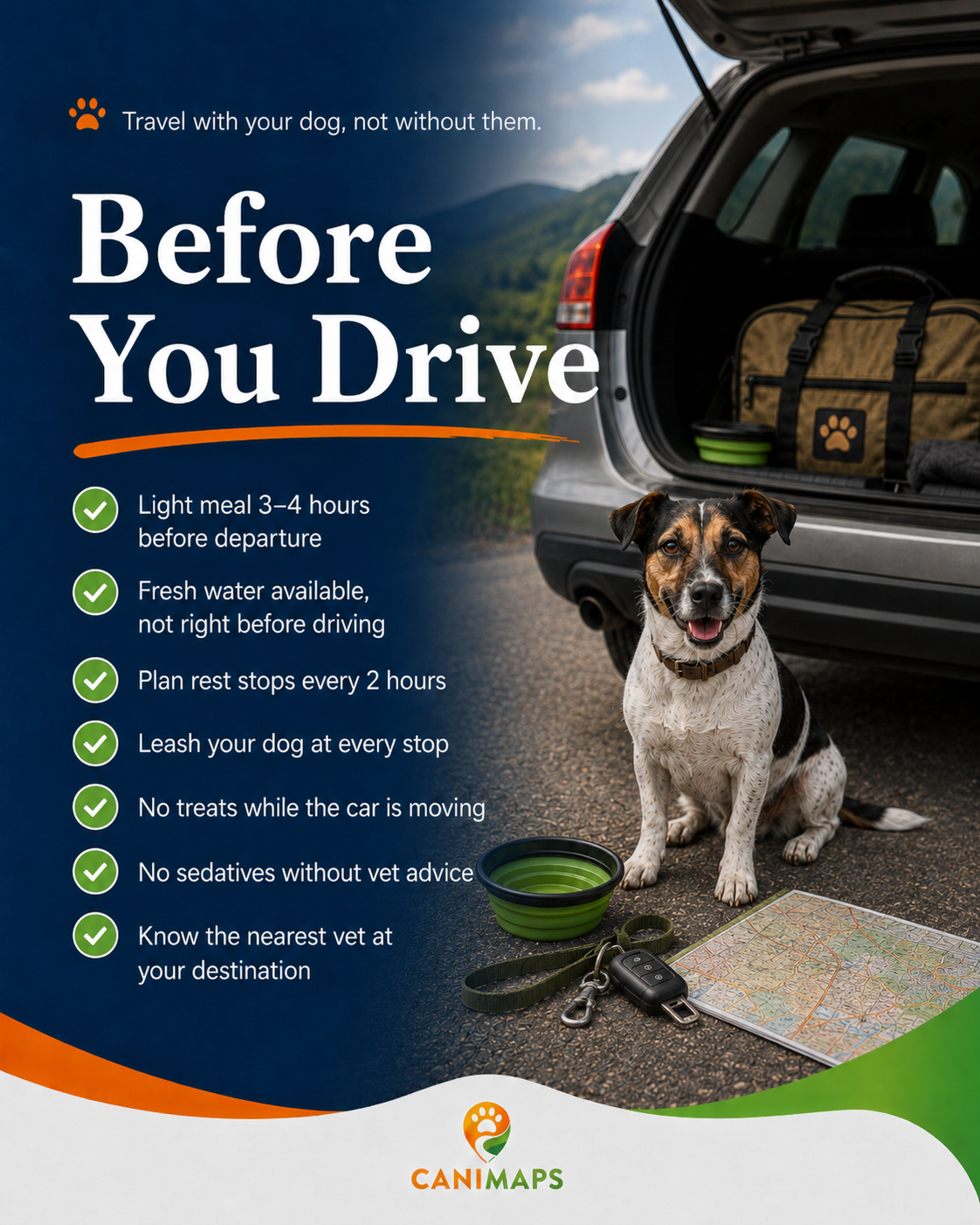
Before your next dog-friendly trip, check:
Feed a light, familiar meal 3 to 4 hours before departure if your dog usually travels well.
Ask your vet about a longer food gap if your dog gets car sick.
Do not feed a full meal right before leaving.
Avoid new foods, fatty treats and rich snacks on travel day.
Bring your dog’s normal food.
Pack water from home if your dog has a sensitive stomach.
Use rest stops for water, toilet breaks and stretching.
Keep your dog leashed at every stop.
Do not give sedatives or travel medication unless your vet says so.
Know where the nearest vet or emergency clinic is at your destination.
When to Call Your Vet
Contact your vet before travel if your dog vomits often in the car, drools heavily during rides, refuses water for a long time, has diarrhea, repeated vomiting or weakness, has diabetes, kidney disease, pancreatitis or other chronic issues, is a very young puppy or fragile senior, needs medication with food, or becomes extremely anxious in the car.
And if symptoms are severe, sudden, repeated or worrying, do not wait for a blog article to solve it.
Call your vet.
Final CANIMAPS Takeaway
For most dogs, the best travel meal is not a giant breakfast five minutes before leaving.
It is a light, familiar meal given a few hours before the trip, with water, rest stops and a calm plan.
Your dog does not need a five-course brunch before a road trip.
They need comfort, safety, routine, hydration and a human who thought about the back seat before disaster struck.
Save this before your next dog-friendly adventure, and follow CANIMAPS for more real-world dog travel and lifestyle tips.
FAQ
Should I feed my dog before a long car ride?
Usually yes, but not right before leaving. A light meal 3 to 4 hours before travel is often recommended for dogs that travel well. Dogs with motion sickness may need a longer gap, depending on vet advice.
Can my dog travel on an empty stomach?
Some dogs who get car sick may do better with a longer food gap before travel. This should be handled carefully for puppies, seniors, tiny dogs and dogs with medical conditions.
Can I give treats during the car ride?
It is safer to avoid feeding treats while the car is moving, especially if your dog gets nauseous. Save small treats for calm rest stops.
Should I give my dog calming medicine before a trip?
Not without your vet. Sedatives and calming medications can have risks, and FDA advises talking to a veterinarian before using sedatives for travel.
How often should I stop on a road trip with my dog?
For long trips, a stop around every 2 hours is a useful planning baseline for water, toilet breaks and stretching.
What should I pack for feeding my dog on a road trip?
Pack normal food, water, a travel bowl, waste bags, medication if needed, cleaning supplies and your dog’s usual feeding instructions.
What if my dog vomits every time in the car?
Talk to your vet before the trip. Repeated vomiting may need a different feeding schedule, anti-nausea support, anxiety management or a training plan.
Is this veterinary advice?
No. This is practical travel and lifestyle guidance. Dogs with health issues, repeated vomiting, severe anxiety, medication needs or chronic conditions should follow veterinary advice.
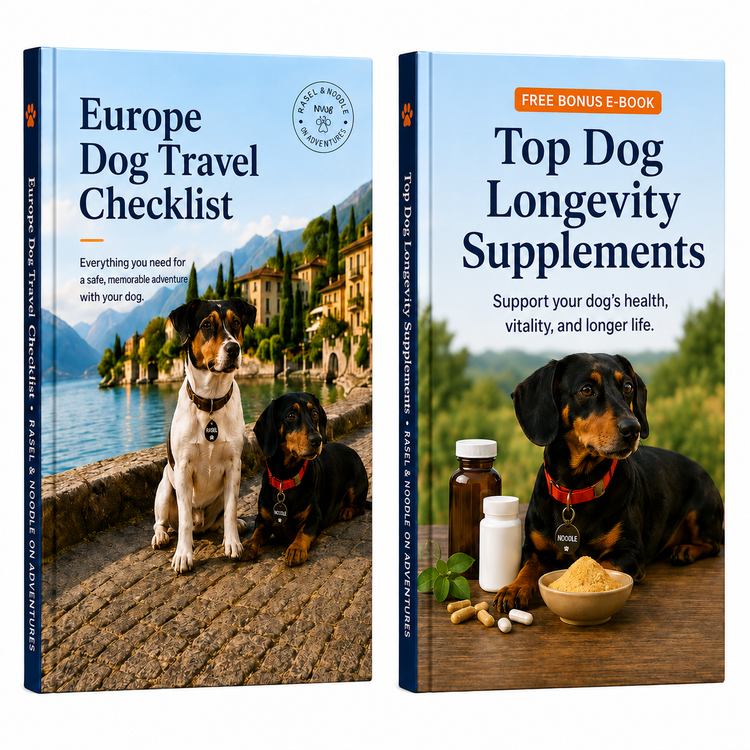
Europe Dog Travel Checklist and Top Dog Longevity Supplements
Get the Europe Dog Travel Checklist plus the free Top Dog Longevity Supplements e-book — travel smarter and support your dog’s long-term health.