
Hot Pavement and Dogs: How to Protect Paws Before Summer Walks
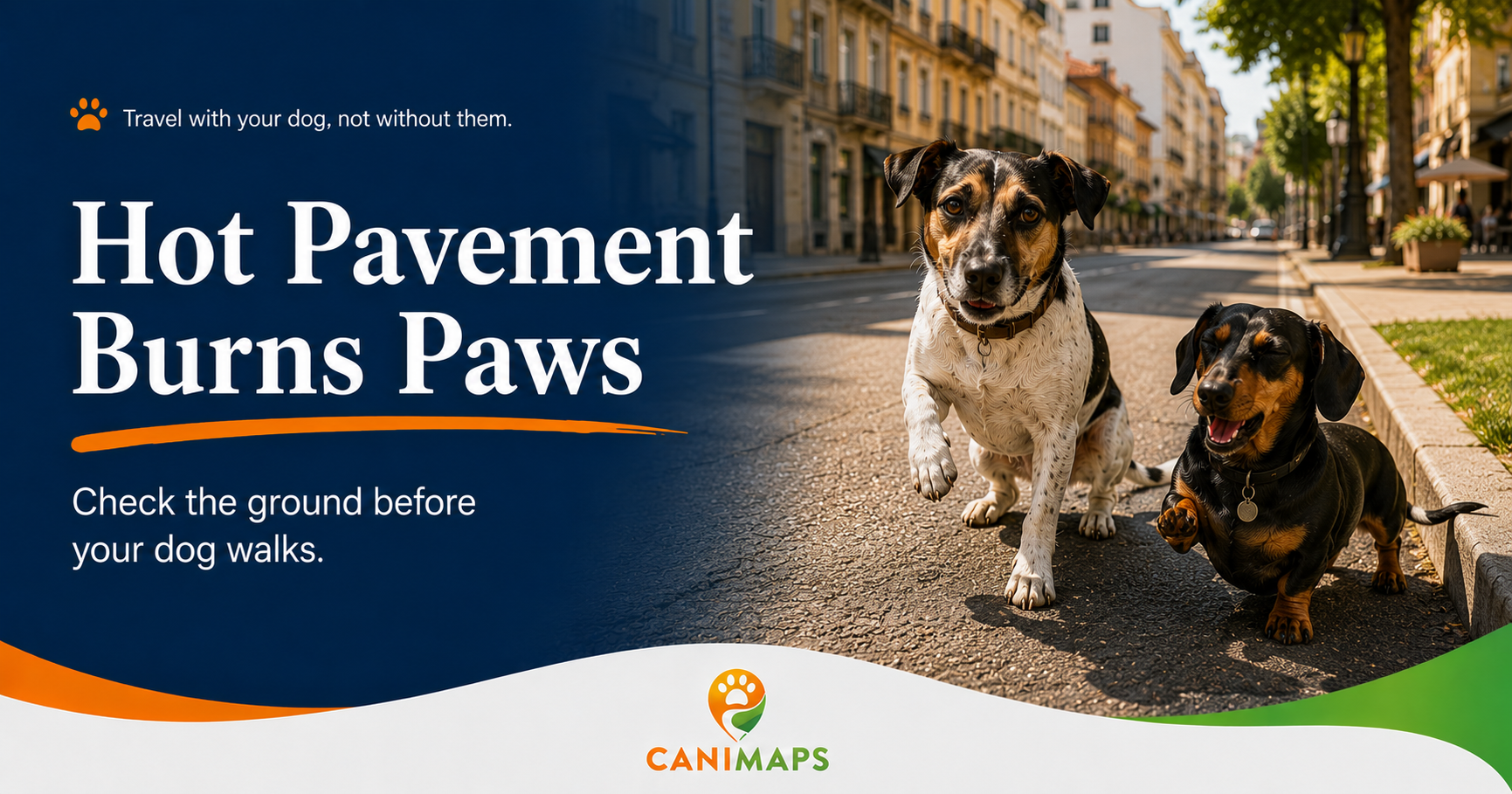
Your dog may be ready for a sunny walk.
Their paws may not be.
Hot pavement is one of those summer risks that looks harmless until it is not. Asphalt, concrete, sand, metal platforms and artificial grass can heat up quickly, especially in cities, beach areas, parking lots and transport stations.
Your dog is walking barefoot on surfaces that you would probably avoid without shoes.
And unlike humans, dogs do not always make calm safety decisions.
Noodle would confidently step onto hot asphalt and then blame the sun personally.
Rasel would check the ground first.
Be Rasel.
Quick Answer
If the ground feels too hot for your bare hand or bare foot, it may be too hot for your dog’s paws.
Walk earlier or later in the day, choose grass or shade, bring water, avoid long waits on asphalt, metal, sand or artificial grass, and watch for signs of paw pain or overheating.
This is not veterinary advice. If your dog is limping, has burned pads, seems weak, collapses, vomits, has diarrhea, pants heavily or acts unusually tired in the heat, contact a veterinarian urgently.
Why Hot Pavement Is a Bigger Problem Than It Looks
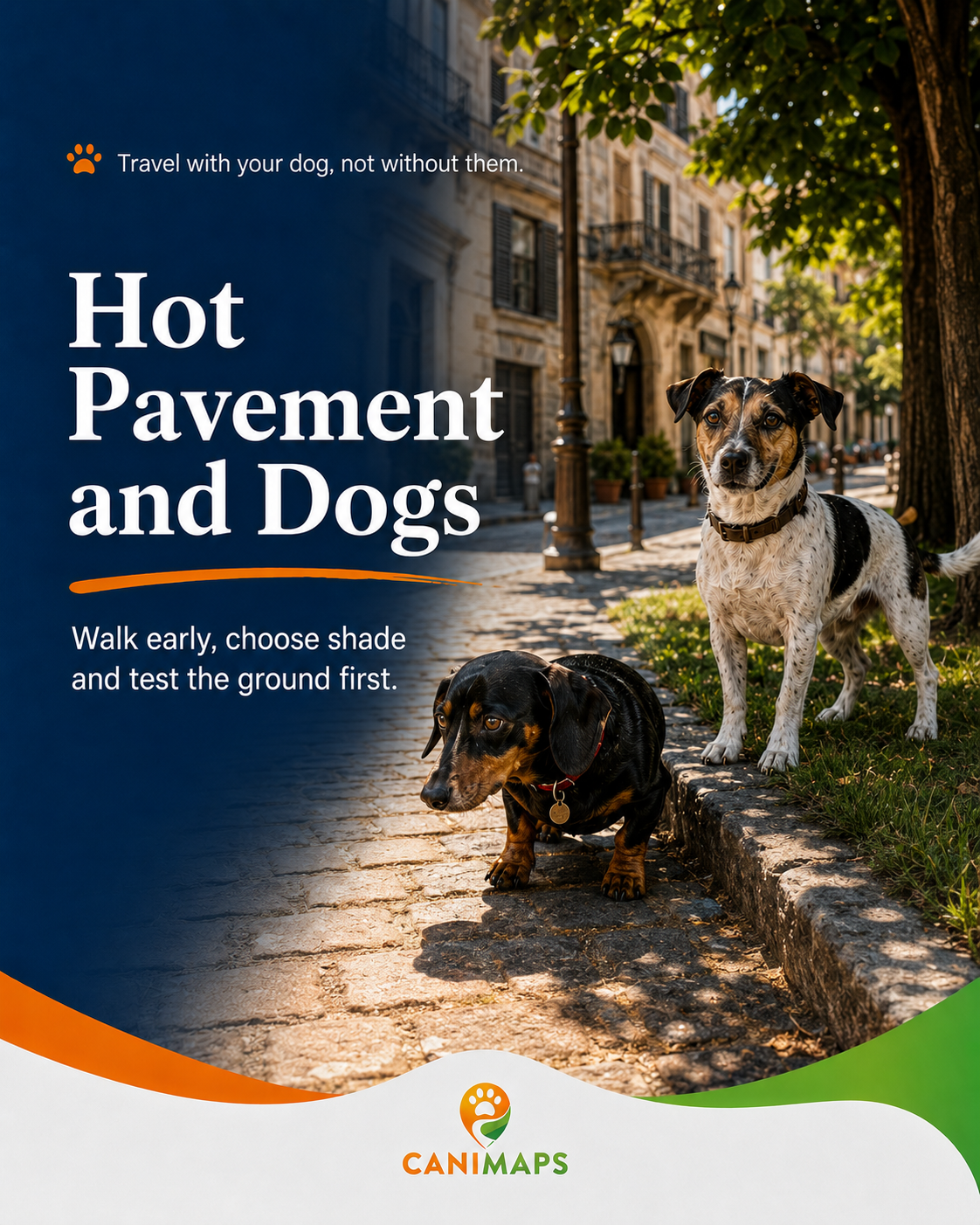
Dogs are lower to the ground than we are. That means they are closer to radiating heat from asphalt, paving stones, sand and station platforms.
Their paw pads are tougher than human skin, but they are not magic shoes.
AKC notes that asphalt and artificial grass can become incredibly hot and may cause discomfort, blisters and burns to dog paw pads. It also quotes veterinary guidance that when the temperature is around 85°F or higher and the pavement has not cooled, the ground may be too hot for safe walking.
The tricky part is that air temperature does not tell the full story.
A warm day can still create very hot surfaces if the sun has been hitting the ground for hours.
That means your dog might seem fine at the start of the walk, then suddenly slow down, pull toward shade, lift paws, limp or refuse to continue.
Very dramatic?
Maybe.
Also very reasonable, considering they may be walking on a frying pan.
How to Check if the Ground Is Too Hot
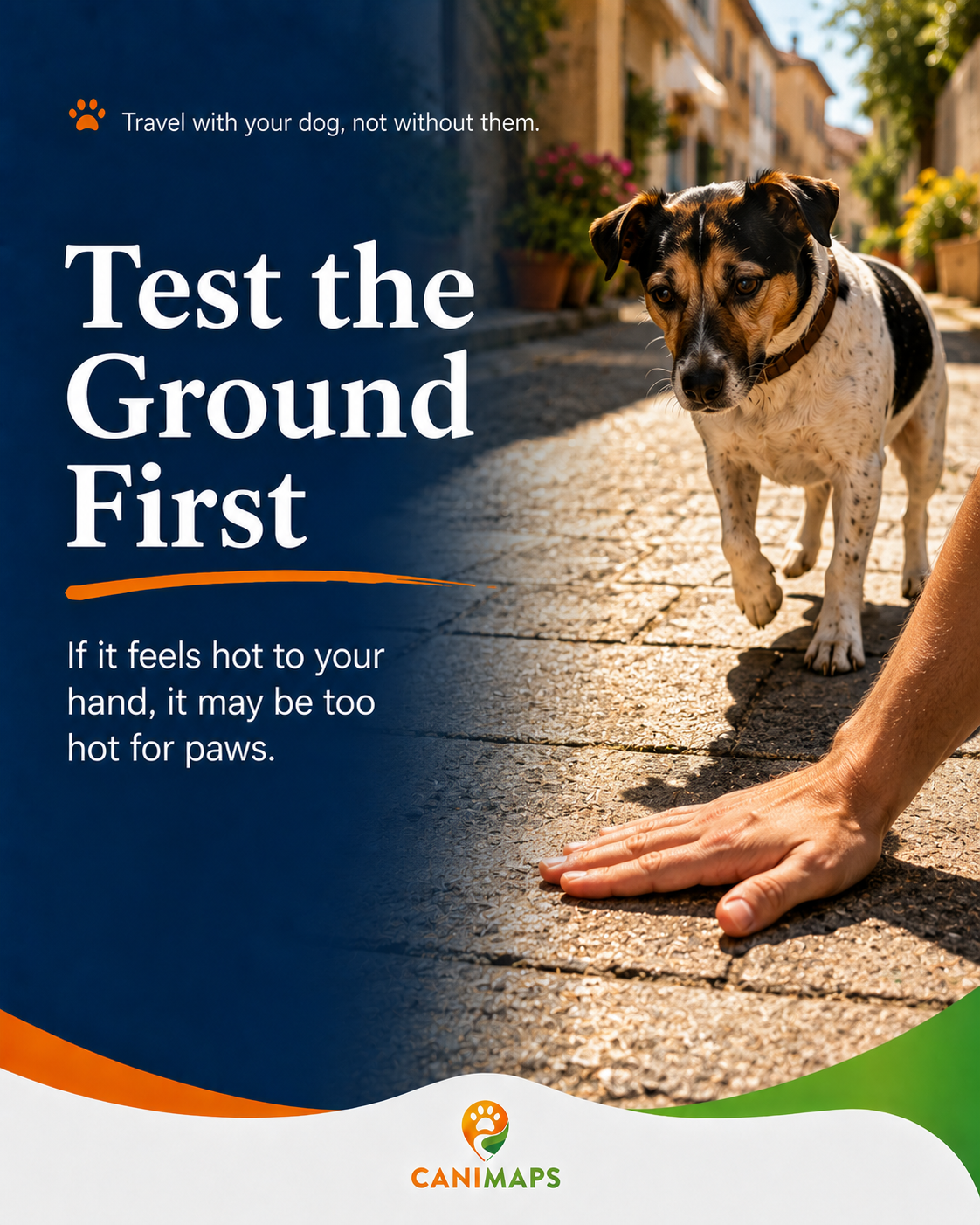
The simplest test is the hand test.
Place the back of your hand on the pavement for several seconds. If it feels too hot or uncomfortable for you, choose another route or delay the walk.
Also check:
asphalt roads
black parking lots
concrete sidewalks
metal ferry ramps
train station platforms
beach boardwalks
artificial grass
hot sand
outdoor café terraces
old stone streets
Shade matters.
A pavement strip under trees may be much cooler than an exposed sidewalk just one metre away.
If you are travelling, do not assume tourist areas are dog-safe just because they look pretty. City squares, old stone streets and beach promenades can become brutal in the afternoon sun.
Best Times to Walk Your Dog in Summer
In hot weather, the safest walking windows are usually early morning and later evening.
Midday and afternoon walks are often the riskiest because surfaces have had hours to heat up.
A practical CANIMAPS walking rhythm:
Morning: longer walk, sniffing and exercise.
Midday: short toilet break only, shade if possible.
Afternoon: avoid hot surfaces and long city walks.
Evening: calmer walk after surfaces cool down.
If you are travelling, plan dog activities around heat, not just your sightseeing plan.
Your dog does not care that the castle looks better at 14:00.
Their paws are voting for 07:30.
Surfaces That Can Hurt Dog Paws
Hot pavement is the obvious one, but it is not the only problem.
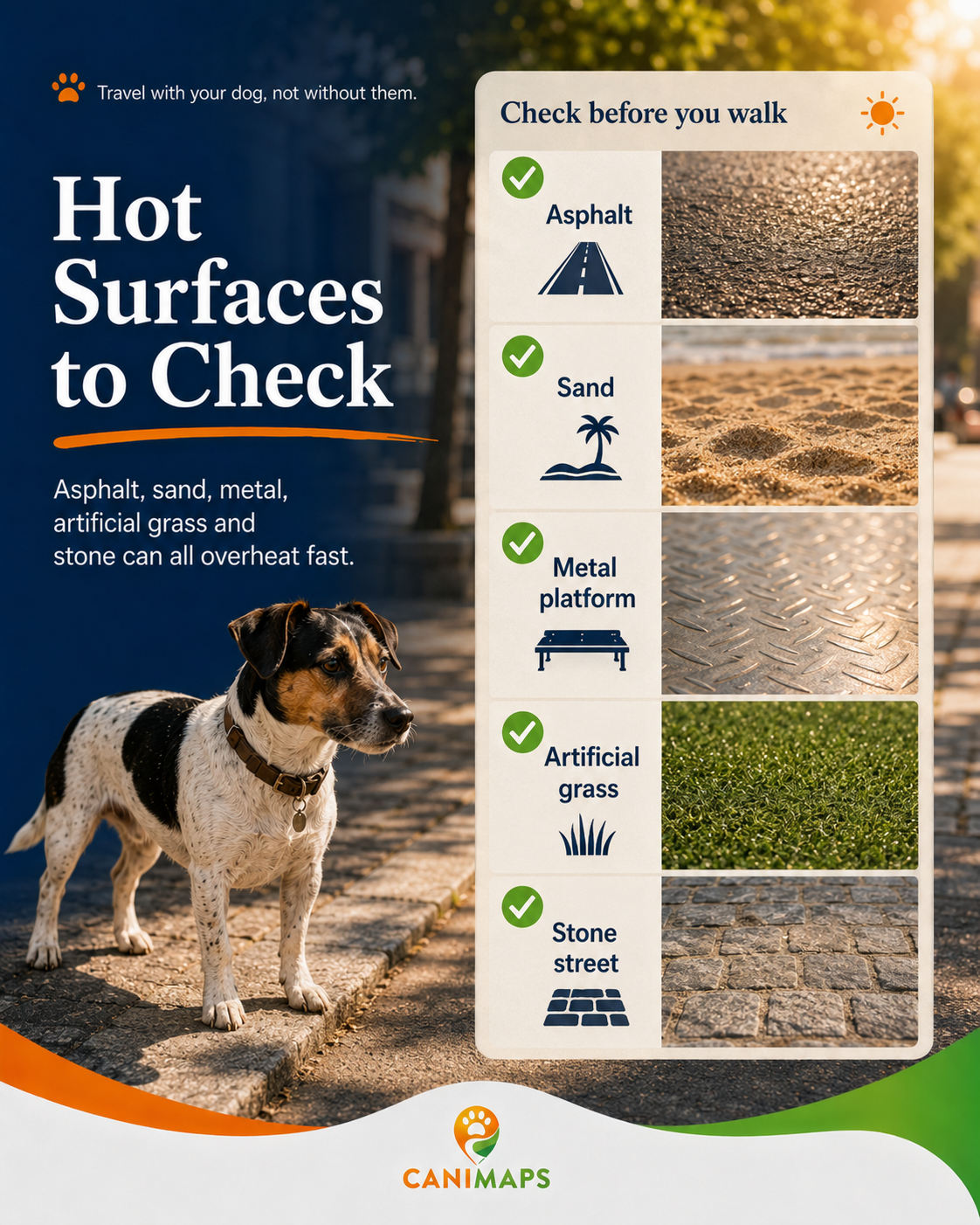
.
Asphalt
Dark asphalt absorbs heat fast. Roads, parking lots and city sidewalks can become unsafe quickly.
Sand
Dog-friendly beaches are not automatically paw-friendly beaches.
Hot sand can burn paws too.
Metal
Ferry ramps, train station areas, metal stairs, grates and cable car boarding areas can heat up fast in direct sun.
Artificial Grass
Artificial turf can become hotter than many people expect. AKC specifically includes artificial grass among surfaces that can become very hot and uncomfortable for dogs.
Stone Streets
Old town streets look charming, but stone can hold heat.
This matters in European cities where dog owners may spend hours walking through historic centres.
Beautiful street?
Maybe.
Cool enough for paws?
Check first.
Paw Protection Options
There is no single perfect solution for every dog, but these options can help.
Choose Cooler Routes
Grass, shaded paths and forest trails are usually better than exposed asphalt.
In cities, cross to the shady side of the street when possible.
This sounds basic.
It also works.
Use Dog Boots Carefully
Dog boots can protect paws from hot pavement, sharp surfaces and rough ground, but dogs need time to get used to them.
Introduce boots slowly at home before expecting your dog to walk normally in public.
Do not buy boots the morning of your trip and expect elegance.
You may get interpretive dance.
Carry Small Dogs When Needed
If your dog is small enough and the ground is too hot for a short crossing, carrying them may be safer than forcing them across a parking lot or station platform.
This does not mean carrying your dog across an entire city.
It means using common sense for dangerous short sections.
Bring Water
Dogs can become dehydrated quickly in hot weather.
ASPCA recommends giving pets plenty of water and shade during hot weather, and warns that dogs should not linger on hot asphalt in very high temperatures.
Bring water and a bowl, especially during summer trips, beach days, mountain days, ferry waits, outdoor cafés or long city walks.
Avoid Long Waits on Hot Ground
This matters for ferry queues, outdoor café lines, bus stops, train platforms, parking lots, beach entrances and cable car stations.
If you have to wait, look for shade, grass, a mat, a towel or a cooler surface.
The dangerous moment is often not the walk itself.
It is standing still on hot ground while humans read signs, check tickets or argue with navigation.
Noodle would call this “admin heat.”
Rasel would already be under a tree.
Signs Your Dog May Be Overheating
Paw safety and heat safety are connected.
A dog dealing with hot ground may also be dealing with hot air, sun exposure and stress.
ASPCA lists overheating symptoms such as excessive panting, difficulty breathing, increased heart and respiratory rate, drooling, weakness, stupor, collapse, seizures, bloody diarrhea and vomiting.
Vets Now lists heatstroke signs including heavy panting, drooling, vomiting, diarrhea, unsteady legs, glassy eyes, racing heart and excessive thirst.
Stop immediately if your dog:
pants heavily at rest
drools more than usual
seems weak or wobbly
vomits
has diarrhea
refuses to walk
lifts paws repeatedly
collapses
seems confused
has bright red or very pale gums
Heatstroke is an emergency.
Contact a vet immediately if you suspect it.
What to Do if Your Dog’s Paws Look Sore
If your dog starts limping or refusing to walk, move them off the hot surface right away.
Check for redness, blisters, peeling, cuts, swelling, licking or chewing paws, and sensitivity when touched.
Do not apply random creams, oils or human burn products without vet advice.
Some products are unsafe if licked.
For mild irritation, move to a cool safe surface, offer water and monitor closely. For burns, blisters, bleeding, severe limping or obvious pain, call your vet.
Your dog does not need to “walk it off.”
They need you to notice.
CANIMAPS Summer Walk Checklist
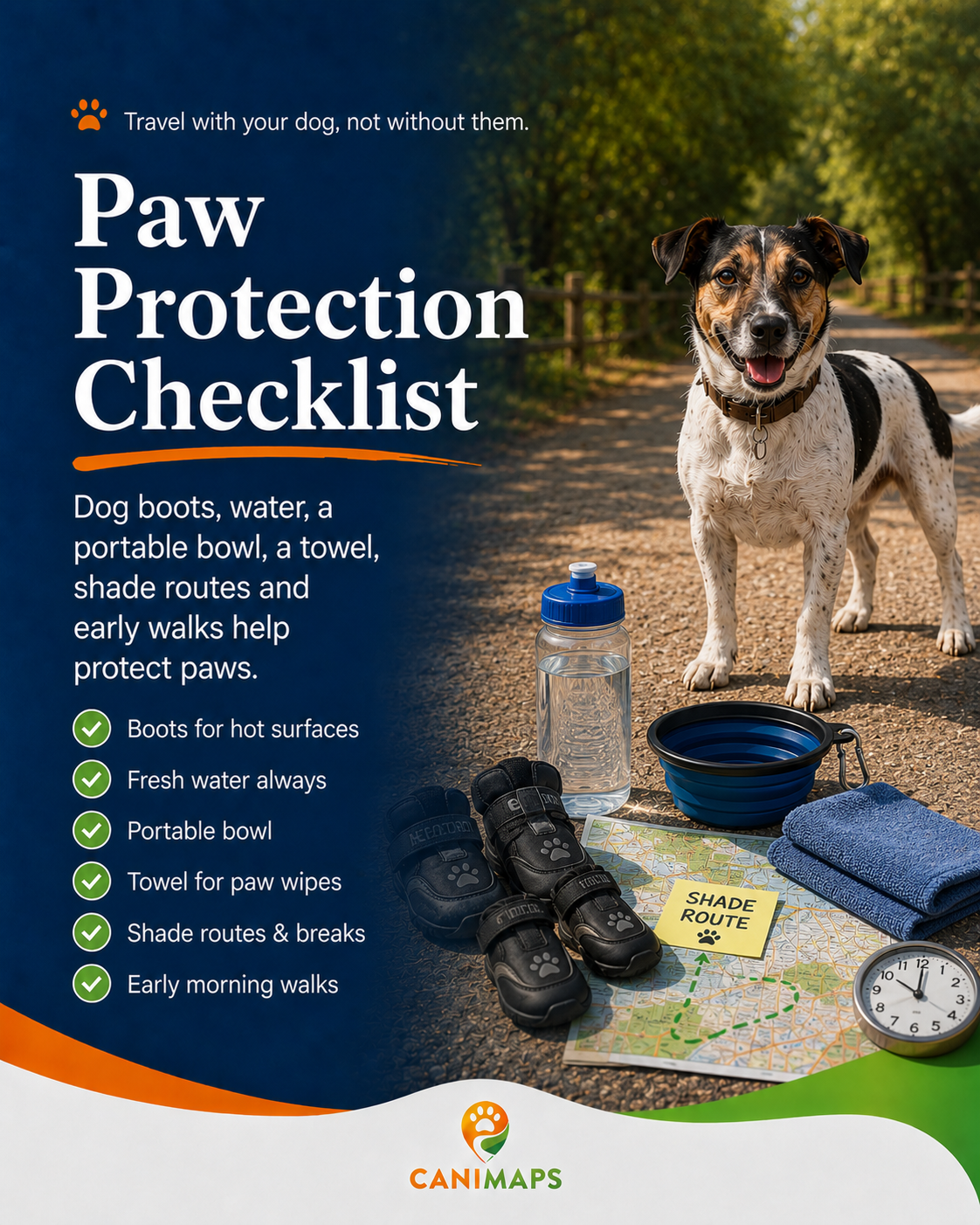
Before a hot-weather walk, ask:
Is the pavement too hot for my hand?
Can we walk earlier or later?
Is there shade?
Is there grass or a softer route?
Do I have water?
Will we wait on hot asphalt, metal or sand?
Does my dog need boots?
Is my dog short-nosed, senior, overweight or heat-sensitive?
Where is the nearest vet if something goes wrong?
Warm weather can be risky even when it does not feel extreme.
AVMA reminds owners that hot weather can pose health risks to pets even on days that do not seem that hot.
Final CANIMAPS Takeaway
Hot pavement is not just a small summer inconvenience.
It can burn paws, make walks stressful and add to overheating risk.
Walk earlier. Choose shade. Test the ground. Bring water. Avoid long waits on asphalt, sand and metal surfaces. And if your dog starts acting strange in the heat, take it seriously.
Your dog does not need to “tough it out.”
They need you to notice the ground before their paws do.
Save this before your next dog-friendly adventure, and follow CANIMAPS for more real-world dog travel and lifestyle tips.
FAQ
Can hot pavement burn dog paws?
Yes. Hot asphalt, artificial grass, sand and other surfaces can cause discomfort, blisters or burns on dog paw pads.
How do I know if the pavement is too hot for my dog?
Use the hand test. Put the back of your hand on the ground for several seconds. If it feels too hot for you, choose shade, grass or a cooler time of day.
What time of day is safest to walk a dog in summer?
Early morning and later evening are usually safer than midday or afternoon. Surfaces can stay hot after hours of sun, so test the ground before walking.
Can sand burn dog paws?
Yes. Hot sand can burn paws just like hot pavement. This matters at dog-friendly beaches, dunes, beach parking areas and promenades.
Do dog boots help with hot pavement?
Dog boots can help protect paws, but they need to fit correctly and dogs need time to get used to them. Introduce boots before your trip, not during the first hot walk.
What surfaces can get too hot for dog paws?
Asphalt, concrete, sand, metal ramps, station platforms, beach boardwalks, artificial grass and stone streets can all become too hot for dog paws.
What are warning signs of heatstroke in dogs?
Warning signs can include heavy panting, drooling, vomiting, diarrhea, weakness, collapse, racing heart, excessive thirst or unsteady movement. Heatstroke is an emergency, so contact a vet immediately if you suspect it.
What should I do if my dog starts limping on a hot walk?
Move your dog off the hot surface immediately, check the paws, offer water and rest in shade. If you see burns, blisters, bleeding, severe limping or obvious pain, call your vet.

Europe Dog Travel Checklist and Top Dog Longevity Supplements
Get the Europe Dog Travel Checklist plus the free Top Dog Longevity Supplements e-book — travel smarter and support your dog’s long-term health.