
Sweden With a Dog: The March to August Leash Rule Traveler's Miss
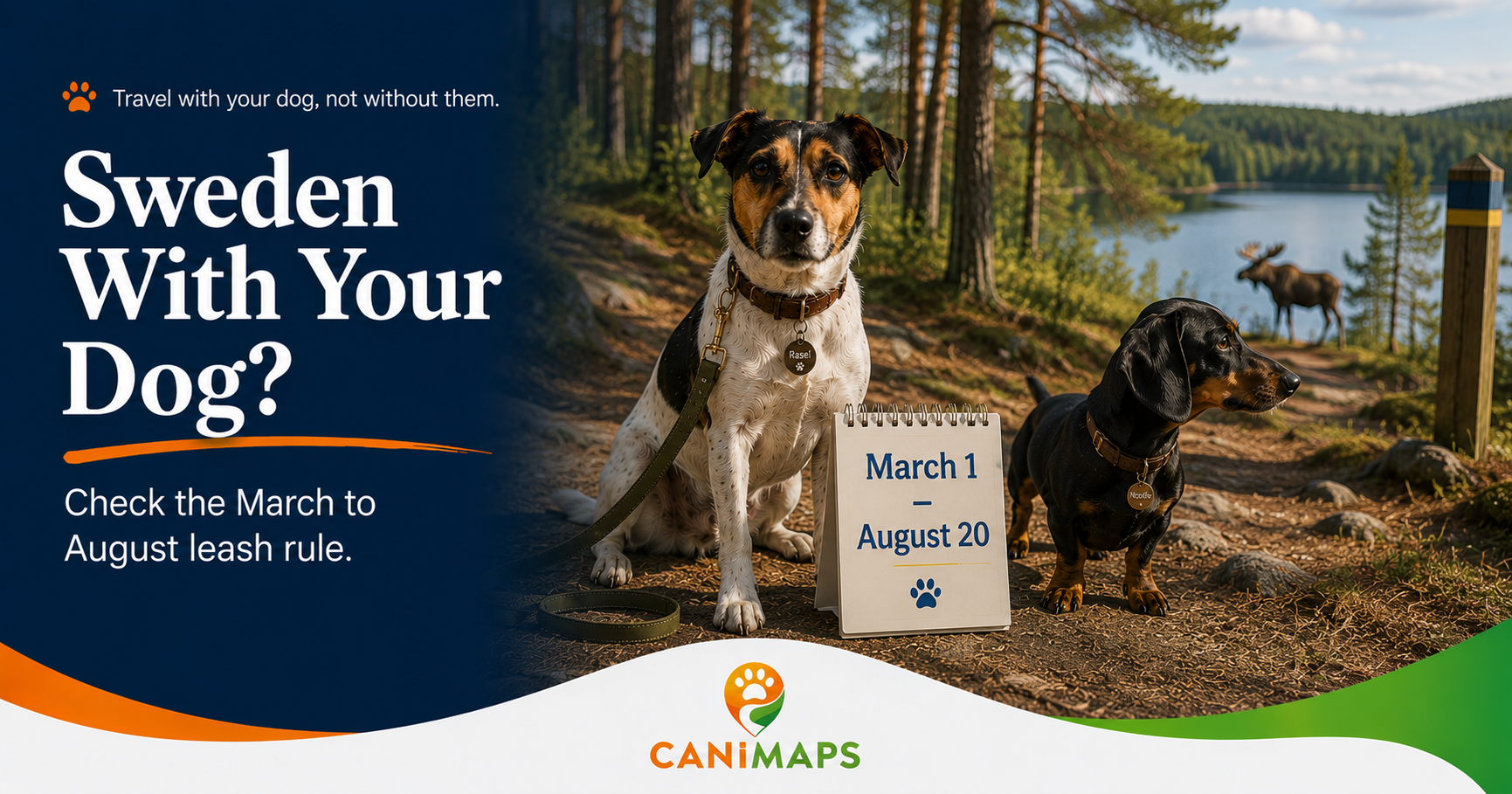
Sweden looks like dog-travel paradise.
Forests. Lakes. Cabins. Quiet roads. Long summer evenings. A dog standing beside a red wooden cottage like he has emotionally joined a Nordic lifestyle magazine.
Then your dog sees a deer.
And suddenly Sweden’s beautiful freedom comes with a very important rule.
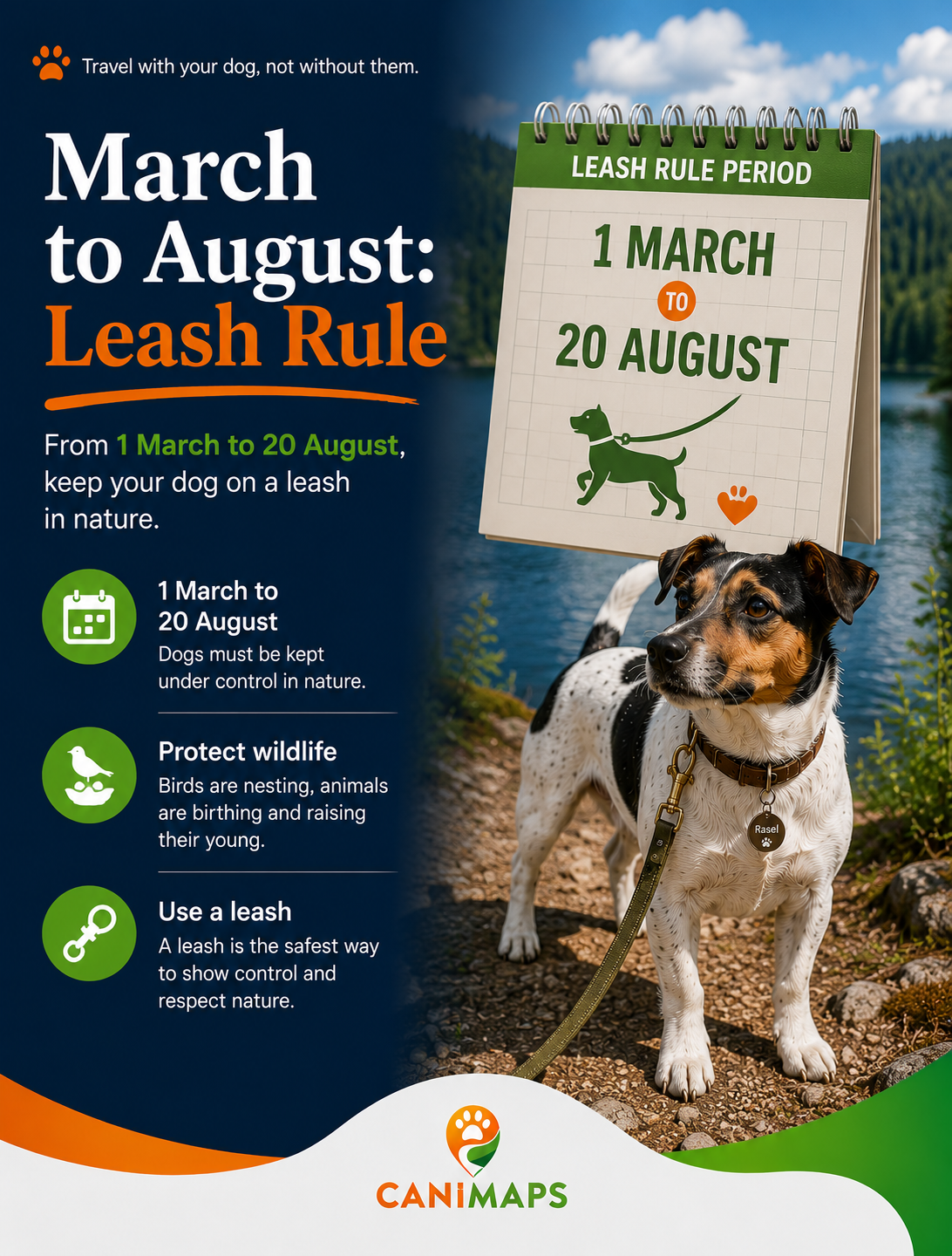
From 1 March to 20 August, dogs in Sweden must be kept under strict control in nature to protect wildlife during sensitive periods. The Swedish Environmental Protection Agency says dogs should be kept on a leash during this period, especially because wildlife may be nesting, hatching, birthing, or raising young.
Quick Answer
Yes, Sweden is very dog-friendly, but dogs should usually be kept on a leash or under strict control in nature from 1 March to 20 August to protect wildlife. National parks, nature reserves, reindeer areas, cities, beaches and local municipalities may have stricter rules. Before hiking or travelling with your dog in Sweden, check the date, location, local signs and whether your dog can stay calm around wildlife, livestock, cyclists and other dogs.
The Big Mistake: Confusing Freedom With Off-Leash Freedom
Sweden’s Right of Public Access is famous for a reason.
It allows people to enjoy nature responsibly. That is wonderful for hikers, campers, road-trippers and dog owners. But the word “responsibly” is doing a lot of work here.
Visit Sweden explains that the Right of Public Access comes with responsibility, especially for dog owners, and says dogs must be leashed in the countryside between 1 March and 20 August.
So the rule is not:
“Sweden has nature, therefore my dog can run anywhere.”
The rule is closer to:
“Sweden has nature, therefore your dog must not disturb wildlife.”
Rasel would understand immediately.
Noodle would hear “forest” and begin preparing a legal defence for chasing squirrels.
Why the March to August Period Matters
The 1 March to 20 August period is not random.
It covers a vulnerable time for wildlife. Birds may be nesting. Young animals may be born. Wildlife can be easily stressed by dogs, even dogs who are not aggressive.
The Swedish Environmental Protection Agency says unleashed dogs can disturb or chase animals, especially during sensitive periods like nesting or calving.
This is the part many visitors underestimate.
Your dog does not need to catch an animal to cause harm. Chasing, startling or stressing wildlife can still be a problem.
From the dog’s perspective, it may feel like a game.
From the animal’s perspective, it may be survival stress.
From Rasel’s perspective, Noodle has once again failed nature etiquette.
Is It Always Literally a Leash?
The safest traveller answer is: use a leash.
Official Swedish guidance says that from 1 March to 20 August, dogs should be kept on a leash. County administrative board guidance also says dogs must be supervised so they are prevented from running free where there may be wildlife.
For visitors, this is not the moment to argue technicalities.
If you are travelling, hiking, camping or visiting nature areas, a leash is the clearest and safest way to show control.
A long line can be useful in some open areas, but only if it is safe, legal for that location and does not create risk for wildlife, cyclists, children, livestock or other dogs.
The CANIMAPS rule is simple:
If you are unsure, leash.
It is cheaper than a fine, kinder to wildlife and less embarrassing than yelling “Noodle, diplomacy!” across a Swedish forest.
National Parks and Nature Reserves Can Be Stricter
The March to August rule is only the base layer.
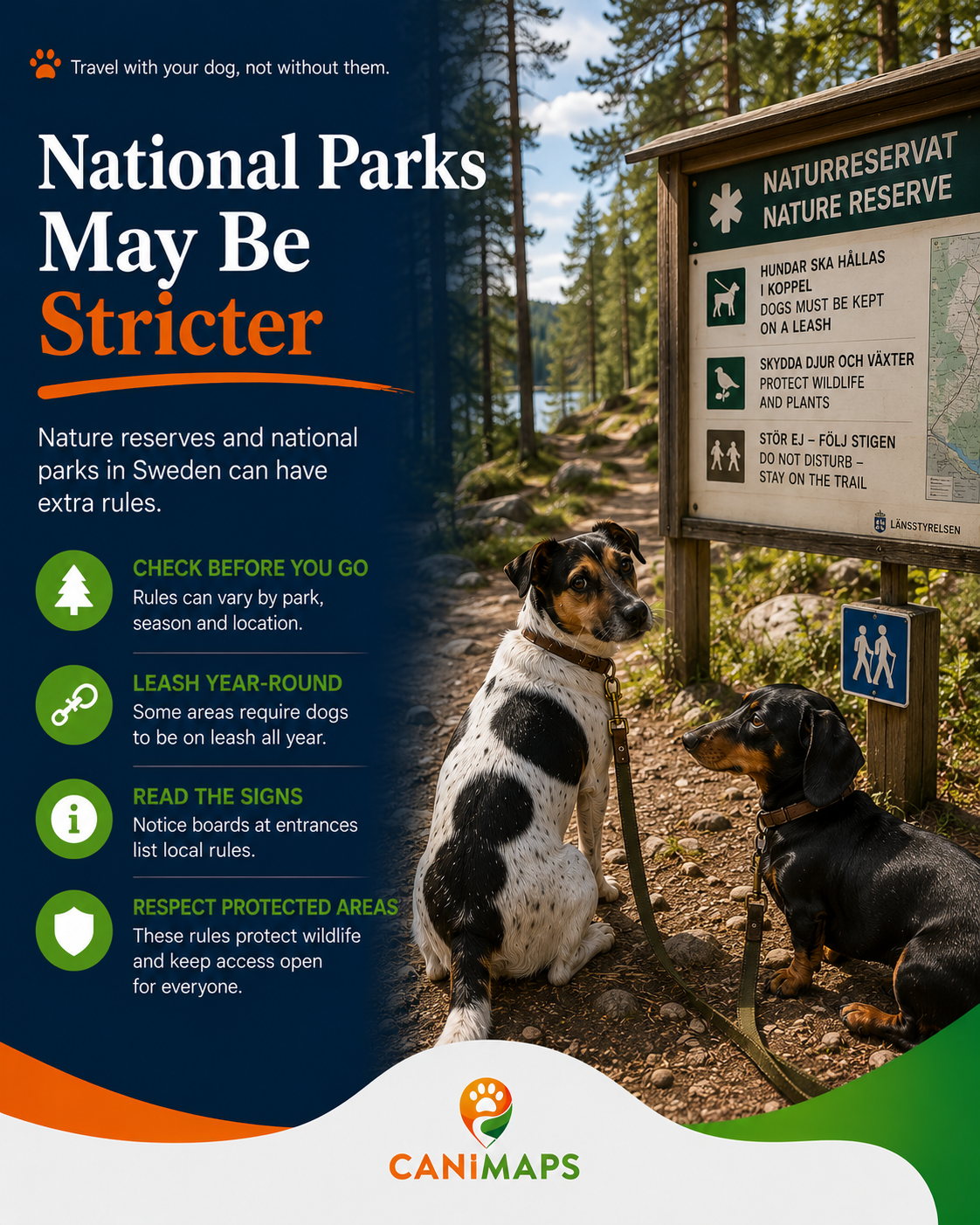
National parks and nature reserves may have their own additional rules. The Swedish Environmental Protection Agency says dogs may be restricted or required to be on a leash year-round in national parks and nature reserves.
Visit Sweden also notes that most nature reserves require dogs to be leashed.
That means you should not assume that after 20 August everything becomes off-leash everywhere.
Before visiting a park, reserve, trail, island or protected area, check official park rules, notice boards, municipality guidance, county administrative board information, seasonal signs and local wildlife restrictions.
A sign at the trailhead beats a random travel blog every time.
Reindeer Areas Need Extra Care
Northern Sweden brings another layer: reindeer.
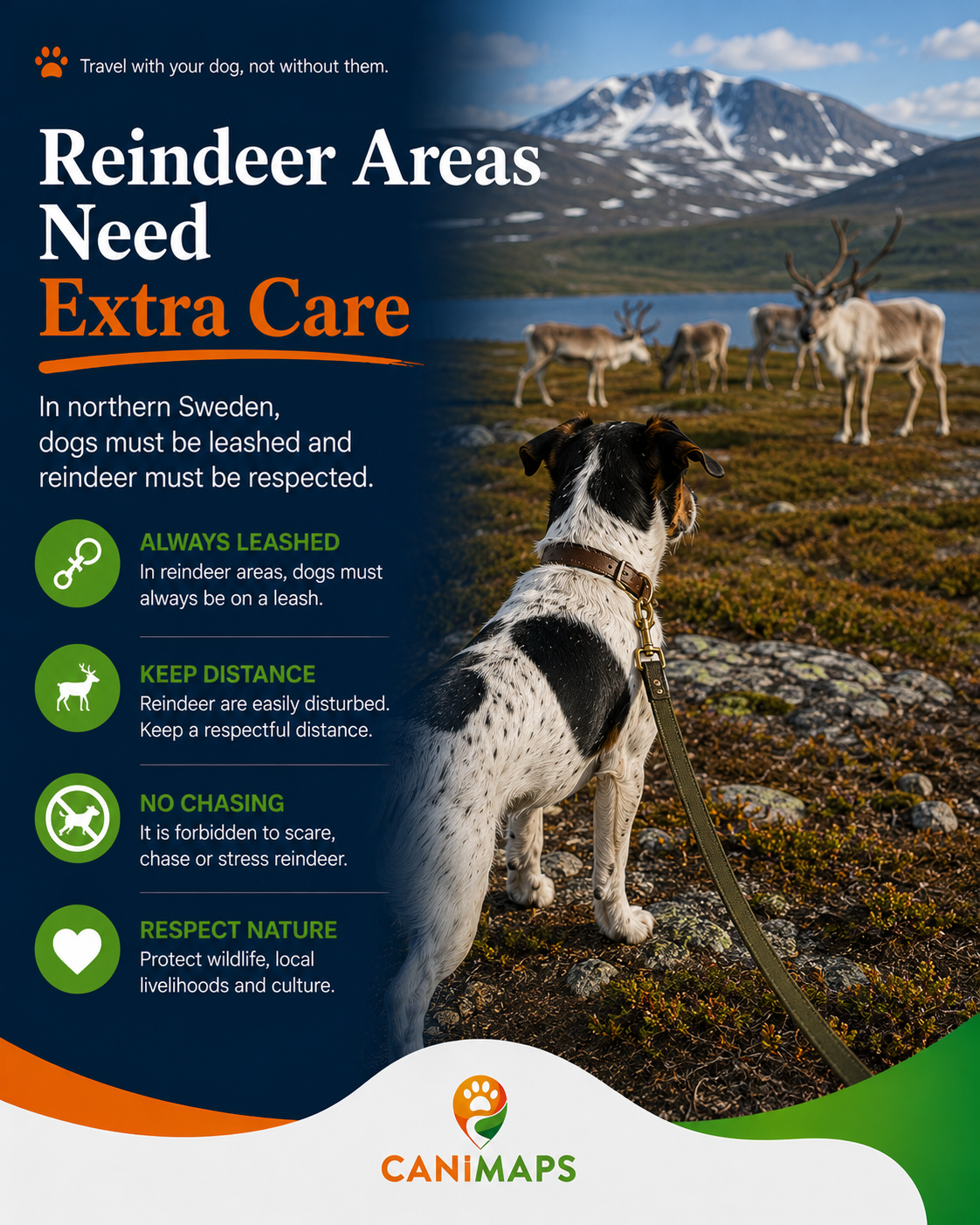
The Swedish Environmental Protection Agency says that in areas where reindeer are kept, dogs must always be leashed, especially when reindeer are nearby or being moved. It also warns that reindeer are easily disturbed and that it is forbidden to scare, chase or stress them.
This is a serious point for travellers heading north.
Reindeer are not background decoration. They are animals connected to livelihoods, culture and sensitive landscapes.
If your dog has a strong chase instinct, treat reindeer areas with extra caution. Keep distance. Keep the leash on. Do not assume “my dog is friendly” solves the problem.
Friendly dogs can still cause chaos.
Noodle is friendly.
Noodle is also a small chaos consultant.
City Rules Are Different, but Not Rule-Free
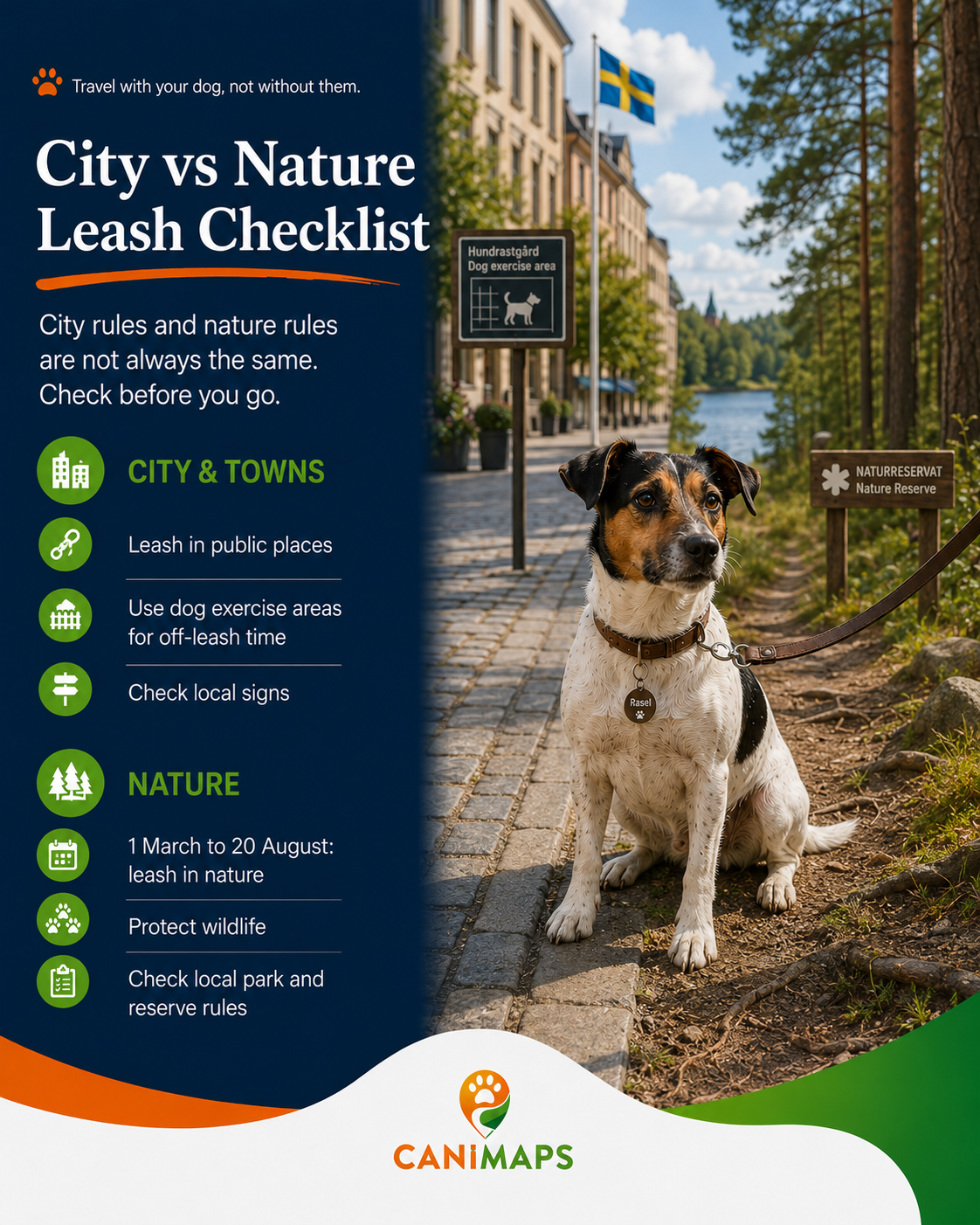
The Sweden leash conversation is not only about wilderness.
Visit Sweden says dogs must be kept on a leash in cities and public places at all times, except in specially provided exercise areas.
That matters for travellers planning Stockholm, Gothenburg, Malmö, Uppsala or smaller towns.
City trips with dogs can be great, but you still need to check local parks, dog exercise areas, public transport rules, accommodation rules, restaurant and café access, beaches and swimming areas, and local signs.
A dog-friendly city still has boundaries.
Rasel calls them rules.
Noodle calls them “suggestions written by people without snacks.”
What to Pack for Sweden Nature Trips With a Dog
For Sweden, your dog bag should not only be cute.
Pack a short leash, long line if suitable and allowed, harness, tick remover, water bowl, extra water, towel, waste bags, reflective gear for low light, paw care for rocky trails, mosquito and tick prevention discussed with your vet, documents if crossing borders and route notes with local dog rules.
If travelling in spring or summer, make the leash plan part of the route plan.
Do not arrive at a beautiful lake with one tiny city lead and a dog who thinks Sweden is a personal sprinting arena.
The CANIMAPS Sweden Checklist
Before taking your dog into Swedish nature, check:
Date: are you travelling between 1 March and 20 August?
Location: forest, lake, countryside, national park, nature reserve, city park, beach or reindeer area?
Leash rule: is leash required seasonally, year-round or locally?
Wildlife risk: could your dog disturb birds, young animals, livestock or reindeer?
Signs: what do local notice boards say?
Dog behaviour: can your dog stay calm on leash around wildlife, cyclists, children and other dogs?
Backup plan: is there a dog exercise area nearby if your dog needs free movement?
This is the difference between “Sweden is dog-friendly” and “Sweden works for my dog.”
Final CANIMAPS Takeaway
Sweden can be amazing with a dog.
But nature access comes with responsibility.
From 1 March to 20 August, dogs should be kept on a leash in nature to protect wildlife. National parks, nature reserves, cities, beaches and reindeer areas may have stricter or separate rules.
So before you let the leash go, check the date, the place and the signs.
Rasel would read the trail rules.
Noodle would already be negotiating with a bird.
Save this before your next dog-friendly trip, and follow CANIMAPS for more real-world dog travel tips.
FAQ
Do dogs need to be on a leash in Sweden?
From 1 March to 20 August, dogs in Swedish nature should usually be kept on a leash or under strict control to protect wildlife during sensitive periods.
Why does Sweden have a March to August dog leash rule?
The period protects wildlife during nesting, hatching, birthing and young-animal seasons. Dogs can disturb or stress animals even if they do not catch them.
Can dogs be off leash in Sweden after 20 August?
Not automatically. National parks, nature reserves, cities, beaches, reindeer areas and local municipalities may still require dogs to stay on leash.
Are dogs allowed in Swedish national parks?
Dogs may be allowed in some Swedish national parks, but parks can require dogs to be on leash year-round or apply extra local restrictions.
Are nature reserves in Sweden stricter for dogs?
Often yes. Many Swedish nature reserves require dogs to stay on leash, so visitors should check local signs and official reserve rules.
What are the rules for dogs around reindeer in Sweden?
In reindeer areas, dogs should be leashed and kept from disturbing, chasing or stressing reindeer, especially when reindeer are nearby or being moved.
Do dogs need to be on leash in Swedish cities?
Dogs are generally expected to be leashed in cities and public places, except in specially provided dog exercise areas.
What should I check before hiking in Sweden with my dog?
Check the date, location, leash rule, wildlife risk, park or reserve signs, reindeer presence, local rules and whether your dog can stay calm on leash.

Europe Dog Travel Checklist and Top Dog Longevity Supplements
Get the Europe Dog Travel Checklist plus the free Top Dog Longevity Supplements e-book — travel smarter and support your dog’s long-term health.