
Paris With a Dog: Museums, Parks and Tourist Attractions Before You Book
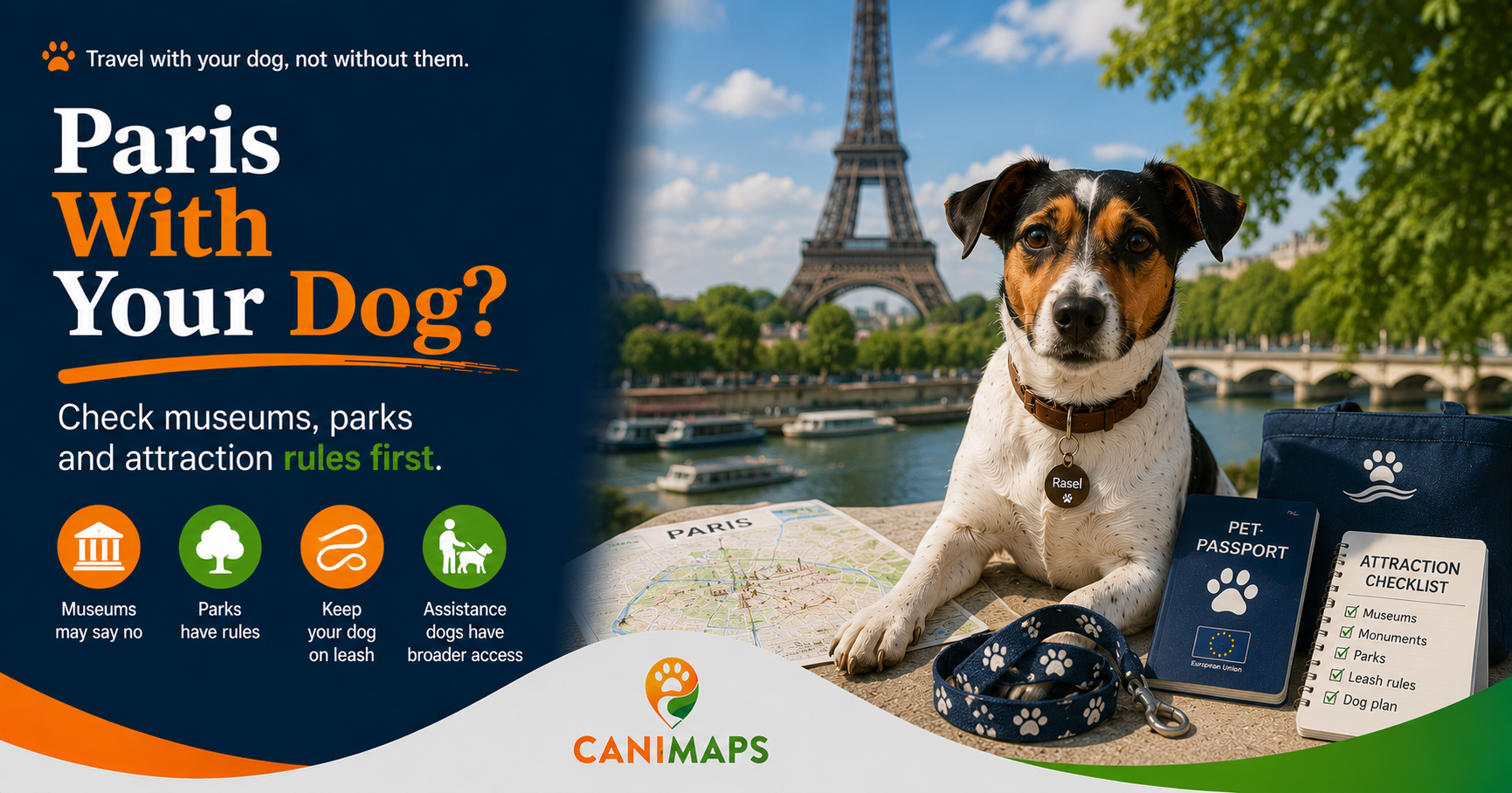
Paris can feel very dog-friendly.
You see dogs at cafés. You see dogs walking through beautiful streets. You see tiny dogs behaving like they own the 7th arrondissement.
So it is easy to assume:
“If Paris is dog-friendly, my dog can come everywhere.”
Not quite.
Paris is often dog-friendly in daily street life, but famous attractions are another story. A café terrace, a neighbourhood walk and a world-famous museum do not follow the same rules.
That is the mistake visitors make.
They build the human itinerary first:
Louvre in the morning.
Eiffel Tower after lunch.
Tuileries or Luxembourg Gardens later.
Dinner near the Seine.
Then the dog question appears too late.
Rasel would check the official rules first.
Noodle would arrive at the Louvre wearing a tiny beret and call it cultural participation.
Quick Answer
Paris can be a good city to visit with a dog, but do not assume your dog can join every famous attraction.
Normal pet dogs are not allowed inside many major museums and monuments, including the Louvre and Eiffel Tower. Some parks allow dogs on leash, but only in marked areas or on paths. Assistance dogs are treated differently from normal pet dogs.
Before booking your Paris days, check each attraction, park and restaurant separately.
Updated for 2026.
The Big Mistake: Thinking Paris Is Dog-Friendly Everywhere
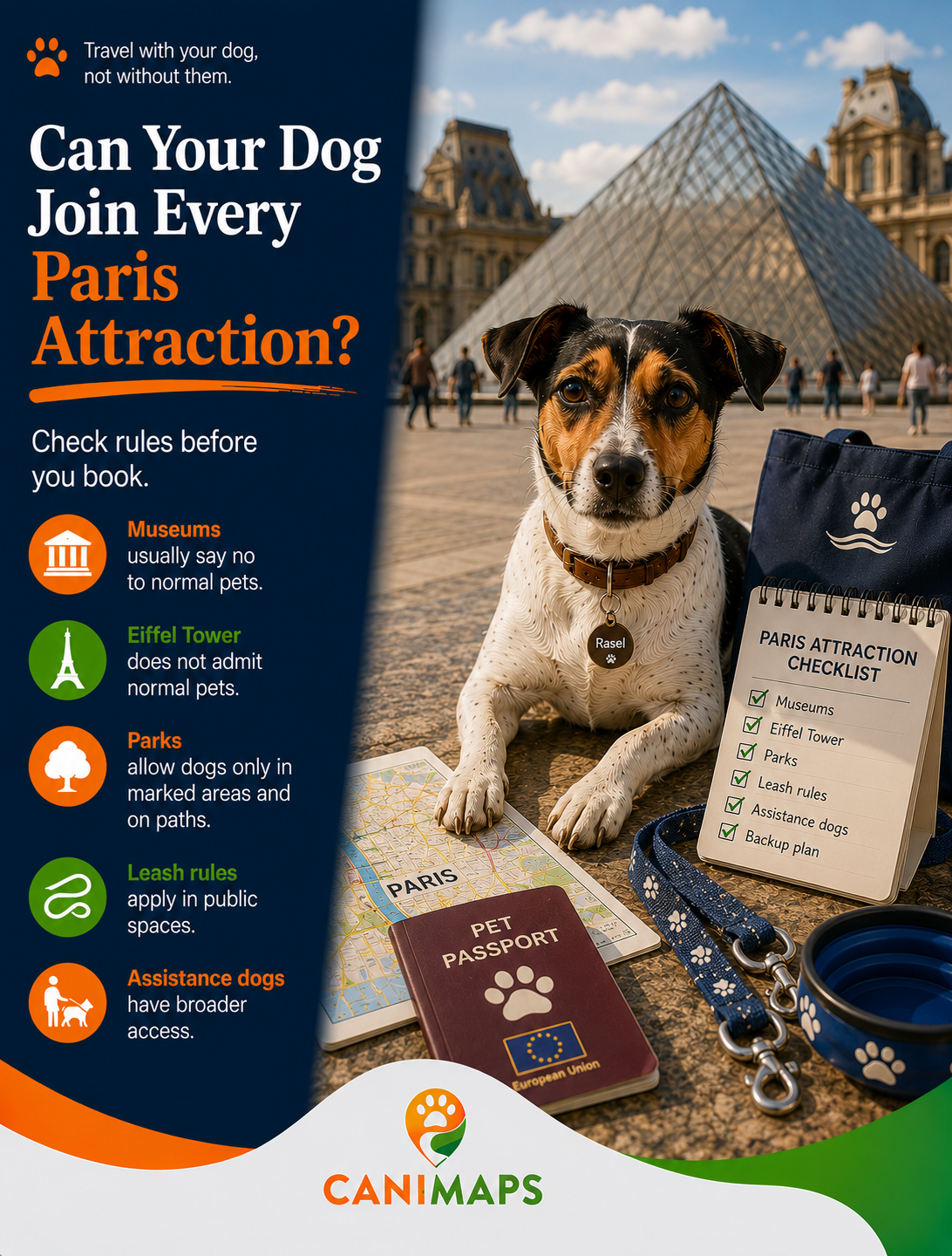
Paris can be dog-friendly in the everyday sense.
Street walks, café terraces, neighbourhood exploring and outdoor moments can work very well with the right dog and the right plan.
But famous attractions are different.
A city can feel relaxed with dogs and still have strict rules at museums, monuments, gardens, indoor spaces and public attractions.
The mistake is assuming the whole city follows one simple rule.
It does not.
Museums: Most Pets Cannot Enter
For Paris museums, the safest assumption is that normal pet dogs cannot enter unless the official venue says otherwise.
The Louvre says only guide dogs and assistance animals accompanying persons with motor or mental impairments are permitted inside, with supporting documents.
That means your dog cannot join just because they are small, calm, fashionable or carried in a bag.
This matters because museum visits take time. If your dog cannot enter and cannot be left alone at your accommodation, you need a plan before buying tickets.
Before booking a museum visit, check whether normal pets are allowed, whether assistance dogs are allowed, whether documentation is required, whether one person can wait outside with the dog, whether the dog can stay safely at accommodation, whether a dog sitter or pet service is available, and whether the museum visit is short enough to fit your dog plan.
Do not make the museum ticket the first decision.
Make the dog plan the first decision.
Eiffel Tower: Normal Pets Are Not Admitted
The Eiffel Tower is another major place where dog owners need to check before going.
The official Eiffel Tower FAQ says animals are not admitted to the monument, except those required by registered disabled visitors. It also says guide dog visitors must present service animal certification from a registered body.
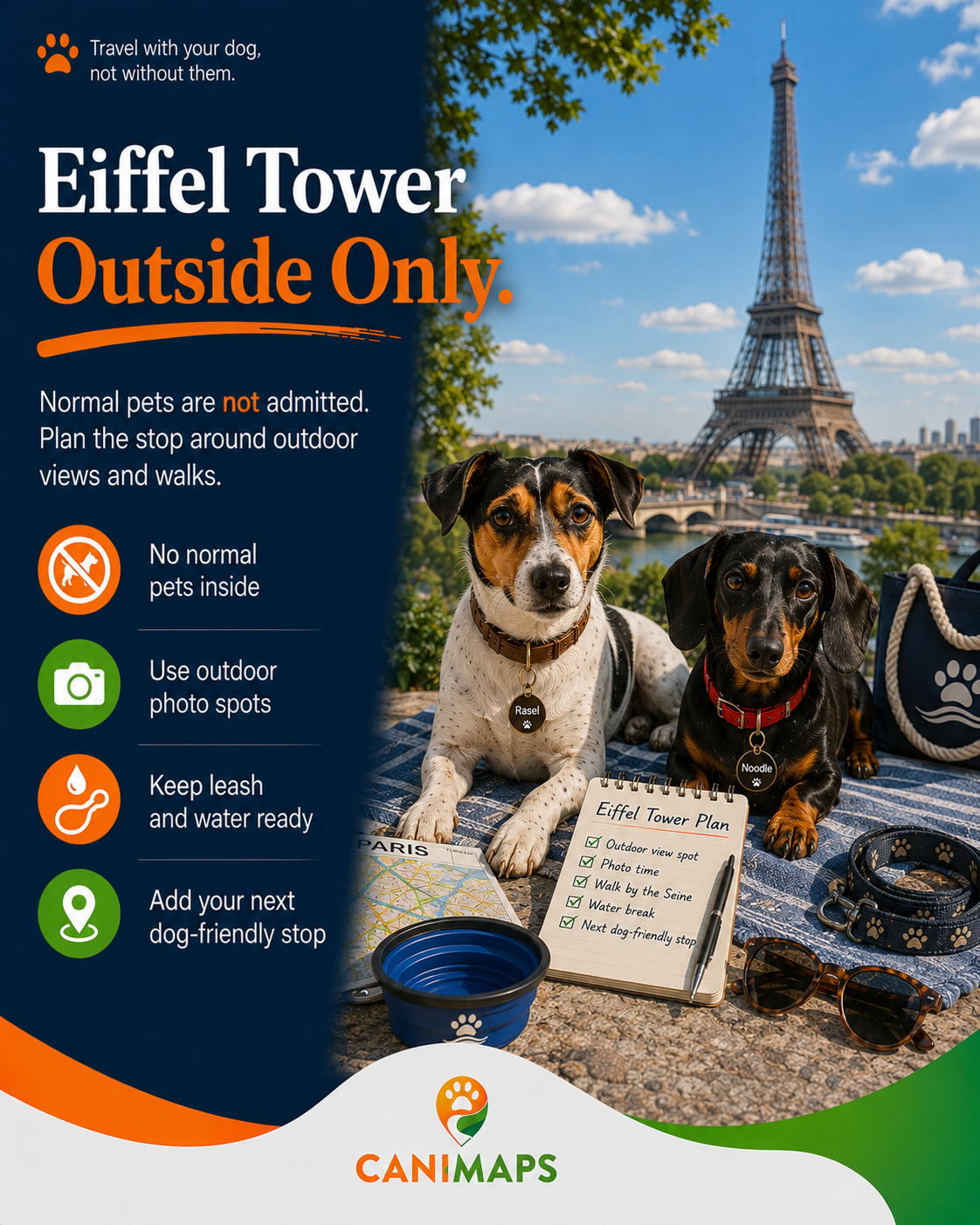
So if your plan is:
“We will take the dog up the Eiffel Tower.”
That plan probably does not work for a normal pet dog.
A better plan might be to walk around the nearby area with your dog, take photos from outside, split the group if one person wants to visit, visit at a time when the dog can safely rest elsewhere, or choose a dog-friendly outdoor walk instead.
Paris gives you many good dog-friendly moments.
The Eiffel Tower lift is not usually one of them.
Noodle would argue that he is “basically a registered landmark.”
Rasel would quietly point to the FAQ.
Parks: Check Whether Dogs Are Allowed Before You Go
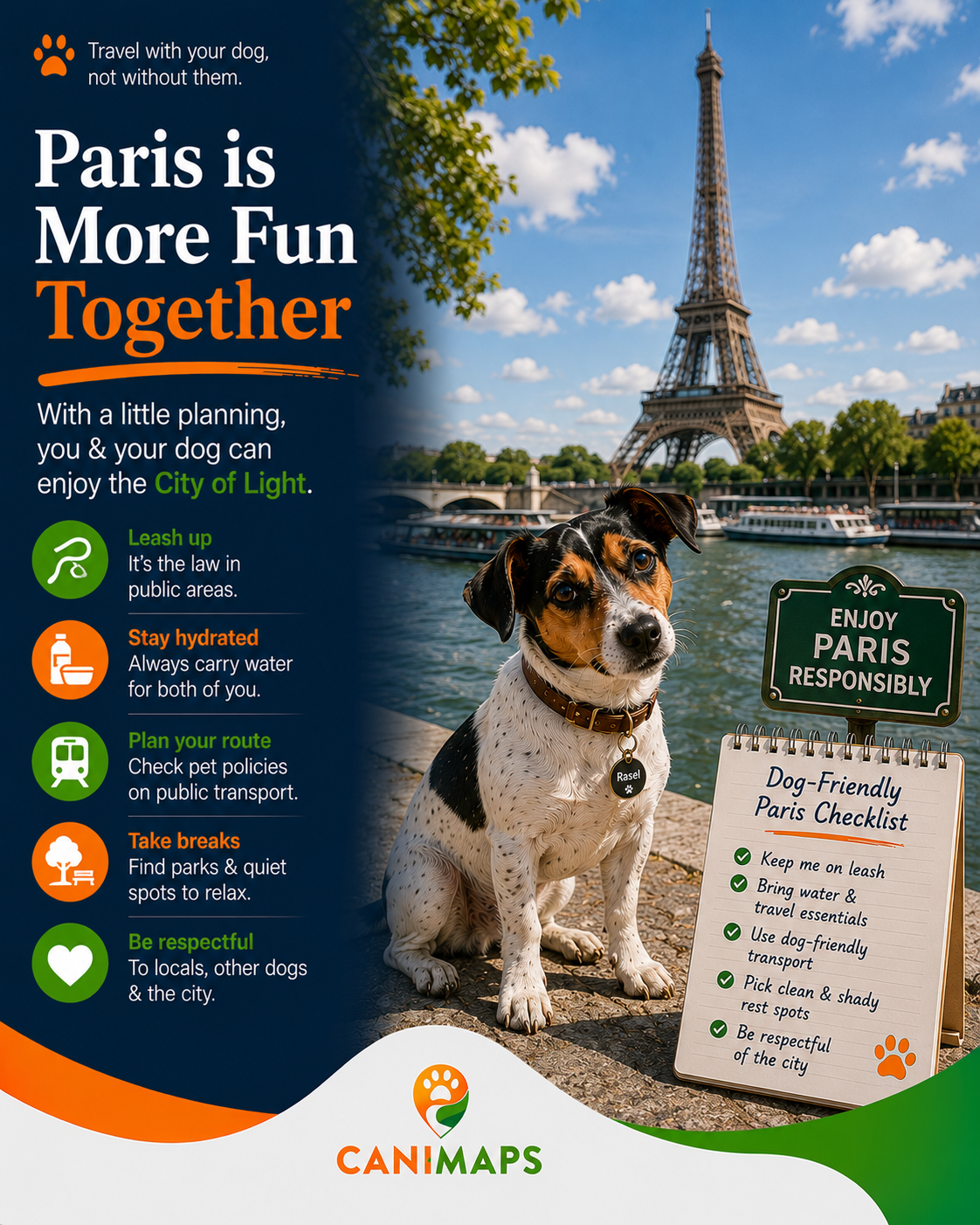
Paris parks are not all the same.
Paris.fr says leashed pets are allowed in 165 green spaces that are marked as accessible to them. In those places, dogs may circulate on paths, but not on lawns or planted beds.
Paris.fr also states that dogs must be kept on a leash in public space.
This is important because many visitors imagine Paris parks as easy dog breaks between attractions.
Sometimes they are.
Sometimes they are not.
Before choosing accommodation or planning a long sightseeing day, check which nearby parks allow dogs, whether dogs are allowed everywhere or only on certain paths, whether lawns are forbidden, whether there is a dog area nearby, whether the park is too crowded for your dog, whether there are signs at the entrance and whether the route is shaded in summer.
A park that looks perfect on the map may not be the right dog break.
A small approved green space near your hotel may be more useful than a famous garden with restrictions.
Leash Rules and Restricted Dog Categories
France also has rules around leash use and certain dog categories.
Service-Public explains that dogs must be kept on a leash in certain places or if they pose a danger. It also says departmental health regulations generally provide that dogs may only travel on public roads in urban areas if kept on a leash.
There are stricter rules for category 1 and category 2 dogs. Service-Public says category 1 dogs must be leashed and muzzled on public roads and in shared building areas, and access to public transport and public places other than public roads is forbidden. Category 2 dogs must be leashed and muzzled in public roads, public places, premises open to the public and public transport.
If your dog could fall under these categories, do not rely on general travel advice. Check French rules carefully before planning the trip.
This is not the section to guess.
It is the section to verify.
Assistance Dogs Are Different From Pet Dogs
Normal pet dogs and assistance dogs are treated differently.
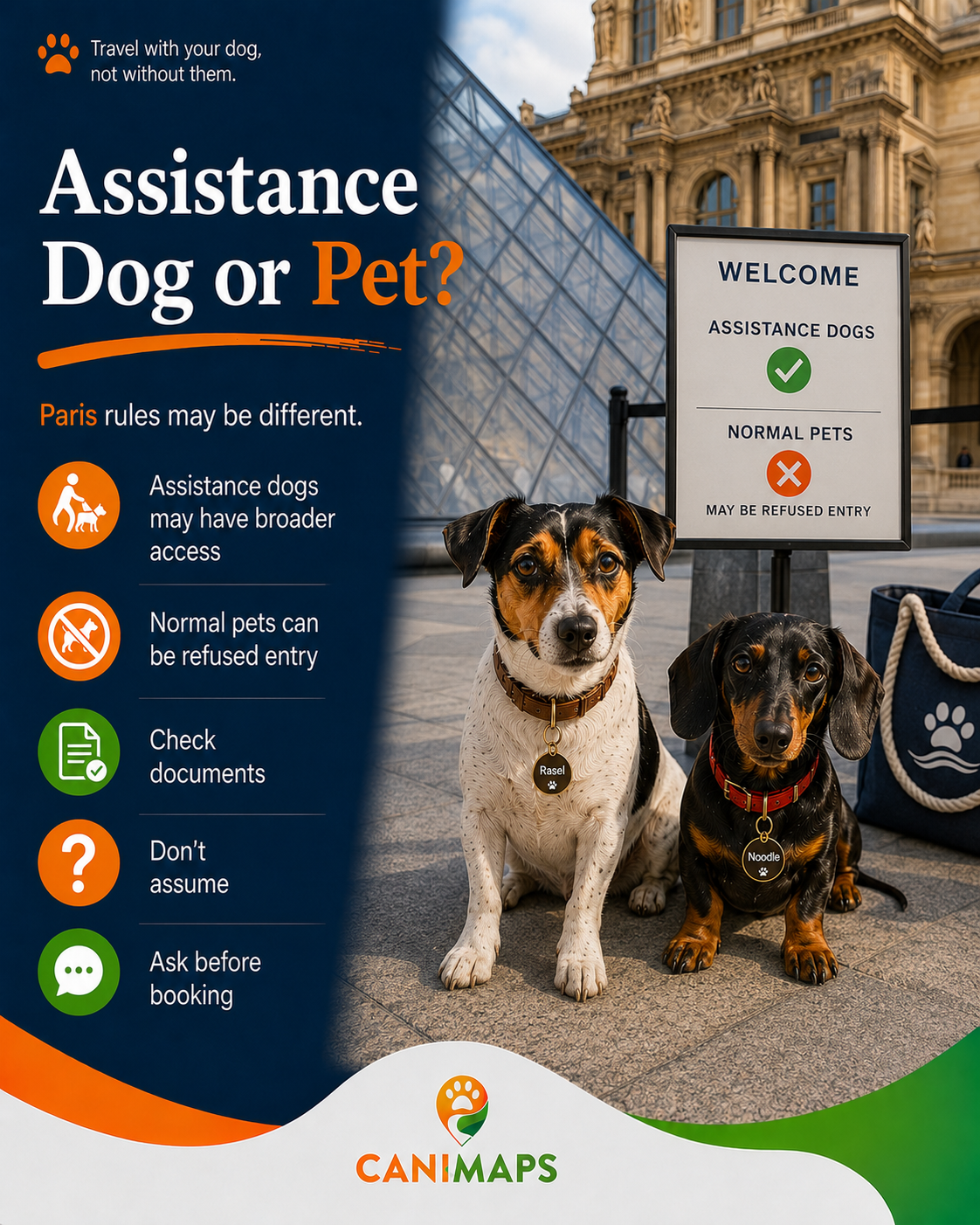
Paris je t’aime says guide or assistance dogs are authorised to enter public places in Paris, including public transport, cultural venues, shops and restaurants. It also notes conditions around specific training and documentation.
This matters because some attraction pages say pets are not allowed, but assistance dogs may be admitted.
Do not mix up pet dog, emotional support dog, therapy dog, guide dog and assistance dog.
Access rules can be very different.
If travelling with an assistance dog, check the documentation rules before arrival and carry proof where required.
CANIMAPS Paris Planning Checklist
Before booking a Paris city trip with your dog, check:
Accommodation: can your dog stay there, and can they be left alone if you visit museums?
Museums: does each museum allow normal pet dogs, or only assistance dogs?
Monuments: can your dog enter, or only walk nearby?
Parks: which green spaces near your hotel allow dogs on leash?
Lawns and paths: are dogs restricted to paths only?
Leash rules: will your dog need to stay on leash throughout the day?
Restricted categories: could your dog fall under French category 1 or 2 rules?
Assistance dog documents: if relevant, do you have proof and documentation ready?
Daily rhythm: can you combine human-only attractions with dog-friendly outdoor breaks?
Backup plan: what happens if your dog cannot enter the place you planned?
If your Paris plan depends on your dog entering every famous site, rebuild the plan.
If your Paris plan mixes outdoor walks, terrace breaks, approved parks and human-only attraction windows, it can work much better.
Final CANIMAPS Takeaway
Paris can absolutely be part of a dog-friendly Europe trip.
But it is not dog-friendly everywhere.
The Louvre, Eiffel Tower and many indoor attractions are not normal pet-dog activities. Some parks allow dogs, but only where marked and often only on paths. Assistance dogs are different from normal pets. French rules can also be stricter for certain dog categories.
So before booking:
Check the museum.
Check the monument.
Check the park.
Check the leash rule.
Check the dog plan.
Rasel would build the itinerary around the rules.
Noodle would try to enter the Louvre as “modern art.”
Save this before your Paris city trip with your dog, and follow CANIMAPS for more real-world dog travel tips.
FAQ
Can dogs go inside the Louvre?
Normal pet dogs cannot enter the Louvre. The Louvre says only guide dogs and assistance animals accompanying persons with motor or mental impairments are permitted, with supporting documents.
Can dogs go up the Eiffel Tower?
Normal pets are not admitted to the Eiffel Tower. The official Eiffel Tower FAQ says animals are not admitted, except those required by registered disabled visitors.
Are dogs allowed in Paris parks?
Some Paris green spaces allow leashed pets where marked. Paris.fr says leashed pets are allowed in 165 green spaces, but dogs may use paths and not lawns or planted beds.
Do dogs need to be on leash in Paris?
Paris.fr states that dogs must be kept on a leash in public space.
Are assistance dogs allowed in Paris attractions?
Assistance dogs have broader access rights. Paris je t’aime says guide or assistance dogs are authorised in public places including cultural venues, shops, restaurants and public transport, subject to conditions and documentation.
Are all Paris attractions dog-friendly?
No. Paris can feel dog-friendly in everyday street life, but many museums, monuments and indoor attractions do not allow normal pet dogs.
What is the biggest mistake when visiting Paris with a dog?
The biggest mistake is planning only around famous attractions. Your dog may not be allowed inside the museum or monument you came to see.
What should I check before booking Paris with a dog?
Check accommodation rules, museum and monument access, nearby dog-friendly parks, leash rules, restricted dog categories, assistance dog documentation and backup plans.

Europe Dog Travel Checklist and Top Dog Longevity Supplements
Get the Europe Dog Travel Checklist plus the free Top Dog Longevity Supplements e-book — travel smarter and support your dog’s long-term health.