
Taking Your Dog on Trains in Germany: What to Check Before You Board
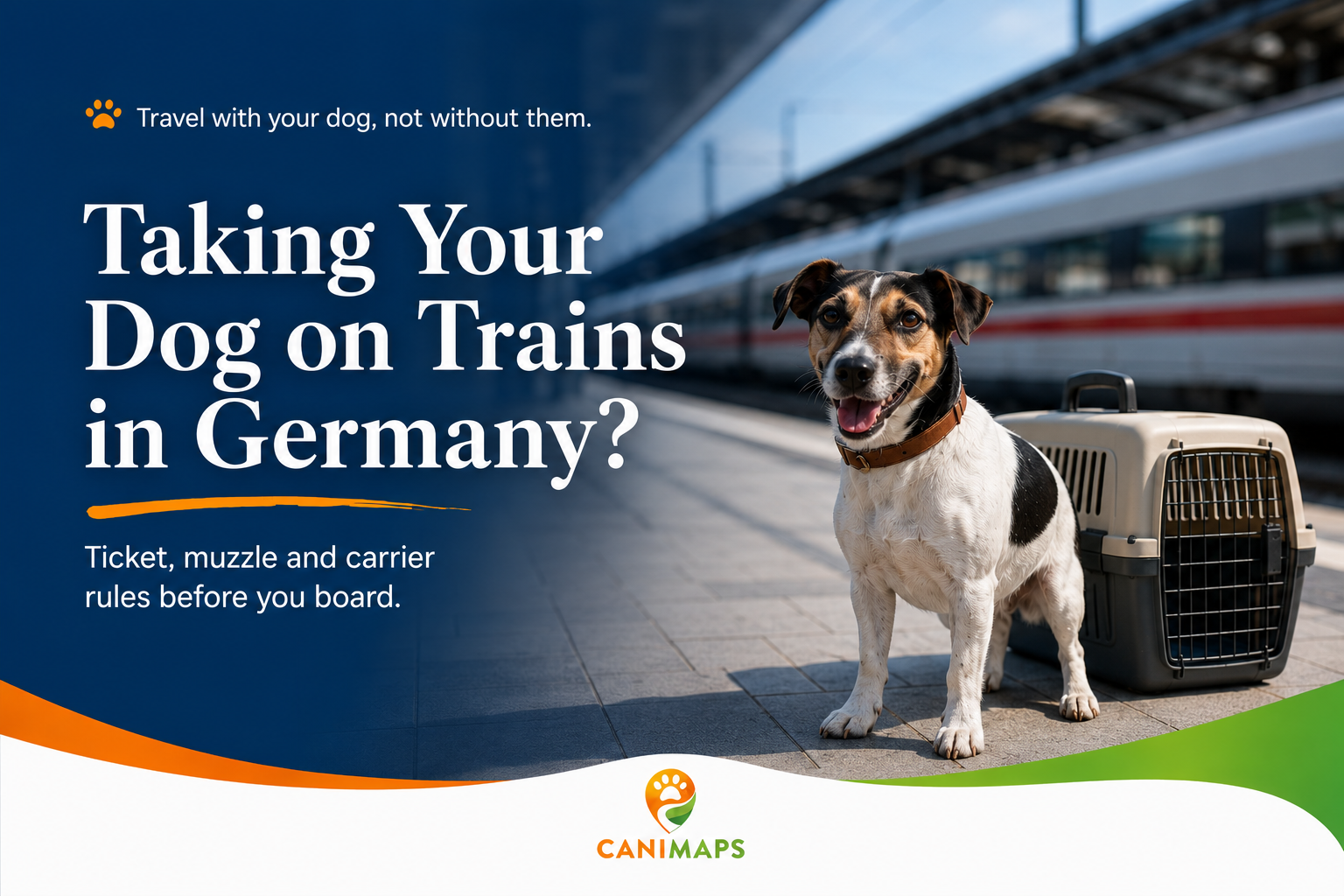
Germany is one of the best countries in Europe to explore by train. Fast connections, big stations, regional routes, city breaks, mountain towns, Christmas markets, lakes, forests, cafés, bakeries your dog will absolutely try to investigate.
But before you walk proudly onto an ICE train with your dog, check the rules.
Because in Germany, the answer to “Can my dog come on the train?” is usually yes, but the real question is: how exactly?
Small dog in a carrier? Different situation. Bigger dog on a leash? Different situation. Assistance dog? Different situation again.
Here is the practical CANIMAPS guide.
Quick Answer
Yes, dogs can travel on many trains in Germany, but the rules depend on the dog’s size, the train type and the operator. Small dogs in a transport box may travel differently from larger dogs, which may need a ticket, leash and muzzle. If your journey crosses borders, valid pet travel documents may also be required.
Small Dogs Can Be Easier
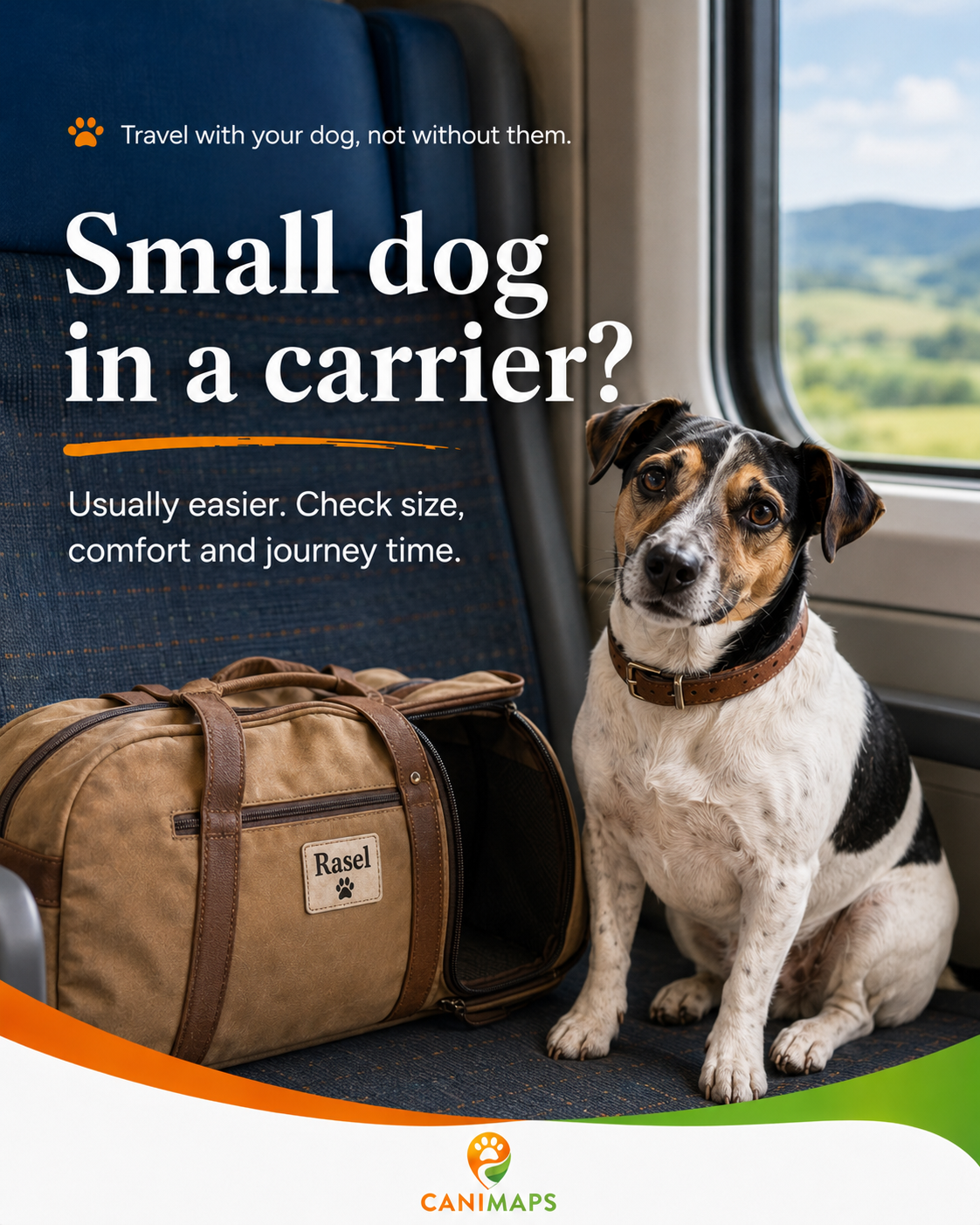
Deutsche Bahn says small dogs up to the size of a domestic cat can travel free of charge in a transport box on some ticket types, including the Germany day ticket and regional day tickets.
That small detail matters: in a transport box.
So if your dog is small enough and comfortable in a carrier, train travel can be much simpler. You still need to make sure the carrier is practical for the journey. Your dog should be able to stay calm, safe and contained, especially in crowded stations or busy trains.
Before travelling, check whether your dog can fit comfortably in the carrier, whether the carrier is easy to carry through stations, whether it can fit safely near your seat or luggage area, whether your dog will tolerate the full journey time, and whether you have water, treats and a backup plan for delays.
The train may be dog-friendly, but your dog still has to be train-ready.
Larger Dogs Need More Planning
For larger dogs, the rule changes.
The European Consumer Centre Germany explains that dogs not travelling in a transport box on DB long-distance trains need an additional ticket, must be leashed and must wear a muzzle.
Deutsche Bahn’s FAQ for Germany day tickets and regional day tickets also says larger dogs count as passengers and are charged like an adult person. When booking a ticket for a dog that requires one, DB says to enter “Hund” instead of a passenger name.
This is exactly the kind of detail that can ruin a travel day if you find it out too late.
Before booking, check whether your dog needs a ticket, how the dog ticket should be booked, whether your train type has additional rules, whether your dog needs a muzzle, whether your dog is comfortable wearing it, and whether your dog can sit calmly on the floor near you.
A muzzle should not be a surprise on the platform. If your dog may need one, train at home before the trip.
Do Not Assume All Public Transport Is the Same
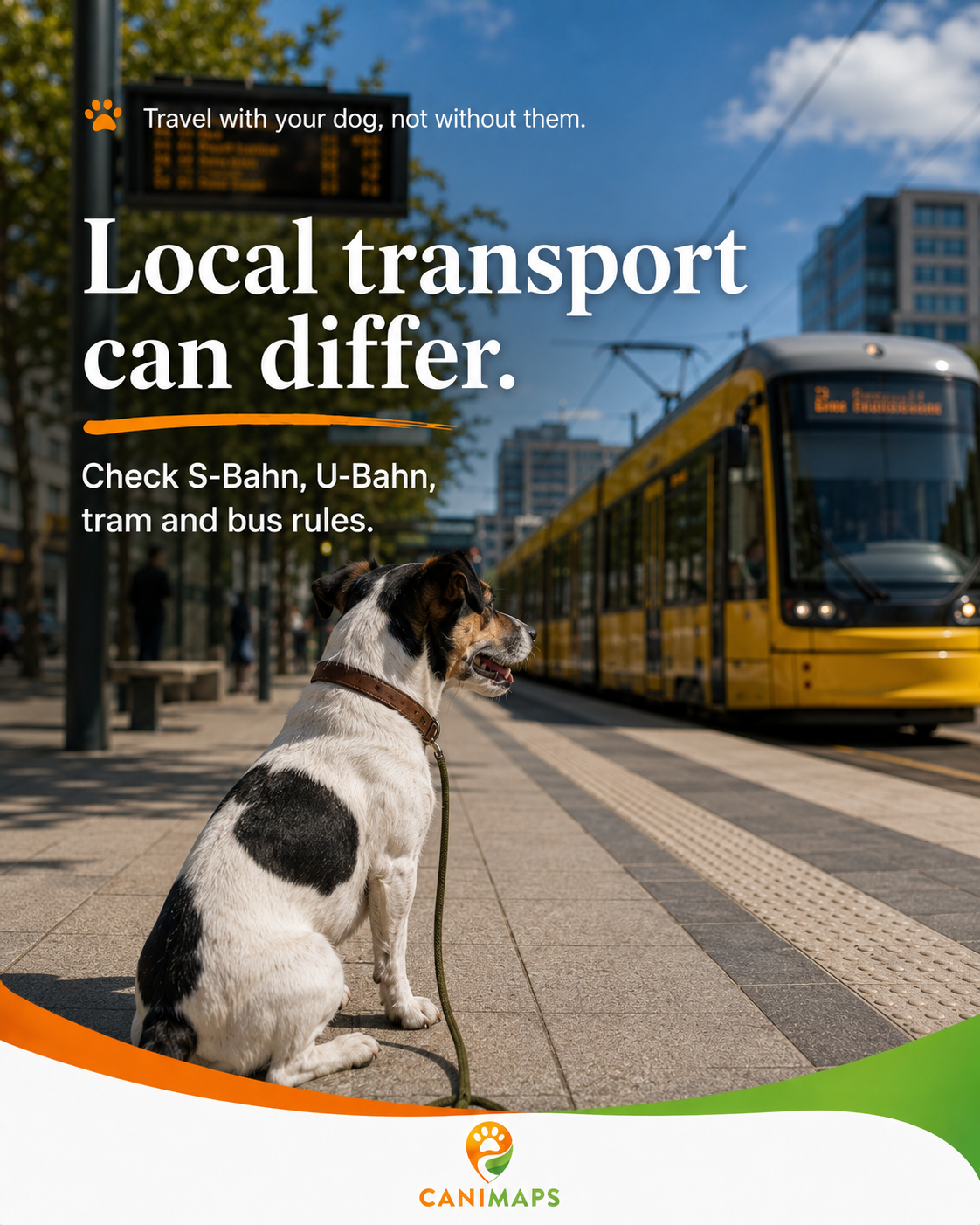
Germany has long-distance trains, regional trains, S-Bahn, U-Bahn, trams and buses. The rules can differ by operator, city and ticket type.
That means “DB allows dogs” is not the same as “every local route in every German city has identical rules.”
If your trip includes local public transport, check the local operator too. This is especially important in cities where your train ticket, regional pass or local transit ticket may have separate rules for dogs.
A practical example: you might take an ICE train to Munich, then use local transport to reach your hotel, then take a regional train for a day trip. That could involve several operators and ticket types.
Your dog does not care about German transport complexity. Sadly, the ticket inspector might.
Assistance Dogs Are Different
Assistance dogs and guide dogs are treated differently from pets. The European Consumer Centre Germany states that assistance dogs and guide dogs can travel free of charge and do not have to wear a muzzle on DB services.
This article is mainly about pet dogs travelling with owners. If you are travelling with an assistance dog, check the official accessibility rules and any documentation requirements before travelling.
Cross-Border Travel Needs Pet Documents
If Germany is part of an international dog trip, do not only check train rules. Check pet travel documents too.
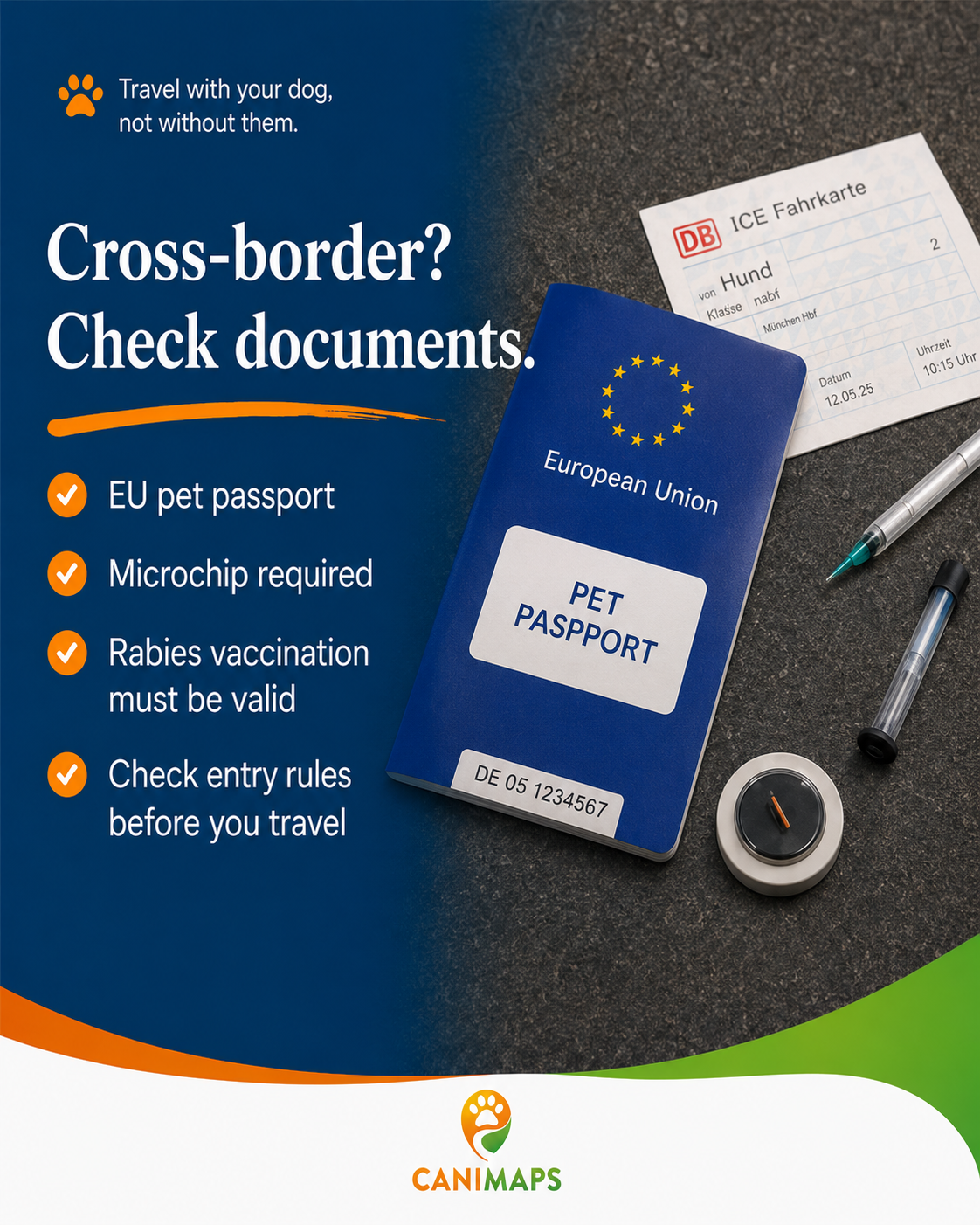
EU guidance says a European pet passport for dogs, cats and ferrets can be issued by an authorised veterinarian and is valid as long as the pet’s health information, such as rabies vaccination, remains valid.
Germany’s federal information also notes that microchipping has been mandatory for newly identified animals since 3 July 2011, and that the pet passport must certify valid anti-rabies vaccination.
For travellers entering Germany from outside the EU, German customs says EU animal health requirements apply to pet animals including dogs, cats and ferrets.
So your checklist depends on where you start.
If you travel from another EU country to Germany, check the EU pet passport, identification and rabies vaccination. If you travel from outside the EU, check EU entry requirements for pets before travelling. If Germany is only a transit country, check both Germany’s entry rules and your onward destination rules.
Train tickets are one part of the trip. Pet documents are another.
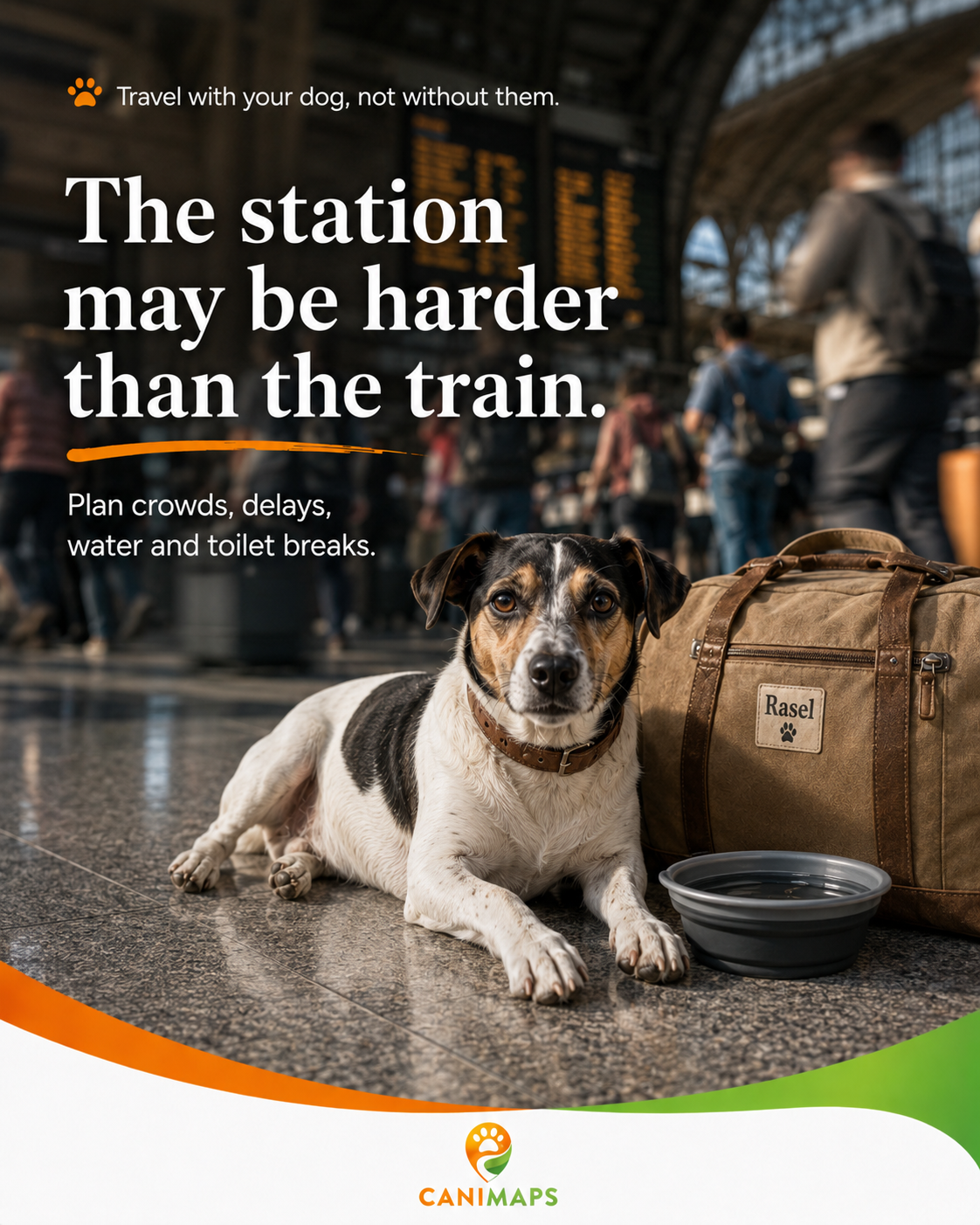
The Station May Be Harder Than the Train
For many dogs, the most stressful part is not the train itself. It is the station.
German stations can be busy, loud and full of smells. There are rolling suitcases, announcements, bicycles, food, pigeons with suspicious confidence and people rushing everywhere.
Before travelling, think about arrival time at the station, busy platforms, escalators or lifts, toilet breaks before boarding, water access, possible delays and where your dog will wait safely.
A calm dog on a quiet walk may behave very differently in Berlin Hauptbahnhof on a Friday afternoon.
CANIMAPS Train Checklist
Before taking your dog on a train in Germany, check:
Is your dog small enough for a carrier?
If not, does the dog need a ticket?
Does the dog need a muzzle?
Is the dog comfortable with the muzzle?
Are you using DB, local transport or both?
Are you crossing borders?
Is the pet passport valid?
Is the rabies vaccination valid?
Do you have water and a delay plan?
Is your accommodation near the station truly dog-friendly?
That last point matters. The train may go perfectly, and then your hotel may say “pets allowed” but add a fee, size limit or room restriction. Always check before booking.
Common Mistake: Booking Only Your Own Ticket
The classic mistake is booking your own ticket first and dealing with the dog later.
Do it the other way around.
First, check the dog rule. Then book the human ticket. Then book the dog ticket if needed. Then check local transport at the destination.
Less romantic? Yes. More useful? Absolutely.
Final Takeaway
Germany is very doable by train with a dog, but it rewards the prepared traveller.
Small dog in a carrier may be simple. Larger dog may need a ticket, leash and muzzle. International trips need valid pet documents. Local transport may have separate rules.
Plan the boring part first, and the fun part becomes much easier.
Save this before your next dog-friendly trip, and follow CANIMAPS for more real-world dog travel tips.
FAQ SECTION
Can dogs travel on Deutsche Bahn trains?
Yes. Dogs can travel on Deutsche Bahn services, but the rules depend on the dog’s size, the train type and whether the dog travels in a transport box.
Do dogs need a ticket on German trains?
Larger dogs usually need a ticket on Deutsche Bahn long-distance trains. Small dogs travelling in a suitable transport box may travel differently depending on the ticket type.
Do dogs need a muzzle on German trains?
Larger dogs not travelling in a transport box may need to wear a muzzle on Deutsche Bahn long-distance trains. Always check the current operator rules before travel.
Can small dogs travel free on German trains?
Small dogs up to the size of a domestic cat may travel free of charge on some Deutsche Bahn ticket types if they are inside a suitable transport box.
Can dogs use local public transport in Germany?
Often yes, but local public transport rules may differ by city, operator and ticket type. Check the local operator before travelling.
Do I need a pet passport for Germany?
If you are entering Germany from another country, your dog may need valid pet travel documents, identification and rabies vaccination proof.
Are assistance dogs treated differently on German trains?
Yes. Assistance dogs and guide dogs may follow different rules from normal pet dogs and may be exempt from some ticket or muzzle requirements.

Europe Dog Travel Checklist and Top Dog Longevity Supplements
Get the Europe Dog Travel Checklist plus the free Top Dog Longevity Supplements e-book — travel smarter and support your dog’s long-term health.