
How to Stop Dog Begging Without Being Mean
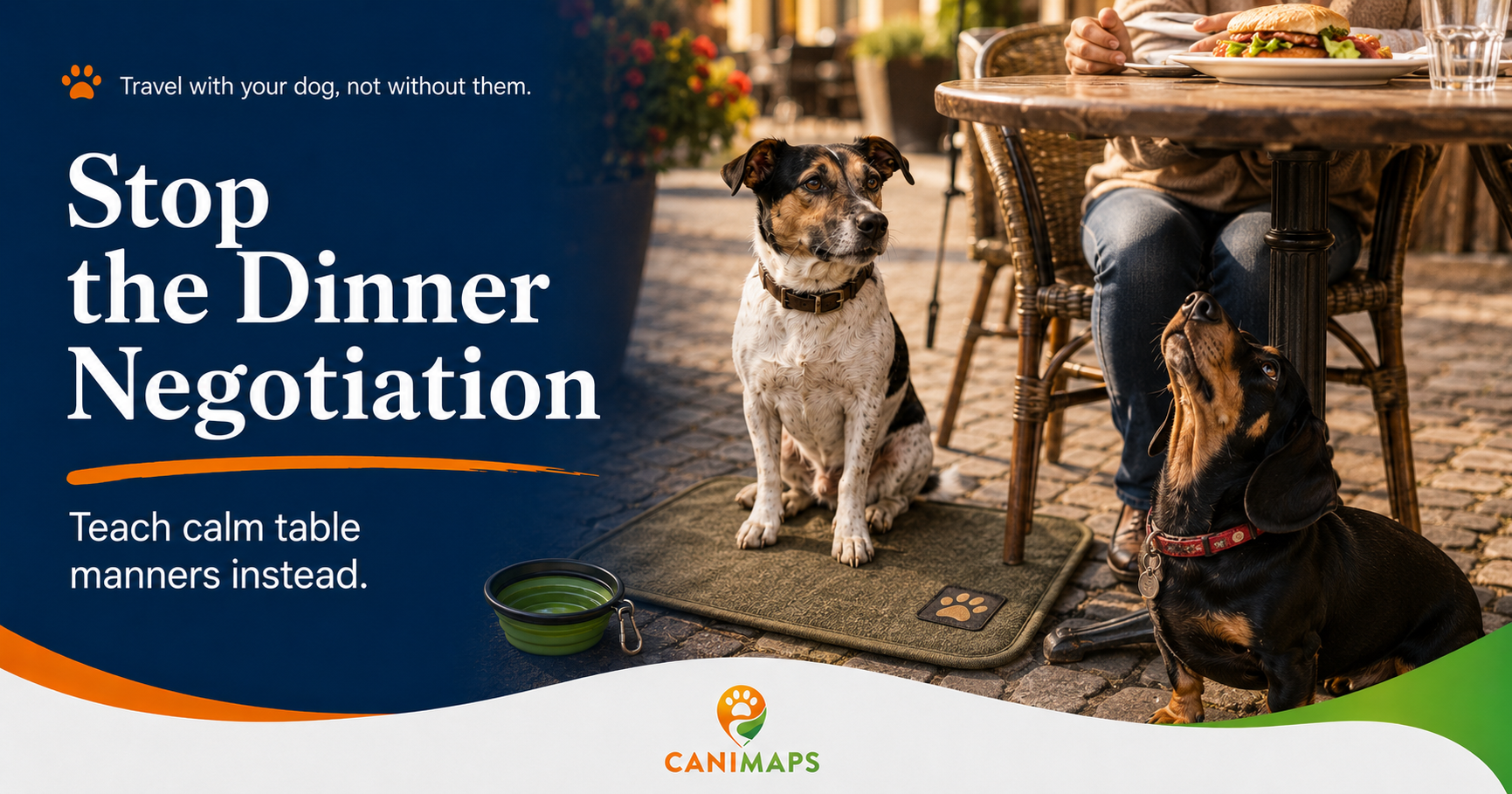
Your dog is not starving.
Your dog has eaten breakfast, inspected the kitchen floor, emotionally audited your lunch, and still somehow believes your sandwich is legally theirs.
Begging is one of the most common dog-owner problems because it works. Not always. Not every time. But often enough that your dog keeps trying. One tiny piece of chicken today becomes a full courtroom case tomorrow.
The good news: you can stop dog begging without shouting, punishment or turning dinner into a hostage negotiation. The goal is simple. Stop rewarding the begging, teach your dog what to do instead, and make mealtimes predictable.
This is not about being mean. It is about being clear.
Why dogs beg in the first place
Dogs beg because begging has a history of success.
Maybe someone once gave them a piece of toast. Maybe a child dropped pasta. Maybe a guest said “just a little bit”. Maybe you gave in because those eyes are frankly unfair.
Dogs are excellent pattern detectives. If staring at you during dinner sometimes produces food, your dog learns that staring is a reasonable career path.
Begging can include:
sitting close to the table
staring
pawing
whining
barking
drooling dramatically
putting a chin on your knee
sneaking food
jumping up
circling under chairs
The behaviour is not usually personal. Your dog is not trying to ruin dinner. They are doing what previously worked.
AKC recommends consistency, not giving in to begging, feeding dogs separately if needed, using basic obedience and rewarding good behaviour.
The mistake that keeps begging alive
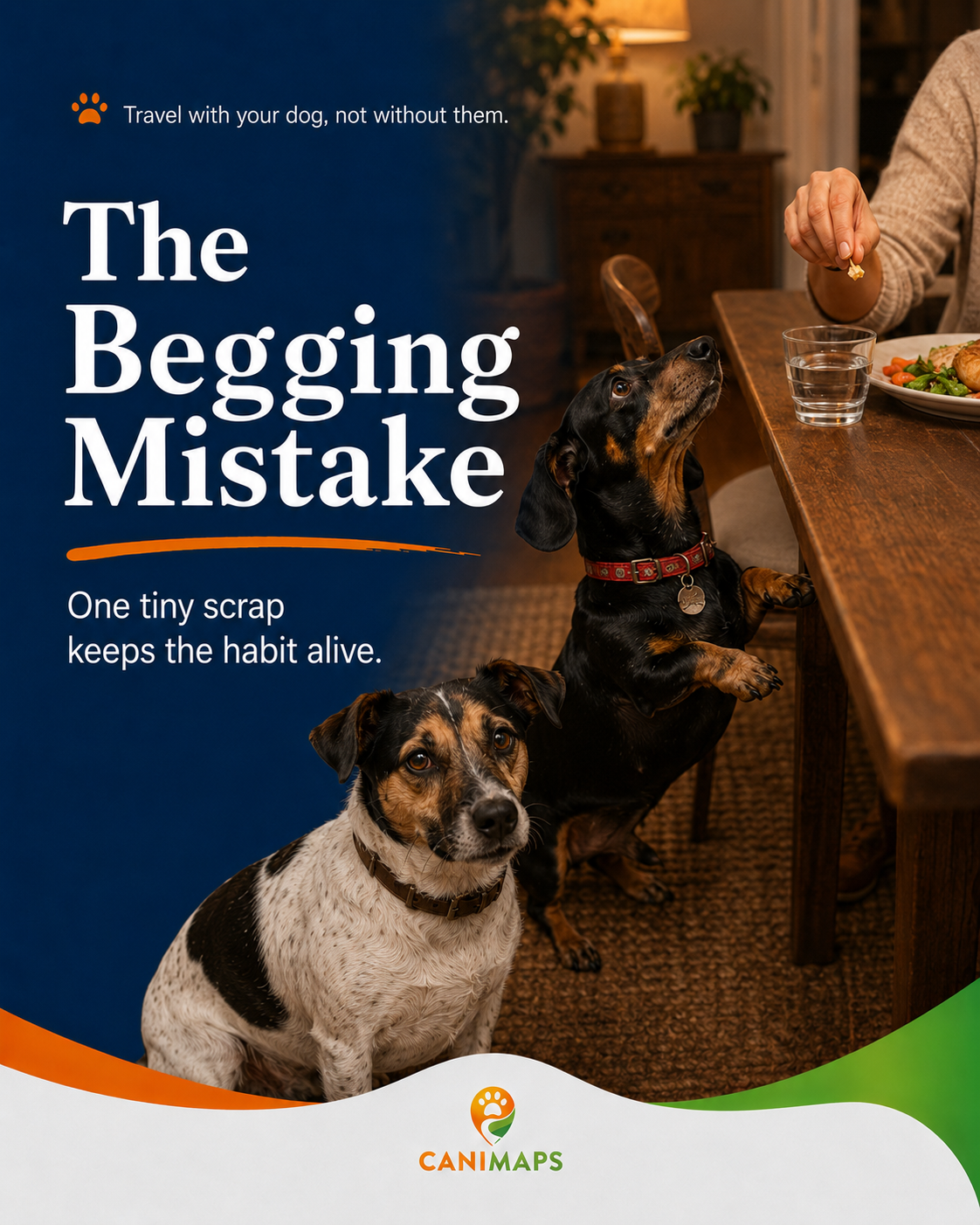
The biggest mistake is giving in “just this once”.
Dogs do not understand “this is a special exception because I am tired and this cheese is already in my hand.” They understand that begging worked.
Even worse, occasional rewards can make the behaviour stronger. If your dog only wins sometimes, they may try harder, longer and louder. Congratulations, you accidentally built a slot machine with ham.
So the first rule is boring but powerful:
Do not feed begging.
Not once. Not from you. Not from guests. Not from the child who thinks the dog is “just helping”. Not from Grandpa, who claims he is innocent while holding sausage under the table.
Everyone needs the same rule.
What not to do when your dog begs
Do not shout at your dog for begging. Do not push them away over and over. Do not punish them for wanting food.
Why? Because attention can still be rewarding. If your dog begs and you talk, touch, react and create drama, the begging still becomes part of the meal.
Also, punishment does not teach your dog what you want instead.
A better plan is:
prevent access when needed
ignore begging calmly
reward the behaviour you want
give your dog a clear alternative job
AKC explains positive reinforcement as adding something a dog finds rewarding to increase behaviours we want.
In normal language: reward the calm dog, not the tiny dinner lawyer.
Step 1: stop rewarding the begging
This step sounds simple and feels emotionally impossible.
When your dog begs:
do not feed from the table
do not make eye contact
do not talk to them
do not laugh and say “you’re so bad”
do not push food toward them
do not let guests feed them
Be calm and boring.
If the dog has been begging successfully for months or years, the behaviour may temporarily get worse when rewards stop. This is normal. Your dog is testing whether the old system still works.
Stay consistent.
Ontario SPCA notes that consistency and planning can help train a dog to stop begging or sneaking food from the table.
Step 2: teach a better job
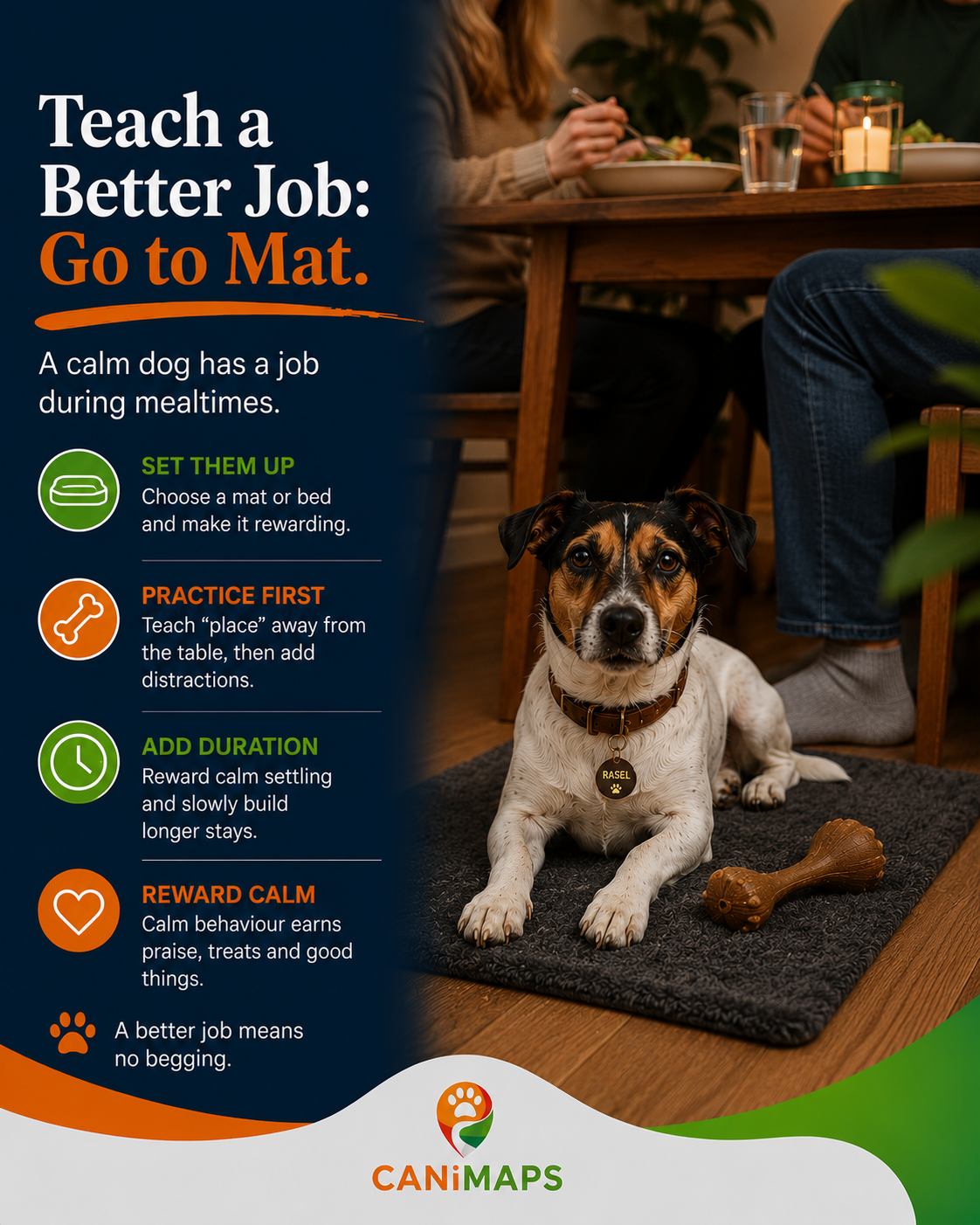
A dog cannot beg and relax on a mat at the same time. That is why alternative behaviour matters.
San Francisco SPCA describes two main ways to handle begging: management and prevention, plus training an alternative behaviour.
Your dog needs a clear answer to this question:
“If I cannot beg at the table, what should I do instead?”
Good alternative behaviours include:
lie on a mat
go to bed
stay behind a baby gate
chew a safe toy
eat their own meal
rest in another room
settle near the table without staring
Do not expect your dog to magically choose the right one. Teach it before dinner, when nobody is waving pizza around.
Step 3: use the “go to place” routine
The “go to place” cue is one of the most useful dog skills for home life and travel.
It means your dog learns to go to a specific mat, bed or blanket and stay there calmly.
VCA recommends teaching a “go to your place” cue and then practicing during meals. It also suggests making the place rewarding with a reserved toy or a toy stuffed with some of the pet’s dinner.
Here is a simple beginner routine:
Choose a mat, bed or blanket.
Toss a treat onto it.
When your dog steps on it, praise calmly.
Repeat until your dog happily goes there.
Add a cue like “place” or “mat”.
Reward lying down or settling.
Practice for short moments before using it at meals.
Add duration slowly.
Give a safe chew or food toy during dinner if appropriate.
At first, reward often. Later, reward calmly and less frequently.
The goal is not military obedience. The goal is a dog who thinks, “Dinner means I relax here.”
Step 4: make meals predictable
Dogs beg less when the routine is clear.
Try this structure:
dog gets their own meal before or during your meal
dog goes to mat, bed or separate space
dog gets a safe chew or stuffed toy if needed
humans do not feed from the table
all guests follow the rule
dog is rewarded after the meal for calm behaviour
If your dog struggles, use management. That is not failure. That is strategy.
Management can include:
baby gate
crate if your dog is crate trained
dog bed in another room
leash tether under supervision
closed kitchen door
feeding the dog separately
A calm boundary is better than 40 minutes of “no, stop, no, leave it, stop, please, why are you like this?”
What about dog-friendly cafés?
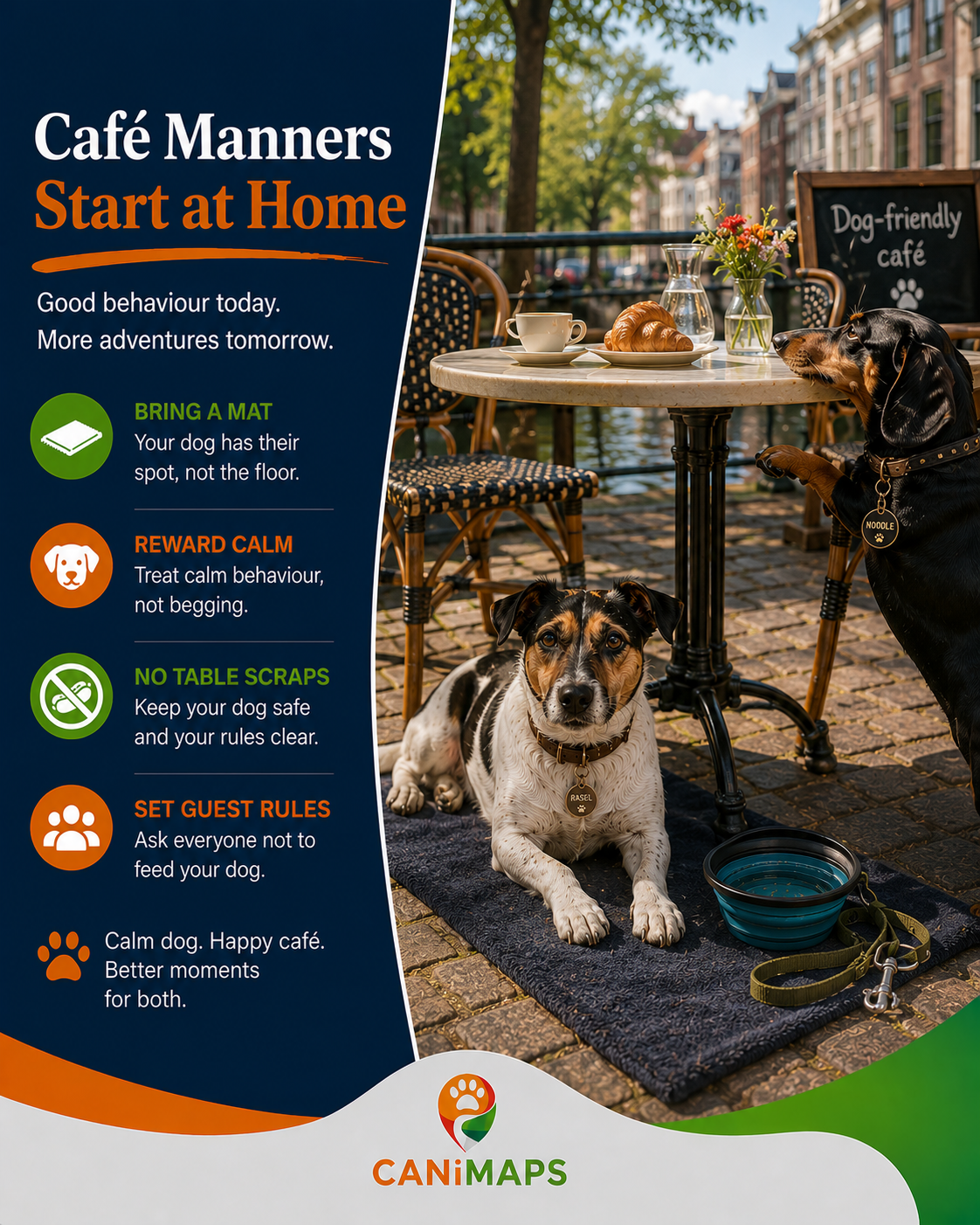
This is where begging becomes very CANIMAPS.
At home, begging is annoying. At a dog-friendly café, it becomes a full public performance.
Your dog may smell croissants, burgers, other dogs, dropped fries, toddler snacks and ten million crumbs from previous civilizations.
For café manners, practice at home first.
Before going to a café, teach:
settle on mat
leave it
watch me
quiet
wait
go to place
Bring:
portable mat
water bowl
safe chew or food toy
small training treats
leash
patience
At the café:
choose a quieter table
keep your dog out of walkways
reward calm behaviour
do not let strangers feed your dog
avoid table scraps
leave before your dog becomes overwhelmed
Your dog does not need to be perfect. But they do need a job besides “emotionally blackmail strangers for pastry.”
Is it mean to stop giving table scraps?
No.
It is not mean to have rules. It is not mean to prevent begging. It is not mean to teach calm behaviour.
What feels kind in the moment can create stress later. If your dog learns that every meal is a food opportunity, they may become more frustrated when food does not arrive.
Also, many human foods are not ideal for dogs, and some are unsafe. Keeping a clear no-table-feeding rule can protect your dog from stomach upset and accidental unsafe foods.
Kindness is not the same as giving in.
Kindness is being predictable.
When begging is not just begging
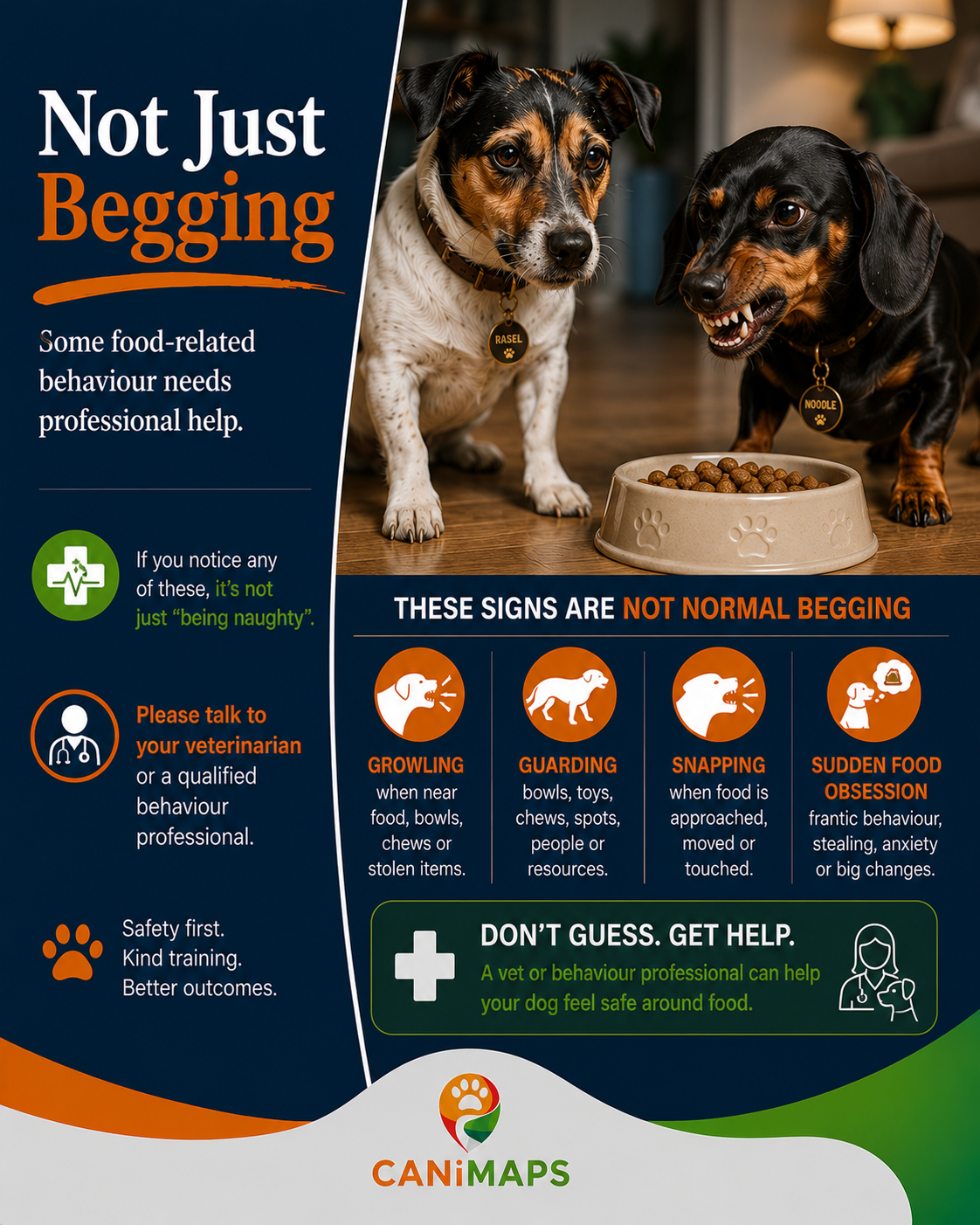
Most begging is learned behaviour. But sometimes food-related behaviour needs extra care.
Get professional help if your dog:
growls near food
guards bowls, chews or stolen items
snaps when food is removed
becomes frantic around food
steals aggressively
fights with other pets over food
suddenly becomes much hungrier than usual
has a major behaviour change
ASPCA’s food guarding guidance shows that food-related behaviours can involve discomfort or wariness and should be handled carefully.
If your dog shows aggression, guarding or sudden changes around food, speak with a veterinarian or qualified behaviour professional. Do not punish or physically challenge a dog around food.
CANIMAPS dinner manners checklist
Before your next meal, try this:
Decide the rule: no table feeding.
Tell guests the rule before food appears.
Feed your dog before or during your meal.
Give your dog a mat, bed or calm place.
Reward the dog for settling.
Ignore begging calmly.
Use a gate or separate room if needed.
Practice before cafés, hotels and travel meals.
Do not expect instant results.
Stay consistent for several weeks.
Tiny daily consistency beats one dramatic training session.
Final takeaway
Your dog begs because begging has worked.
To change it, stop paying the behaviour and give your dog a better job. Teach a mat routine. Reward calm settling. Keep guests consistent. Practice at home before expecting café-level manners in public.
You are not being mean.
You are just ending the dinner subscription service your dog did not remember signing you up for.
Save this before your next dog-friendly adventure, and follow CANIMAPS for more real-world dog travel and lifestyle tips.
6. FAQ Section
Why does my dog beg for food?
Most dogs beg because begging has worked before. Even one occasional table scrap can teach a dog that staring, whining or pawing may produce food.
Should I ignore my dog when they beg?
Yes, but only as part of a bigger plan. Calmly ignore begging and reward an alternative behaviour, such as lying on a mat or going to their place.
Is it mean to stop giving table scraps?
No. Clear rules are not mean. They make mealtimes more predictable and can reduce frustration for your dog.
How do I teach my dog to go to their place during meals?
Start away from mealtime. Reward your dog for stepping onto a mat or bed, then for lying down and staying there. Add duration slowly before using it during meals. VCA recommends practicing “go to your place” during meals once the dog understands the cue.
Can I stop dog begging at cafés?
Yes, but practice at home first. Bring a mat, reward calm behaviour, choose quieter tables and do not let strangers feed your dog.
What if my dog growls around food?
Growling, guarding or snapping around food is not normal begging. Speak with a veterinarian or qualified behaviour professional and avoid punishment or confrontation.