
Should You Let Your Dog Sleep in Your Bed?
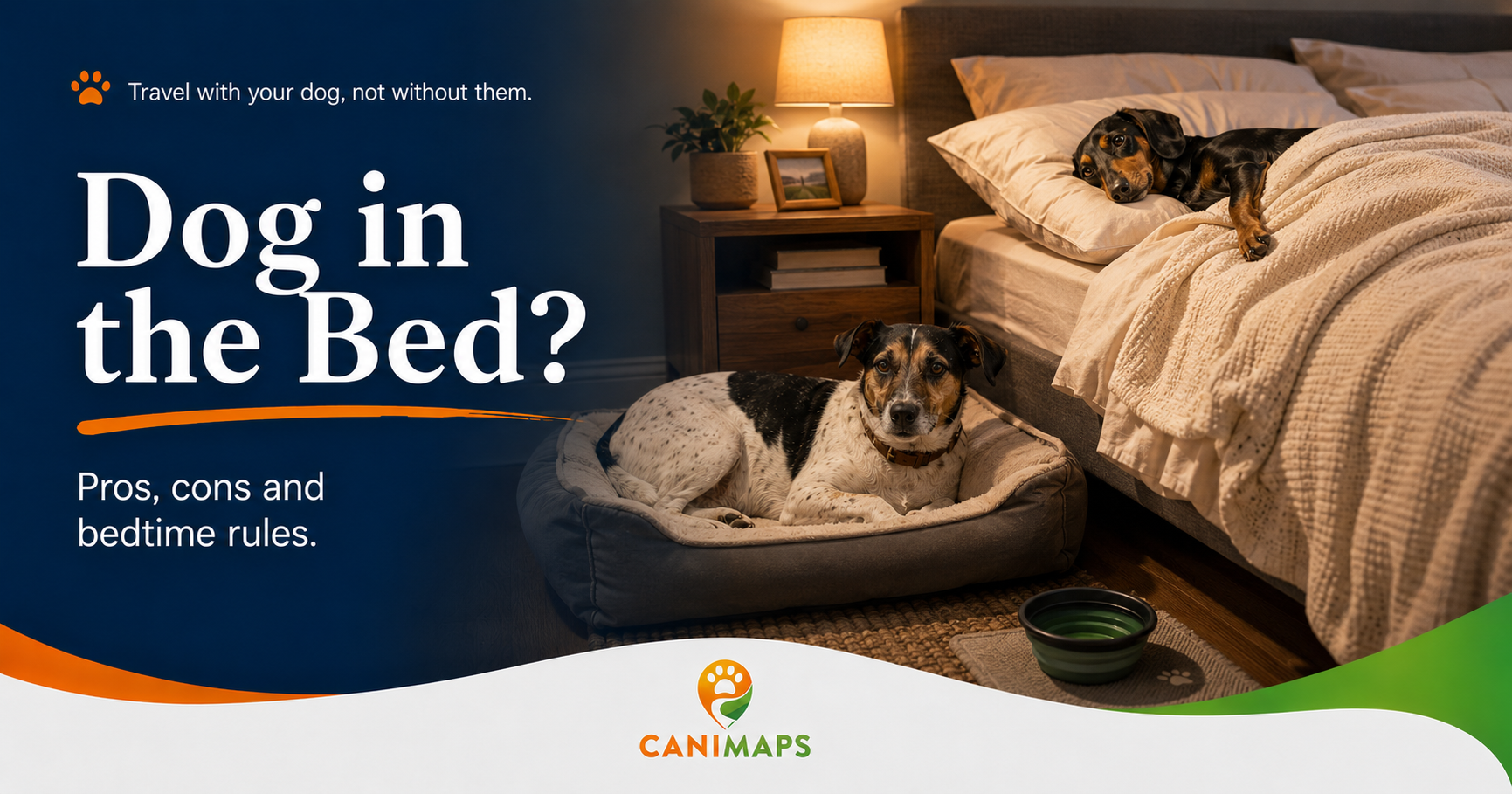
Some dog questions divide households.
One person says, “The dog is family.”
Another person says, “The dog has their own bed.”
The dog says nothing, because the dog is already asleep across three pillows.
So, should your dog sleep in your bed?
The honest answer is not “always” or “never.”
It depends on your sleep, your dog’s behaviour, your hygiene routine, your health, your household rules and whether your dog can settle independently when needed.
Letting your dog sleep in bed is not automatically wrong.
But it should be a choice, not a nightly hostage situation where your terrier owns the duvet and you wake up folded like a camping chair.
Quick Answer
Your dog can sleep in your bed if it works for your household.
Bed-sharing may be fine if everyone sleeps well, hygiene is managed, allergies are not worsened, your dog can safely get on and off the bed, and your dog does not guard the bed or become anxious when asked to sleep elsewhere.
It may be better for your dog to sleep in their own bed if they disrupt sleep, worsen allergies, have accidents, guard the bed, cannot safely jump on or off, are recovering from surgery, or cannot settle independently.
The best rule is the one that keeps both humans and dog safe, rested and clear about expectations.
The Honest Answer: It Depends

A dog sleeping in your bed can be cozy, calming and emotionally lovely.
It can also be noisy, cramped, unhygienic, allergy-triggering or behaviourally complicated.
The best question is not:
“Are dogs allowed in beds?”
The better question is:
“Is this helping everyone sleep well and stay safe?”
Your answer may be yes.
Your answer may be no.
Your answer may be “weekends only,” “not under the covers,” “only on the blanket,” or “dog bed beside the bed.”
That is fine.
Dogs do not need one universal rule.
They need a rule they can understand.
Why Dogs Love Sleeping Close to You
Dogs are social animals, and many enjoy resting near their people.
Your bed smells like you, feels warm and is usually one of the calmest places in the home.
For some dogs, sleeping near you feels safe.
For others, it is simply comfortable.
For a few, it becomes a full real-estate strategy.
Dogs also sleep a lot. AKC explains that dogs may spend around half the day asleep, with additional time spent awake but resting, and that age, size and activity level influence sleep needs. Puppies and senior dogs often need more sleep than healthy adult dogs.
So yes, your dog’s dedication to napping is not laziness.
It is a lifestyle.
The Benefits of Letting Your Dog Sleep in Your Bed
For many owners, bedtime with a dog is one of the best parts of the day.
Potential benefits may include comfort and companionship, a calming evening ritual, warmth, emotional bonding, easier monitoring of some dogs, less loneliness for the owner and a familiar routine during travel.
There is also something special about the tiny sigh a dog makes when they finally settle.
That sound has probably repaired more bad days than any motivational quote ever printed.
But comfort is only one side of the decision.
The Downsides Nobody Mentions
The first downside is sleep disruption.
Dogs move. Dogs dream. Dogs snore. Dogs lick paws at 3:07 a.m. Dogs perform emergency blanket archaeology.
VCA notes that dogs may disrupt their owners’ sleep through nighttime shifting and snoring. VCA also points out that co-sleeping can worsen allergies because dogs can carry dander, pollen and dust on their coats.
Other possible downsides include worse sleep for you, worse sleep for your partner, worse allergies, overheating under covers, jumping on and off the bed all night, senior dogs struggling with the height, accidents, bed guarding, inability to settle elsewhere and hotel or guest-house rules becoming harder to follow.
The biggest red flag is not fur on the blanket.
The biggest red flag is when your dog believes the bed is theirs and you are a temporary inconvenience.
Hygiene Rules if Your Dog Sleeps in Bed
If your dog sleeps in your bed, hygiene matters.
That does not mean you need to panic.
It means you need a simple routine.
Good bed-sharing rules include regular flea, tick and parasite prevention as advised by your veterinarian, wiping muddy paws before bed, washing dog blankets often, washing your bedding regularly, keeping grooming up to date, avoiding bed-sharing if your dog has diarrhea, parasites or untreated skin issues, and cleaning dog beds and blankets routinely.
CDC guidance says regular veterinary care, vaccines, deworming and flea/tick control help keep pets and families healthy. CDC also recommends good pet hygiene and gives an example cleaning schedule that includes washing pet beds and blankets weekly.
A practical CANIMAPS rule:
If your dog is clean enough for the sofa but not clean enough for your pillow, give them a blanket zone or a bed beside yours.
When Your Dog Should Not Sleep in Your Bed
Some dogs should not share the bed, at least not right now.
Avoid bed-sharing if your dog growls when moved, snaps when touched in bed, guards pillows, blankets or people, startles aggressively when woken, has uncontrolled parasites, has contagious skin issues, has repeated accidents, cannot safely jump on or off, is recovering from surgery, keeps everyone awake or becomes anxious when asked to sleep elsewhere.
VCA advises giving dogs a quiet, comfortable rest area and not disturbing them when they sleep. Its sleep guidance also notes that many child-related dog bites happen when a child wakes a sleeping dog.
This matters in family homes.
A sleeping dog should never be treated like a plush toy.
Children need a clear rule:
Let sleeping dogs sleep.
If your dog growls in bed, do not punish them or physically drag them off. Bed guarding can involve fear, pain, conflict or resource guarding.
Use management immediately and speak with a qualified professional if the behaviour continues.
Puppies, Senior Dogs and Rescue Dogs
Puppies
Puppies need a lot of sleep, but they also need house-training structure and safe boundaries.
AKC says young puppies may sleep 16 to 18 hours a day, while another AKC puppy sleep guide notes puppies often sleep 18 to 20 hours a day.
For many puppies, a crate, pen or puppy-safe bed near your bed is easier than full bed access. It can help with toilet breaks, chewing safety and teaching the puppy that sleep can happen in their own space.
That does not mean your puppy can never sleep in bed later.
It means you may want the skill of independent sleep first.
Senior Dogs
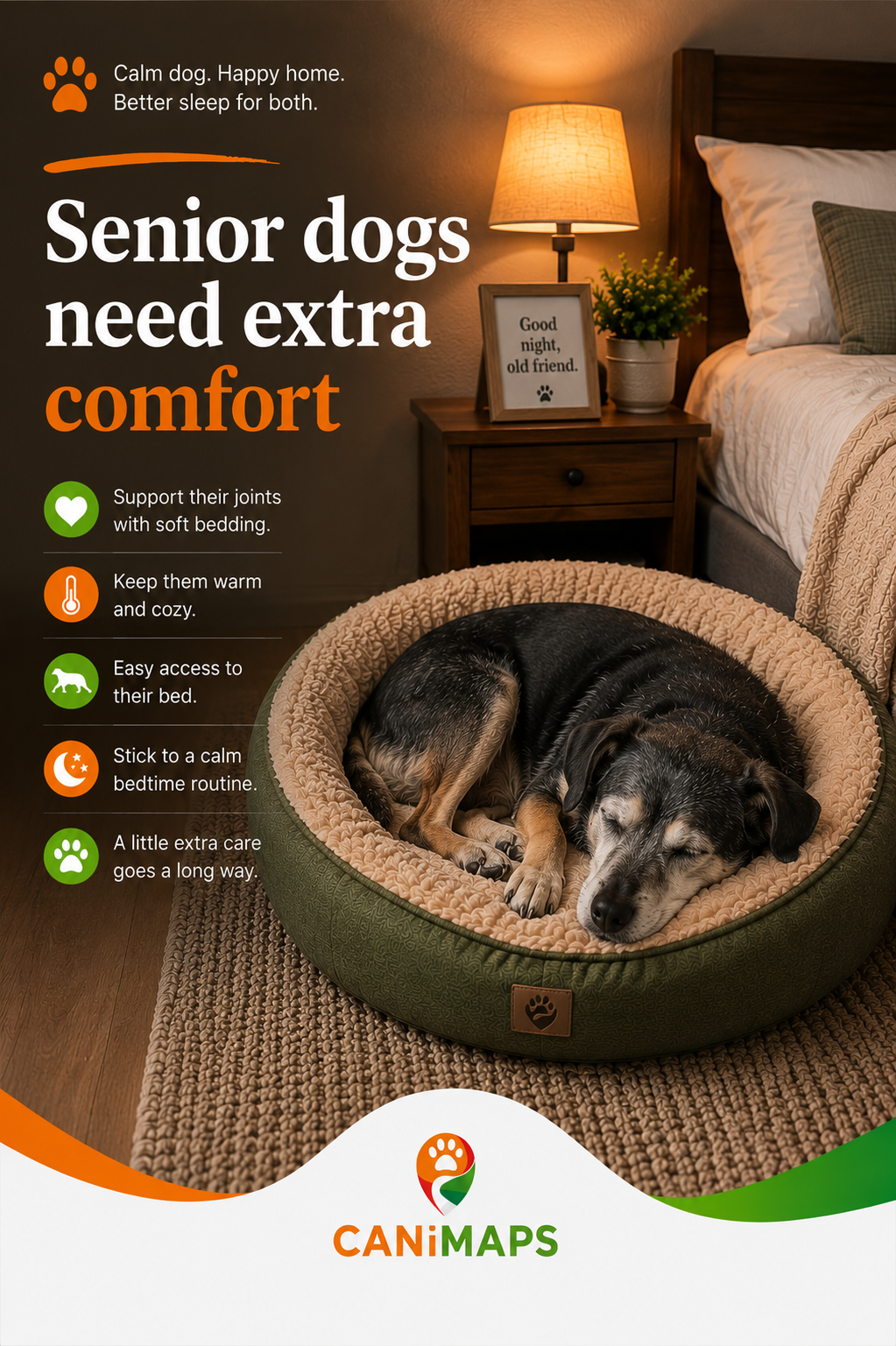
Senior dogs may love being near you, but the bed can become physically harder.
VCA notes that senior dogs may struggle getting in and out of bed, may find overly soft beds uncomfortable, and may have incontinence issues.
For older dogs, consider an orthopedic dog bed beside your bed, non-slip rugs, a ramp or steps if safe, a lower sleeping surface, washable blankets, a night light, easier access to water and a vet check if sleep suddenly changes.
If your senior dog suddenly sleeps much more, sleeps much less, paces at night or seems uncomfortable, treat that as a health clue rather than a personality change.
Rescue Dogs
Newly adopted dogs often need time to decompress.
Bed access can be comforting, but it can also create confusion if the rules later change.
For a new rescue dog, start with a predictable sleep setup: dog bed or crate near your room, calm bedtime routine, no pressure to cuddle, consistent toilet schedule, safe chew or comfort item and gradual freedom as trust grows.
The first rule does not need to be forever.
It just needs to be clear.
How to Teach Your Dog to Sleep in Their Own Bed
Maybe your dog has always slept with you, but now your sleep is suffering.
Or maybe you are preparing for travel, a new baby, a partner, allergies or a senior dog’s safety needs.
You can teach a new bedtime routine without drama.
Try this:
Choose a comfortable dog bed.
Place it near your bed at first.
Add a familiar blanket.
Reward your dog for stepping onto the bed.
Reward lying down.
Give a calm bedtime cue, such as “bedtime” or “settle.”
Keep the room boring.
If your dog comes to your bed, calmly guide them back.
Reward quiet settling.
Move the dog bed farther away only if needed, and only gradually.
Do not wait until midnight to introduce the new rule.
Practise during the day when nobody is exhausted.
AKC notes that dogs benefit from routine because predictability can help them feel safer, more confident and more relaxed.
In other words, bedtime should not be a surprise negotiation.
It should be a familiar script.
Bed Rules for Travel and Dog-Friendly Hotels
This is where CANIMAPS thinking matters.
Your home rule may not work everywhere.
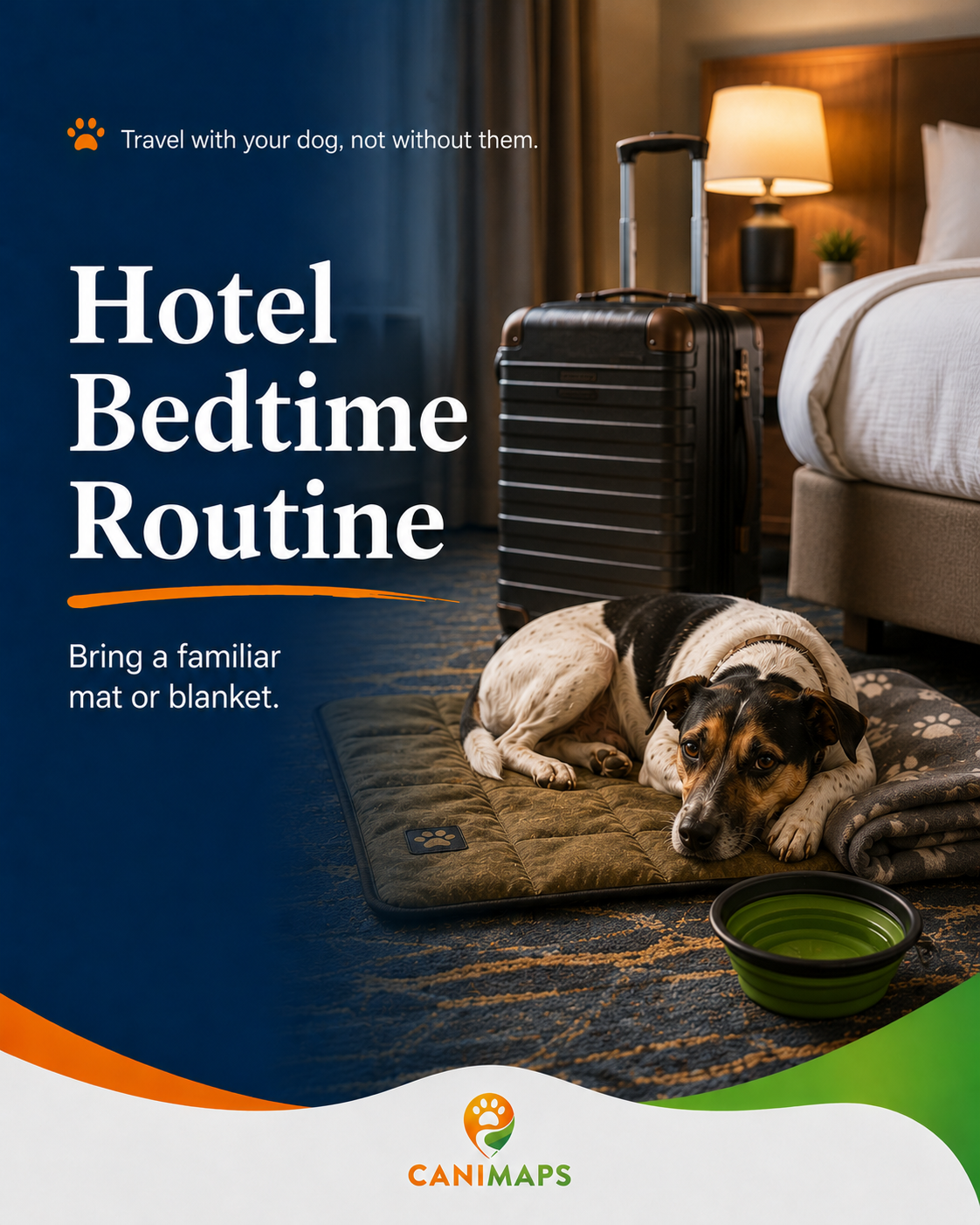
Some dog-friendly hotels allow dogs in rooms but not on beds. Some rentals charge extra cleaning fees. Some hosts provide dog beds. Some places expect you to bring your own blanket.
A travel-friendly dog should be able to settle in more than one setup.
Useful travel bedtime skills include sleeping on a travel mat, settling in a crate or soft carrier if already trained, staying off furniture when asked, relaxing beside the bed, sleeping with a familiar blanket scent, handling hallway noises and settling after a new-location walk.
Pack a travel mat or blanket, washable cover, familiar toy, chew or lick mat, towel for paws, pet-safe wipes, spare bedding layer, poop bags and water bowl.
Hotel rule: never assume bed access is allowed.
Check the property’s pet policy and protect furniture with your own clean blanket if the property permits dogs on beds.
Your dog does not need to understand hotel policy.
You do.
CANIMAPS Bedtime Checklist
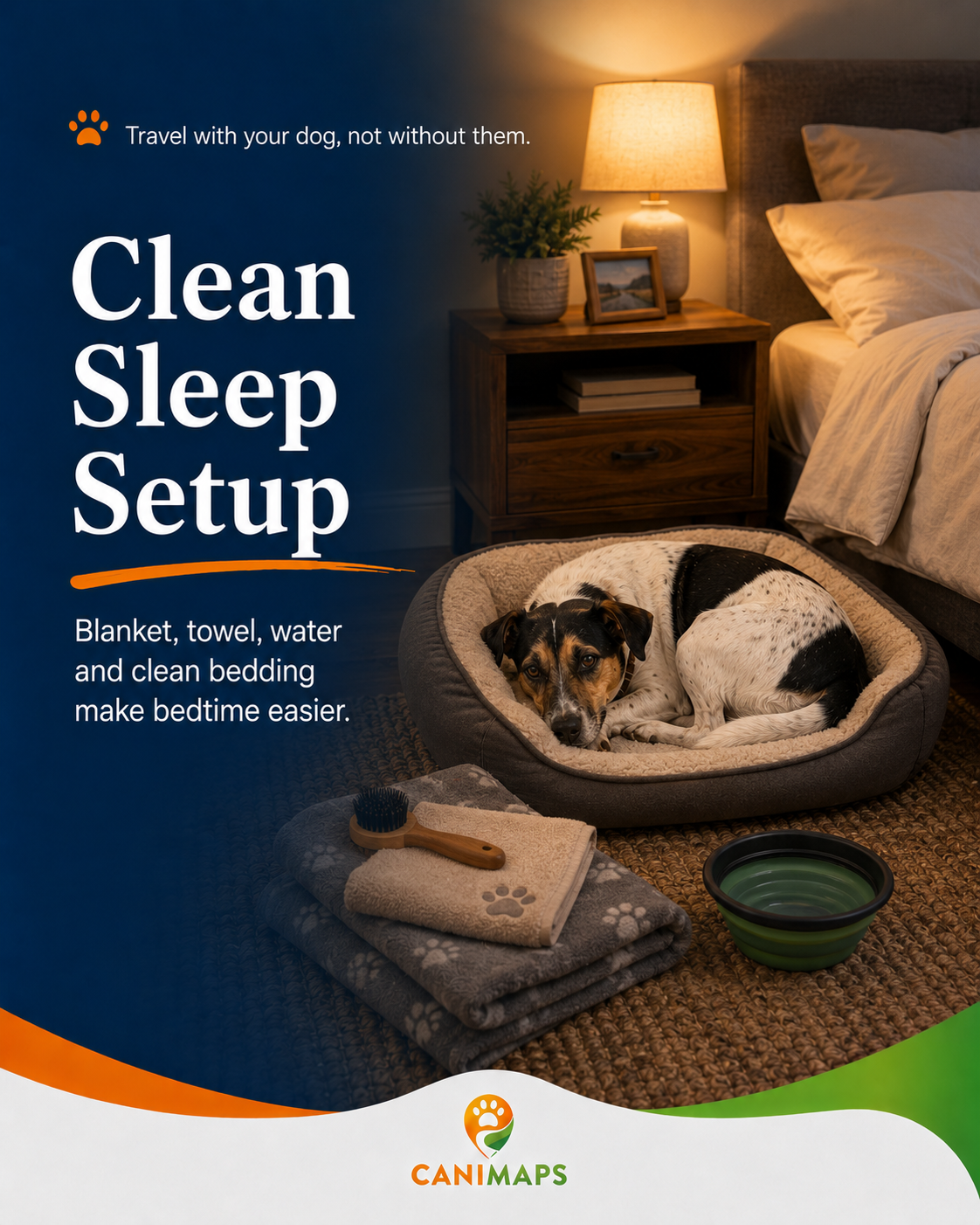
Before deciding whether your dog should sleep in your bed, ask:
Does everyone sleep well?
Does anyone have allergies?
Is the dog clean and parasite-protected?
Can the dog safely get on and off?
Does the dog growl, guard or snap in bed?
Can the dog sleep elsewhere when needed?
Are children taught not to wake the dog?
Are bedding and dog blankets washed often?
Would this rule work during travel?
Is the dog’s sleep routine predictable?
If most answers are positive, bed-sharing may be fine for your household.
If several answers are problems, your dog may need their own sleep space.
Final CANIMAPS Takeaway
Your dog can sleep in your bed if it works for your household.
But it should be a healthy, safe and intentional routine, not a nightly power struggle with paws.
The best bedtime setup is one where your dog feels secure, humans sleep well, hygiene is managed, safety is respected and your dog can still settle independently when life changes.
Bed, crate, mat, sofa, travel blanket — the location matters less than the rule being clear.
And if your dog currently owns 87% of the mattress?
Start with a dog bed beside yours.
Reclaim one pillow at a time.
FAQ
Is it bad to let my dog sleep in my bed?
Not automatically. It depends on sleep quality, hygiene, allergies, behaviour and safety. If everyone sleeps well and your dog can also settle independently, bed-sharing may be fine.
Can my dog sleep in my bed if I have allergies?
It may make symptoms worse for some people. Dogs can bring dander, pollen and dust into the bed, which can worsen allergies.
Should puppies sleep in bed?
Many puppies do better with a safe crate, pen or dog bed near the owner at first. Puppies need lots of sleep and also need toilet-training structure, chewing safety and predictable routines.
Should senior dogs sleep in bed?
Some senior dogs can, but safety matters. If a senior dog struggles to jump, slips, has pain or has incontinence, a comfortable orthopedic bed beside your bed may be safer.
What if my dog growls when I move in bed?
Do not punish or force them. Growling in bed can be a sign of guarding, pain, fear or discomfort. Use management, give the dog a separate sleep space and contact a qualified behaviour professional or veterinarian if it continues.
How do I teach my dog to sleep in their own bed?
Start during the day. Reward your dog for going to the bed, lying down and staying calm. Put the bed near yours at first, use a familiar blanket and build the routine gradually.
Should my dog sleep in bed at a dog-friendly hotel?
Only if the property allows it. Many dog-friendly stays still have furniture rules. Bring a travel mat or blanket so your dog can settle comfortably without assuming bed access.
Is bed-sharing bad for dog behaviour?
Not automatically. It becomes a problem if your dog guards the bed, cannot settle elsewhere, disrupts sleep, becomes anxious when moved or ignores clear household rules.

Europe Dog Travel Checklist and Top Dog Longevity Supplements
Get the Europe Dog Travel Checklist plus the free Top Dog Longevity Supplements e-book — travel smarter and support your dog’s long-term health.