
Spain With a Dog: “Dog Beach” Does Not Mean Your Dog Is Allowed Right Now
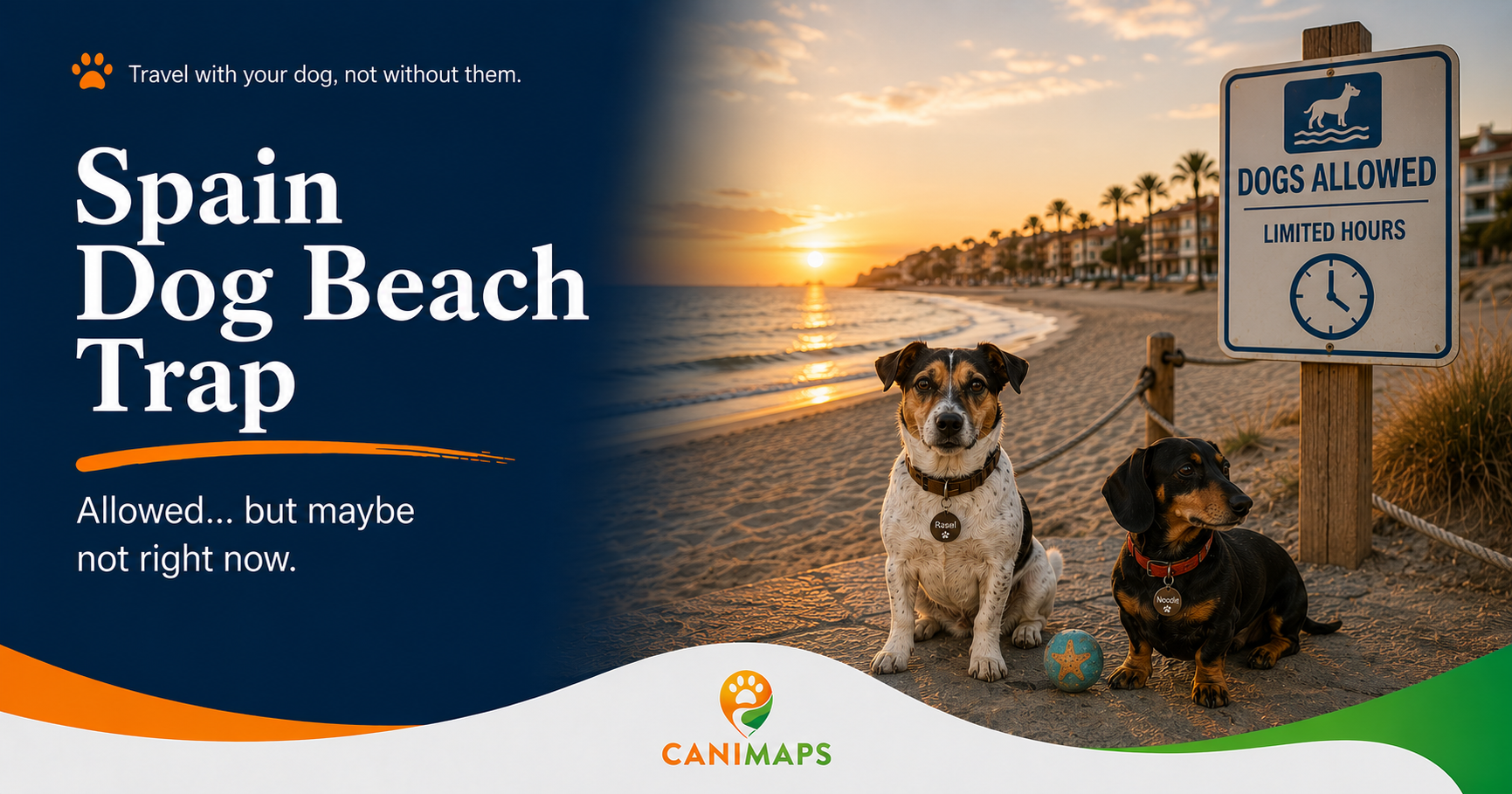
Spain looks perfect for a dog beach holiday.
Sun. Sand. Coastal walks. Your dog sprinting dramatically toward the sea like a shampoo commercial directed by a Labrador.
Then you arrive at the beach entrance and discover something important:
Your dog is allowed there.
Just not now.
This is one of the biggest dog-travel mistakes in Spain.
Many travellers search:
“dog-friendly beach Spain”
Then assume:
“great, beach solved.”
But Spanish beach rules are often:
local
seasonal
municipality-based
time-restricted
confusingly signed
different even between nearby beaches
So before packing towels, tennis balls and emotional support sausages, check the exact beach rules for the exact location and season.
Because “dog beach” does not always mean:
“dogs anytime.”
The big mistake: treating Spain like one single rule system
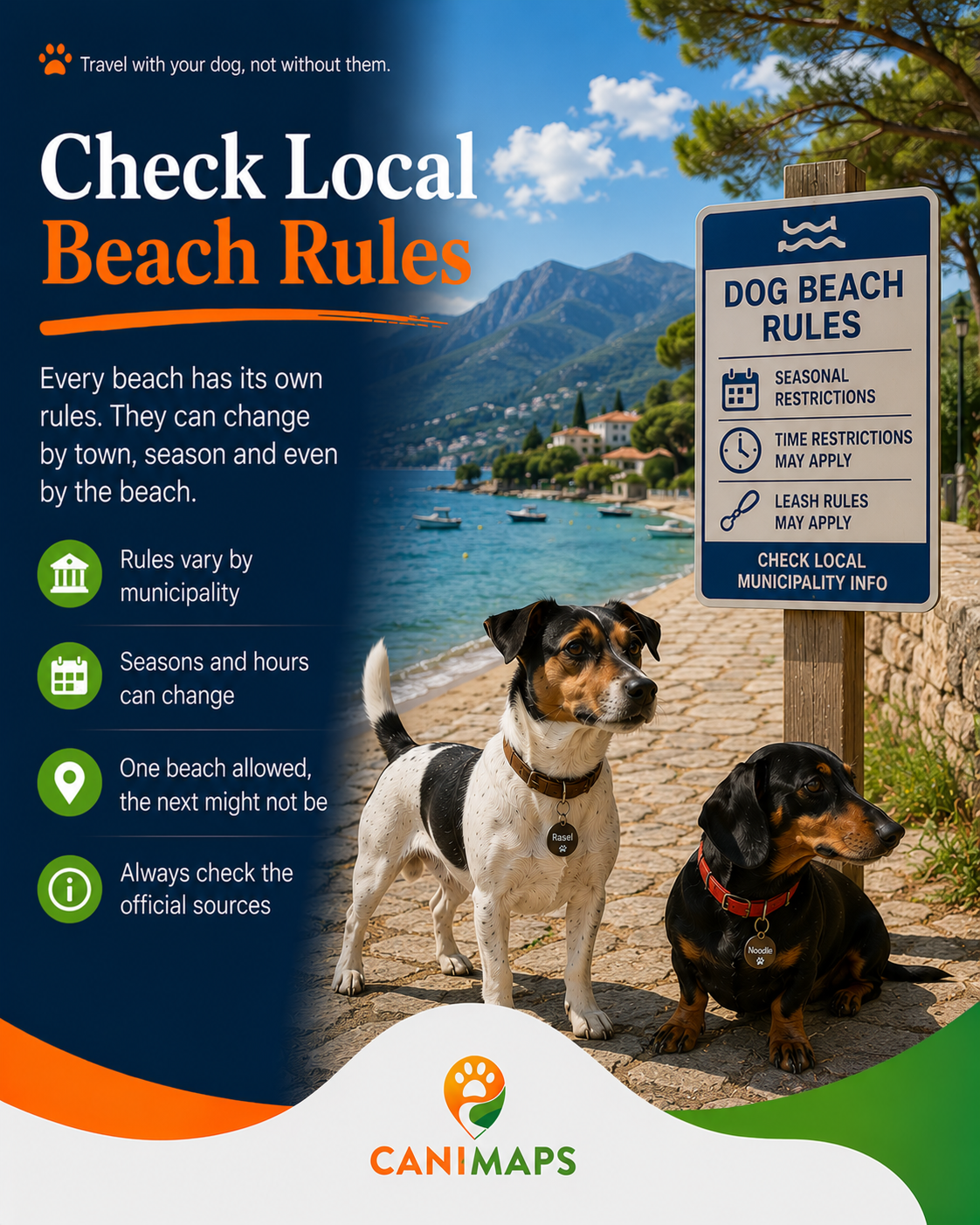
Spain does not run beach dog rules through one giant national “yes/no” system.
Many rules are controlled locally by municipalities.
That means:
one beach may allow dogs,
the next beach may ban them during summer,
and another beach may allow dogs only before 9am.
This is where tourists get trapped.
Spain’s tourism and municipal guidance repeatedly explain that beach dog rules are local and can vary significantly depending on municipality and season.
Rasel calls this:
“important local regulation.”
Noodle calls this:
“administrative betrayal.”
“Dog-friendly beach” may mean only one small section
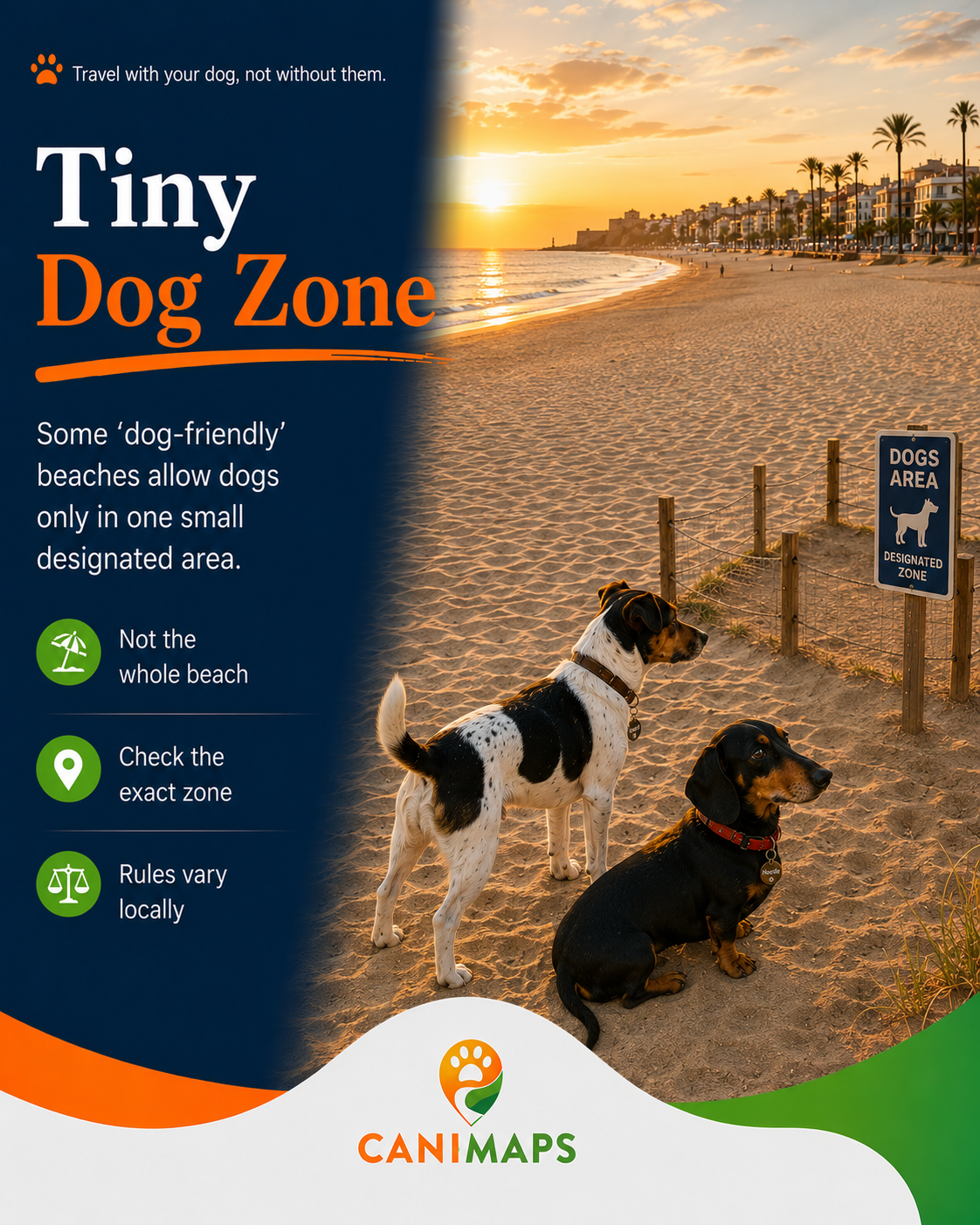
Another classic surprise:
You arrive at a huge beach.
The dog area is:
tiny.
Some municipalities create designated dog zones rather than allowing dogs across the whole beach.
Barcelona’s Llevant Beach, for example, operates a designated dog beach area with seasonal operation determined by the municipality.
That means:
not the whole beach
not necessarily year-round
not necessarily all-day access
not necessarily unlimited entry
So if your dream is:
“long relaxed walk across the entire beach with your dog”
Reality may instead be:
“small fenced section beside twelve other excited dogs named Luna.”
Summer changes everything
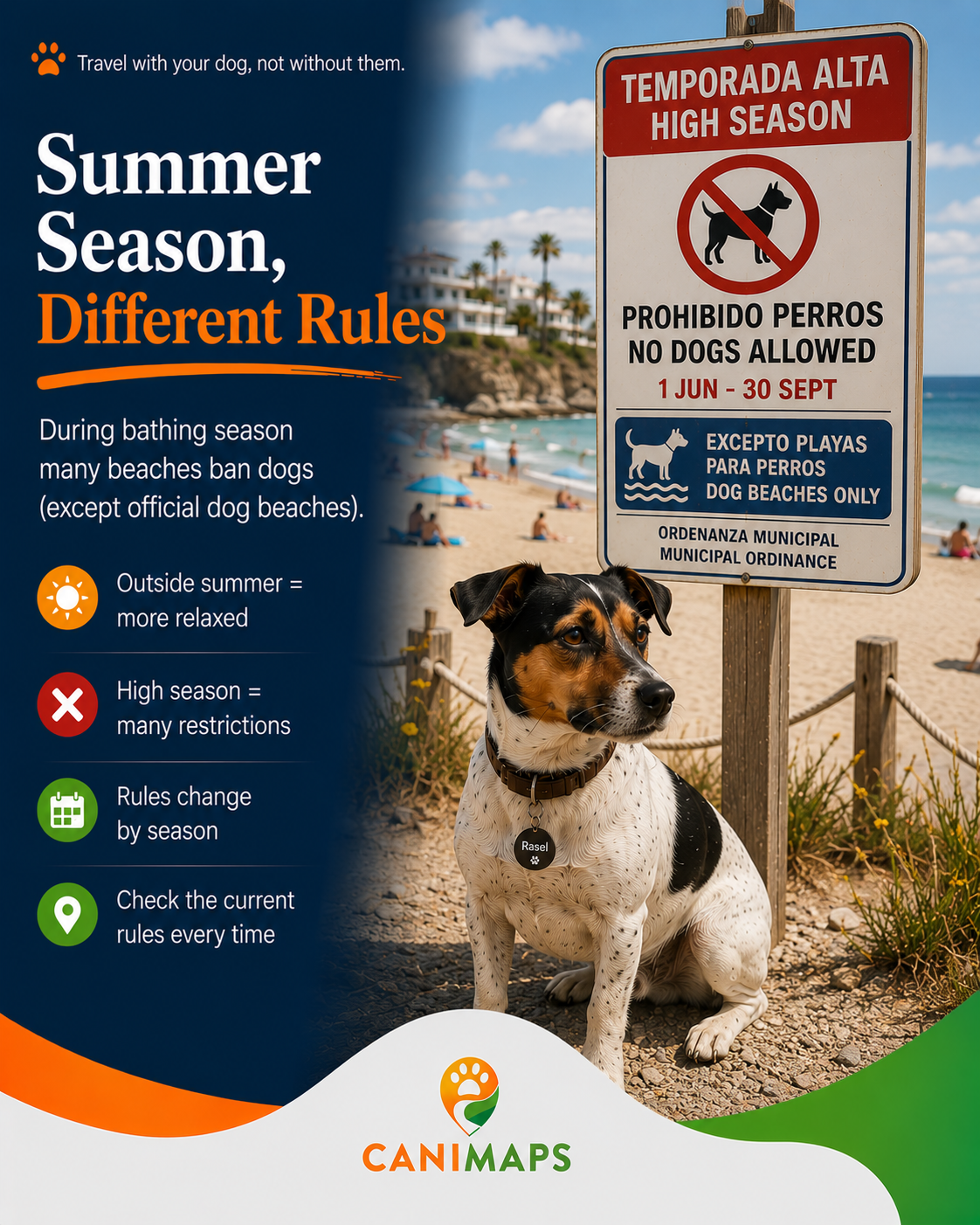
This is the rule many tourists discover too late.
Outside summer:
many beaches are relatively relaxed.
During bathing season:
rules often become much stricter.
Málaga municipality states dogs are prohibited from most beaches during bathing season except authorised dog beaches.
Valencia-region guidance also explains that many municipalities restrict dogs during high season except on designated dog beaches.
So the same beach can effectively have:
winter rules
shoulder-season rules
summer rules
That creates dangerous Google confusion.
An old blog post from October may not match August reality at all.
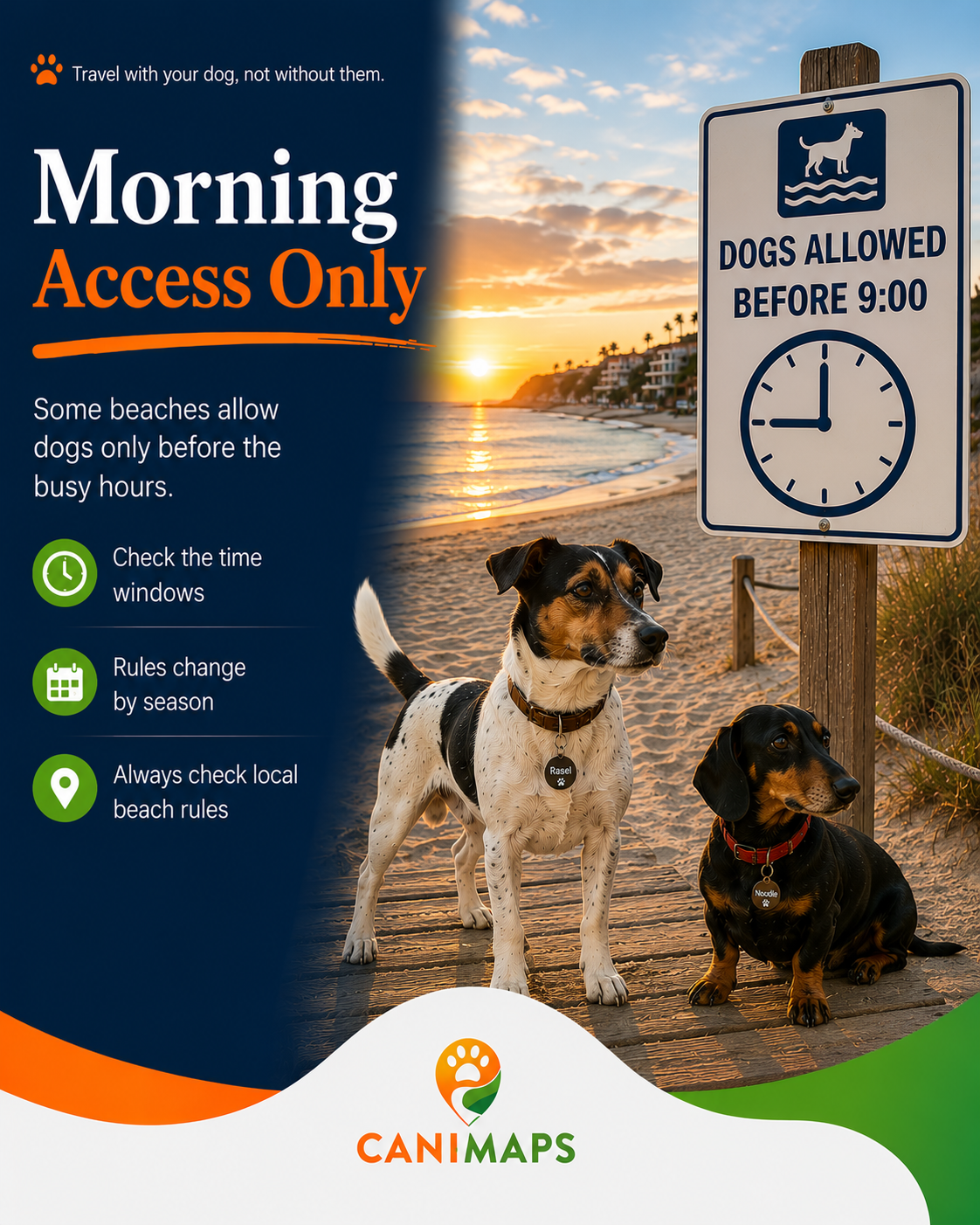
“Allowed” may only mean early morning or evening
This is peak CANIMAPS trap energy.
Some beaches allow dogs only during certain hours outside peak periods.
Typical examples may include:
before morning swimming hours
after evening swimming hours
outside lifeguard schedule periods
outside official bathing season
Several municipalities in Spain apply time-based access restrictions on some beaches.
So when someone online says:
“Dogs are allowed!”
The missing sentence may be:
“…before sunrise while carrying the moon.”
Okay, slightly dramatic.
But timing really matters.
Noodle would absolutely arrive at 2pm with maximum confidence and zero legal strategy.
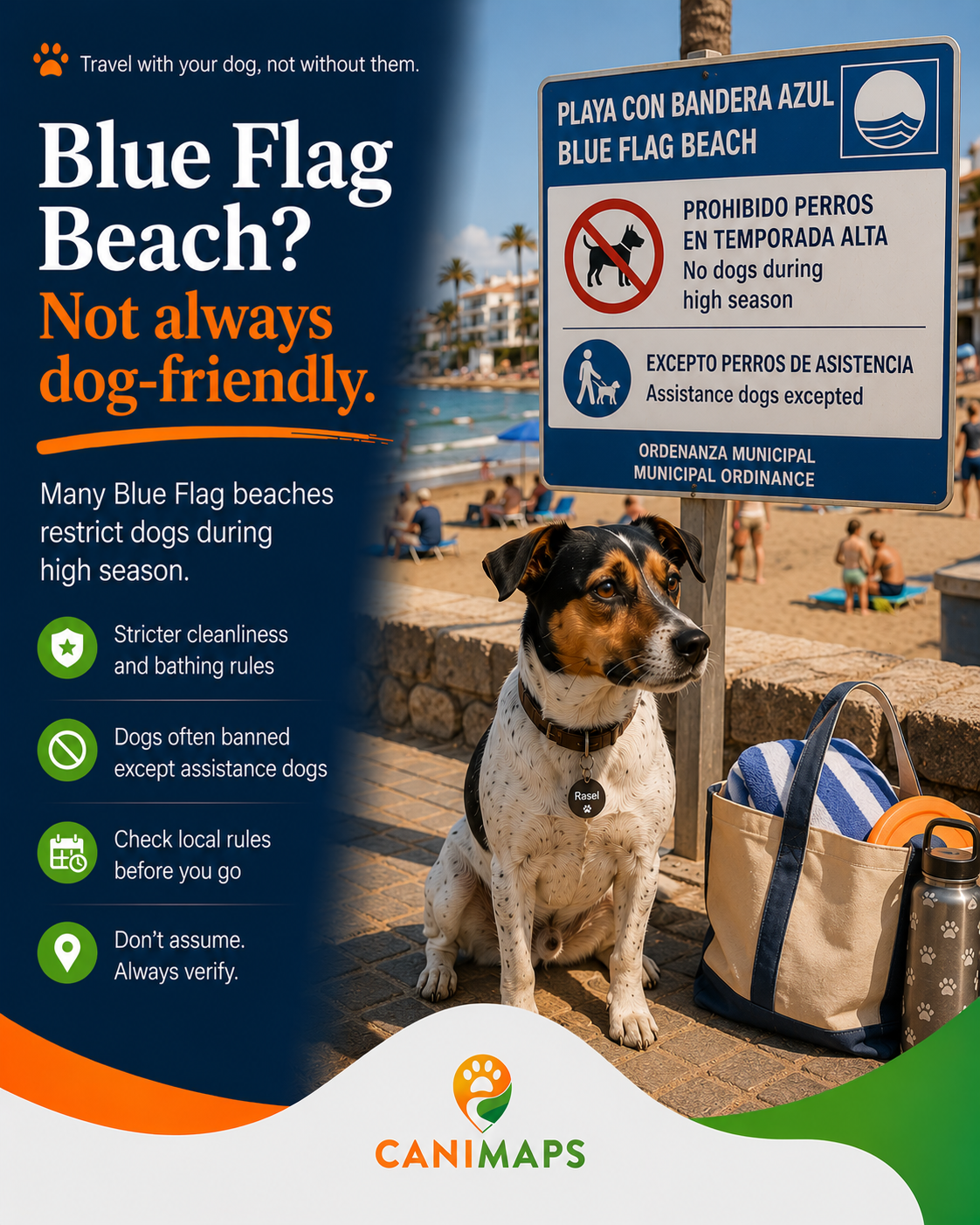
Blue Flag beach? That may actually mean stricter rules
Many travellers assume:
Blue Flag = more dog-friendly.
Sometimes it means the opposite.
Blue Flag beaches often operate under stricter cleanliness and bathing regulations, and some municipalities prohibit dogs except assistance dogs.
That does not automatically mean dogs are banned everywhere.
But it does mean:
never assume.
The prettier and more “officially perfect” the beach looks, the more carefully you should check the rules first.
Why this matters more than people think
This is not just about avoiding awkward moments.
It matters because:
fines may exist
arguments happen
beach staff may ask you to leave
locals may get angry
your whole day plan can collapse
your dog may overheat searching for a backup beach
The practical mistake is usually not:
bringing the dog.
The mistake is:
not checking the exact local rule first.
Questions to check before visiting a Spanish beach with your dog
Before going to any Spanish beach with your dog, check:
Is this beach fully dog-friendly?
Or only one designated area?
Are dogs allowed year-round?
Are dogs banned during bathing season?
Are there morning/evening-only hours?
Does the municipality update rules yearly?
Are there leash requirements?
Are there size or breed restrictions?
Are showers/water points available?
Is shade available?
Is parking nearby dog-friendly?
Are there fines for violations?
This takes five minutes.
It can save your entire beach day.
Better Spain beach strategy for dog owners
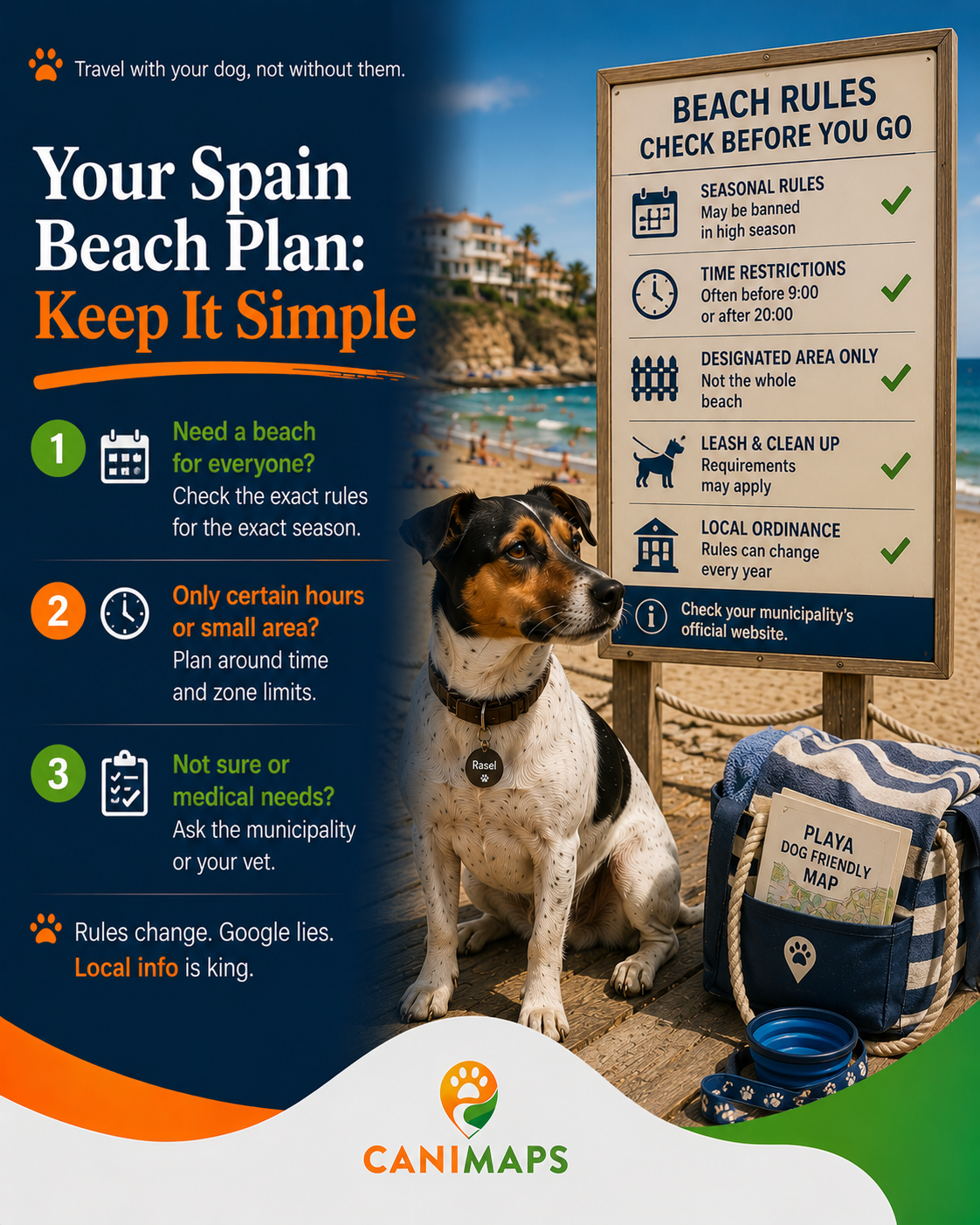
The smarter CANIMAPS strategy is:
Do not search:
“best beaches Spain.”
Search:
“official municipality dog beach rules + your exact destination.”
Then:
verify current season
verify access hours
verify local updates
verify whether the rule changed this year
verify whether the dog section is actually usable for your dog
Because a tiny crowded concrete dog area may technically count as a dog beach.
Your dog may have different opinions.
Especially Noodle.
The CANIMAPS takeaway
Spain can be brilliant with a dog.
But “dog-friendly beach” in Spain often comes with:
conditions,
seasons,
hours,
zones,
and local municipality surprises.
Always check:
exact beach
exact season
exact time
exact municipality rule
Before arriving with:
one happy dog,
three towels,
and unrealistic optimism.
Rasel’s final advice:
Check the local rules first.
Noodle’s final advice:
Bring backup snacks and backup beaches.
Save this before your Spain road trip, and follow CANIMAPS for more real-world dog travel tips across Europe.