
Rental Cars With a Dog in Europe: The Cleaning Fee Trap Travelers Forget
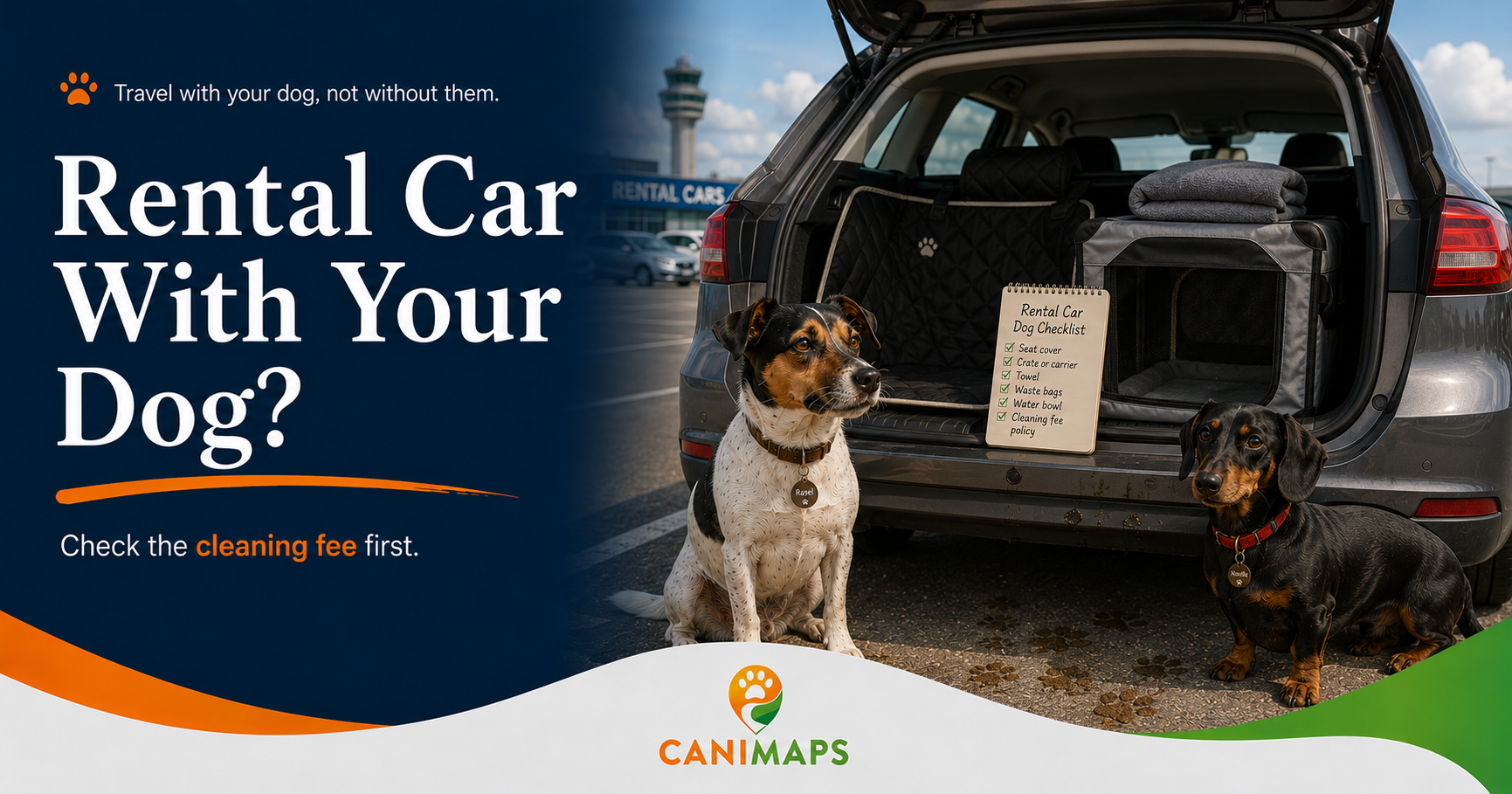
Renting a car in Europe with your dog sounds like freedom.
Pick up the keys. Load the bags. Open the map. Let your dog stare out the window like a tiny road-trip philosopher.
Then the return inspection happens.
Pet hair in the boot.
Dog smell in the back seat.
A paw scratch on the door trim.
One mysterious muddy print that looks legally expensive.
Suddenly the “dog-friendly road trip” becomes a cleaning-fee negotiation at an airport rental desk.
This article was created on your request for CANIMAPS content production as a publishable draft for review before publishing. It is not based on a claimed personal CANIMAPS rental car test unless separately confirmed.
The big mistake: assuming “pets allowed” means “no consequences”
Some rental companies allow pets. That is good news.
But “pets allowed” does not mean “return the car like a mobile dog bed.”
SIXT says pets are allowed in rental vehicles, but customers must return the car clean and free of pet hair to avoid cleaning and detailing fees.
Hertz says pets are allowed in its vehicles and do not need to be added to the reservation, but fees may apply if there is damage or if the rental requires special cleaning after the reservation.
That is the practical trap.
Your dog may be allowed in the car.
Your dog’s hair, smell, mud and enthusiasm may not be free.
Noodle would call that discrimination against fluff.
Rasel would pack a seat cover.
Confirm the local pickup location
Do not rely only on a general brand answer.
Avis says pets are allowed in rental cars at most Avis locations, but customers should call the pickup location to confirm before arriving. Avis also says cars should be returned free of pet hair and smells to avoid a cleaning fee.
This is important because car rental rules can vary by brand, country, franchise, vehicle type, local office and service-animal policy.
Before booking, ask the local pickup office:
Are dogs allowed in this rental car?
Do I need to declare the dog?
Is a crate required or recommended?
Are seat covers allowed?
Are pets allowed in all vehicle classes?
What cleaning fee applies for pet hair or smell?
What damage is charged separately?
Can you confirm this in writing?
This is not overthinking. This is avoiding the most boring argument in Europe.
Choose the vehicle for the dog, not just the price
The cheapest car may be the wrong car.
A tiny hatchback might work for two humans and one small dog, but not for:
a large dog
a crate
luggage
a cooling mat
a long road trip
ferry transfers
mountain roads
wet beach gear
multiple dogs
If your dog needs a crate or secured boot space, check the vehicle category carefully. Rental companies usually guarantee a car group, not always an exact model. That means the boot may be smaller than expected.
Before booking, think about:
dog size
crate size
luggage size
air conditioning
boot ventilation
rear-seat space
easy cleaning
low loading height
room for water and breaks
A “compact or similar” car can become comedy when your dog is not compact or similar.
Safe restraint still matters in a rental car
A rental car is still a car.
Your dog should not travel loose, jump between seats, sit on your lap, or distract the driver.
The UK Highway Code says dogs or other animals should be suitably restrained in vehicles so they cannot distract the driver or injure the driver, themselves or passengers if the vehicle stops quickly. It gives examples such as a seat belt harness, pet carrier, dog cage or dog guard.
Germany gives another useful example. The Allianz Center for Technology notes that in Germany dogs are regarded as cargo under road traffic regulations and must be secured during the journey.
The exact law varies by country, but the travel logic is the same:
A loose dog in a moving car is not cute. It is a safety risk.
Noodle would disagree until the first sharp turn.
Rasel would already be clipped into a harness.
Bring your own protection kit
Do not expect the rental desk to solve dog travel for you.
Pack your own:
seat cover
boot liner
dog seat belt or harness
crate or carrier if needed
travel blanket
towel
wet wipes
small vacuum or lint roller
poop bags
water bowl
car-safe chew or calming item
cleaning cloth
old towel for muddy paws
This kit protects the dog, the car and your wallet.
The goal is to return the vehicle looking like a human rented it, not a golden retriever redecorated it.
Service animals may be treated differently
Some rental companies distinguish between pets and service animals.
SIXT says special cleaning fees are waived for service animals.
That does not mean every service-animal situation is identical in every country or rental office. It does mean travellers should check the company’s service-animal policy separately from the pet policy.
Do not mix these up.
A pet dog, an assistance dog and an emotional-support-style claim may be treated differently depending on company rules and local law.
If you travel with an assistance dog, contact the rental company before booking and ask what documentation or process applies.
Watch the return inspection
The return is where the money risk appears.
Before returning the car:
remove hair
wipe mud
shake out mats
check under seats
clean the boot
remove odour sources
photograph the interior
photograph any existing damage
keep fuel and return receipts
arrive early if inspection is needed
If the car was already scratched or dirty at pickup, document it before leaving the rental location.
This is not about mistrusting everyone. It is about not paying for a mystery paw print from a previous traveller.
Documents still matter
The rental car policy does not replace your dog’s travel documents.
EU guidance says dogs, cats and ferrets travelling between EU countries need a valid EU pet passport with identification and rabies vaccination information.
If you are coming from Great Britain or another non-EU country, different certificate rules may apply.
So your car checklist and your border checklist are separate:
Rental company says dog allowed? Great.
Border says dog documents valid? Also required.
Hotel says dog accepted? Also required.
Country road rules say dog must be secured? Also required.
Dog travel is basically a stack of checklists wearing a leash.
The CANIMAPS rental car checklist
Before renting a car in Europe with your dog, check:
Pet policy
Are dogs allowed by this rental company and this pickup location?
Cleaning fee
What happens if there is pet hair, smell, mud or extra cleaning?
Vehicle size
Will your dog, crate and luggage fit safely?
Seat cover or crate
Can you protect the car without damaging it?
Safe restraint
Can your dog travel secured by harness, crate, carrier or dog guard?
Local road rules
Does the country require specific restraint or control?
Service animal distinction
If relevant, what is the company’s assistance-dog process?
Return photos
Can you document the car condition at pickup and return?
Dog documents
Do border, passport or health certificate rules apply to the trip?
This checklist is not glamorous.
Neither is a €300 cleaning fee.
Final CANIMAPS takeaway
Rental cars can make European dog travel much easier.
They can also create surprise costs if you do not check the pet policy before booking.
The rule is simple:
Do not ask only “are dogs allowed?”
Ask “what condition must the car be returned in?”
Pack the seat cover. Secure the dog. Confirm the local pickup policy. Take photos. Clean before return.
Rasel would return the car spotless.
Noodle would leave one emotional hair on principle.
Save this before your next dog-friendly road trip, and follow CANIMAPS for more real-world dog travel tips.